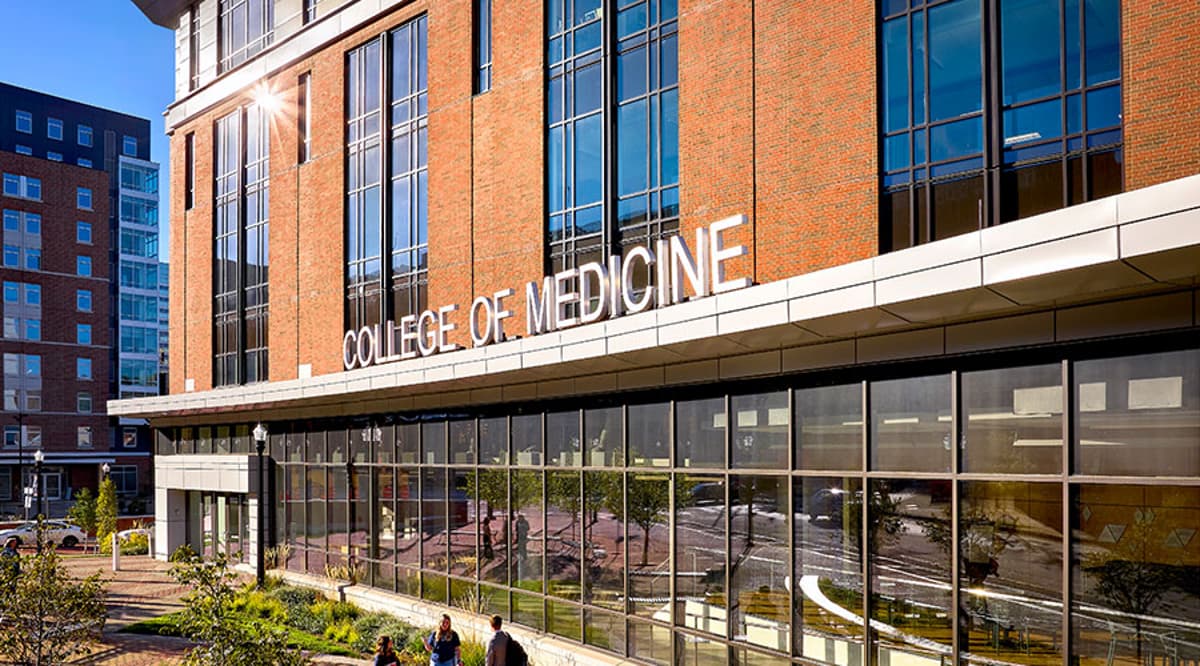
High-Performance Curtain Wall Defines Duquesne's College of Osteopathic Medicine
•February 26, 2026
0
Why It Matters
The project demonstrates how high‑performance building envelopes can meet sustainability goals while creating advanced medical‑education environments, directly supporting the pipeline of future physicians in underserved regions.
Key Takeaways
- •EFCO 5600 Series curtain wall achieves LEED Silver goals.
- •100,000 sq ft facility blends new and renovated spaces.
- •Thermal aluminum framing reduces energy, sound, condensation.
- •Tie‑rod door design simplifies future maintenance and recycling.
- •DUQCOM will enroll 680 students by 2030, easing doctor shortage.
Pulse Analysis
Sustainable campus construction is becoming a benchmark for higher‑education institutions, and Duquesne’s new College of Osteopathic Medicine exemplifies that shift. By selecting EFCO’s 5600 Series curtain wall, the project secured high‑performance glazing, low‑emissivity insulated glass, and a bronze‑gold finish that meets both aesthetic and energy criteria. The system’s Environment Product Declaration and CMA certification provide transparent ESG data, while the modular aluminum framing simplifies logistics on a dense urban site, reducing construction waste and accelerating schedule adherence.
Beyond the envelope, the interior design leverages daylight, acoustic control, and indoor‑air quality to foster a healing‑focused learning environment. The simulation center’s video‑enabled training suites benefit from the curtain wall’s thermal barriers, which maintain consistent interior temperatures and limit sound transmission—critical for realistic clinical scenarios. Additionally, the tie‑rod entrance doors allow on‑site adjustments and component‑level repairs, extending service life and enabling full material recyclability at end‑of‑use, aligning with the university’s broader sustainability commitments.
The broader impact reaches both the local community and the healthcare workforce. Positioned on Forbes Avenue, the building acts as a catalyst for downtown Pittsburgh revitalization, linking academic, medical, and civic spaces. With an enrollment target of 680 students, the college directly contributes to mitigating the projected 124,000‑physician shortfall by 2034, especially in underserved urban and rural areas. The project’s blend of green building practices, advanced medical education facilities, and urban regeneration offers a replicable model for institutions seeking to balance ESG objectives with strategic talent pipelines.
High-Performance Curtain Wall Defines Duquesne's College of Osteopathic Medicine
0
Comments
Want to join the conversation?
Loading comments...