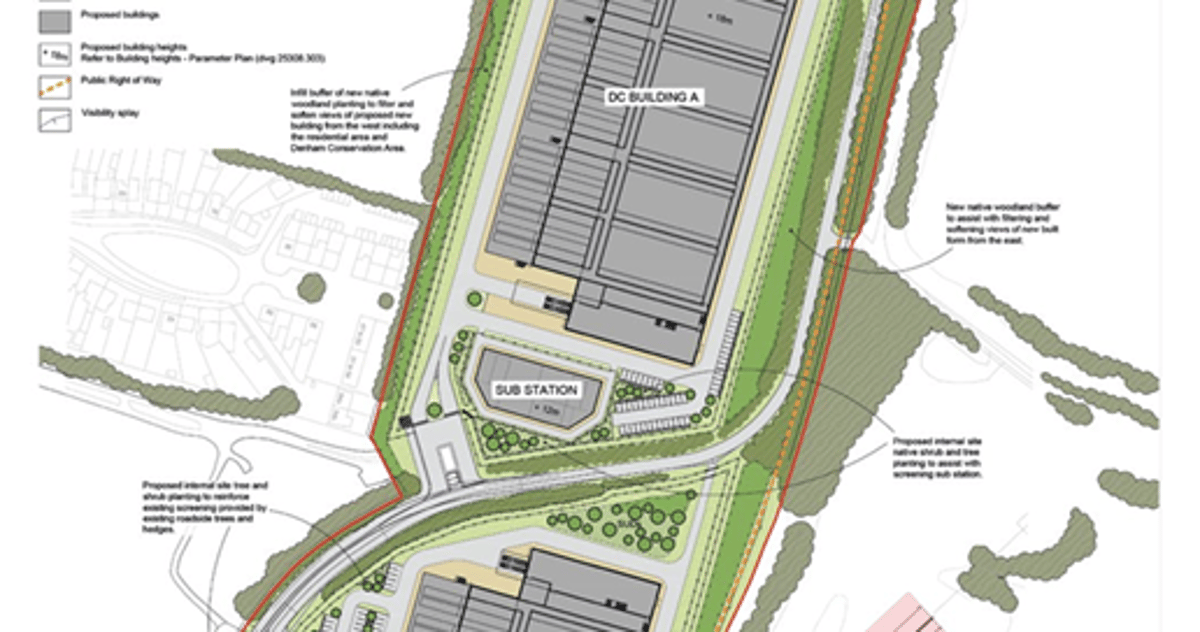
Hyperscale Data Center Proposed for Car Boot Sale Site in Buckinghamshire, UK
Why It Matters
The development signals accelerating demand for high‑density compute capacity near London, while repurposing a community‑focused greenbelt site could spark local resistance and set precedents for future data‑center siting.
Key Takeaways
- •Mulberry Commercial Developments II proposes 60,000 sqm hyperscale data center in Denham
- •Site currently hosts one of Greater London’s largest car boot sales
- •Planned facility includes an on‑site electrical substation but no power specs disclosed
- •Development adds to Buckinghamshire’s growing data‑center cluster near the M40
Pulse Analysis
Buckinghamshire’s proximity to Slough, the United Kingdom’s largest data‑center hub, makes it a strategic foothold for operators seeking low‑latency connectivity to London’s financial and tech markets. The Denham site, positioned alongside the M40, offers robust transport links and the potential for fiber‑rich backhaul, factors that are increasingly decisive as hyperscale providers chase efficient power‑to‑compute ratios. By earmarking 60,000 sqm for a new facility, Mulberry signals confidence that the region can sustain additional megawatts of demand, even as the exact power mix remains undefined.
The proposal also raises questions about land‑use policy on England’s greenbelt. While the area is currently vacant outside the summer boot‑sale season, converting it to a data centre could permanently alter the character of the community space that draws thousands of shoppers each year. Local stakeholders may weigh economic benefits—such as construction jobs and long‑term tax revenue—against the loss of a popular grassroots market and potential environmental impacts. The inclusion of an on‑site substation hints at substantial electricity needs, prompting scrutiny of how the grid will accommodate the load without exacerbating regional carbon targets.
Across the UK, a wave of data‑center projects is reshaping the digital landscape, driven by cloud providers expanding capacity to meet AI workloads and edge‑computing demands. The Denham development aligns with the broader trend of clustering facilities near major motorways to leverage existing infrastructure while minimizing latency. As competition intensifies, operators will increasingly need to demonstrate sustainable power sourcing, resilient cooling solutions, and community engagement to secure planning approval. If Mulberry can navigate these challenges, the Denham site could become a benchmark for integrating large‑scale compute into semi‑rural settings.
Hyperscale data center proposed for car boot sale site in Buckinghamshire, UK
Comments
Want to join the conversation?
Loading comments...