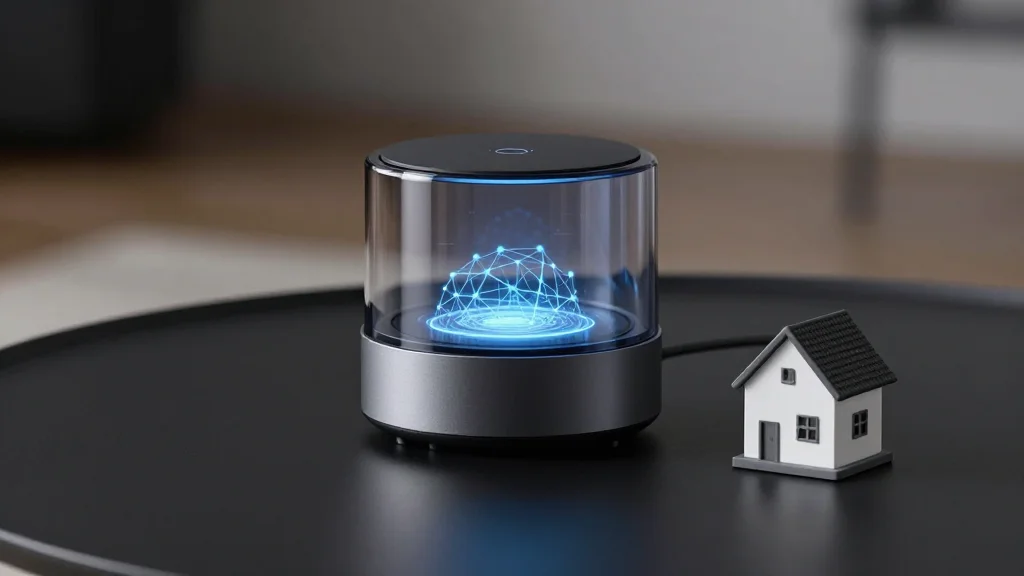
Martha Stewart’s AI Startup Secures $10 Million to Power Home‑Management Platform

Why It Matters
The financing round signals that capital is flowing into consumer‑oriented PropTech, a sub‑segment that has historically lagged behind enterprise solutions. By leveraging Martha Stewart’s household‑name credibility, the startup could accelerate mainstream acceptance of AI‑driven home‑management tools, potentially reshaping how homeowners interact with service providers and smart‑home devices. If the venture succeeds, it could set a precedent for other lifestyle brands to launch tech‑focused subsidiaries, blurring the line between media personalities and technology innovators. This could intensify competition for data access, partnership deals with device manufacturers, and user acquisition in a market that is still in its early growth phase.
Key Takeaways
- •Martha Stewart’s AI startup closed a $10 million seed round to develop a homeowner‑assistant platform.
- •Funding will support AI model training, product development and a consumer beta launch slated for Q4 2026.
- •Investors were not disclosed, but the round size places the startup among the larger seed financings in consumer PropTech.
- •The platform aims to integrate smart‑home data, utility billing and service scheduling into a single AI‑driven interface.
- •Milestones include 100,000 active users and partnerships with at least three major smart‑home hardware firms by early 2027.
Pulse Analysis
Martha Stewart’s foray into AI‑enabled home management reflects a maturation of the PropTech market, where brand equity is becoming as valuable as the underlying technology. Historically, PropTech funding gravitated toward B2B solutions—leasing platforms, commercial analytics, and construction software. The shift toward consumer products suggests investors see untapped demand for convenience tools that can be monetized through subscription models, data licensing, or affiliate service fees.
The $10 million raise also underscores the importance of data in scaling AI assistants. While Stewart’s name can attract early adopters, sustainable growth will depend on the startup’s ability to ingest and process large volumes of heterogeneous data—from smart‑thermostat logs to contractor pricing. Competitors with deeper data pipelines, such as established smart‑home ecosystems, may have a head‑start, forcing the new entrant to secure strategic integrations quickly.
Looking ahead, the venture’s success could catalyze a wave of celebrity‑backed tech startups targeting niche consumer verticals. If Stewart’s platform demonstrates measurable cost savings and user engagement, it could validate a model where lifestyle branding reduces customer acquisition costs for tech products. Conversely, failure to deliver on the promised convenience could reinforce skepticism about brand‑driven tech ventures. Either outcome will provide valuable signals for investors weighing the balance between brand power and technical execution in the evolving PropTech landscape.
Martha Stewart’s AI Startup Secures $10 Million to Power Home‑Management Platform
Comments
Want to join the conversation?
Loading comments...