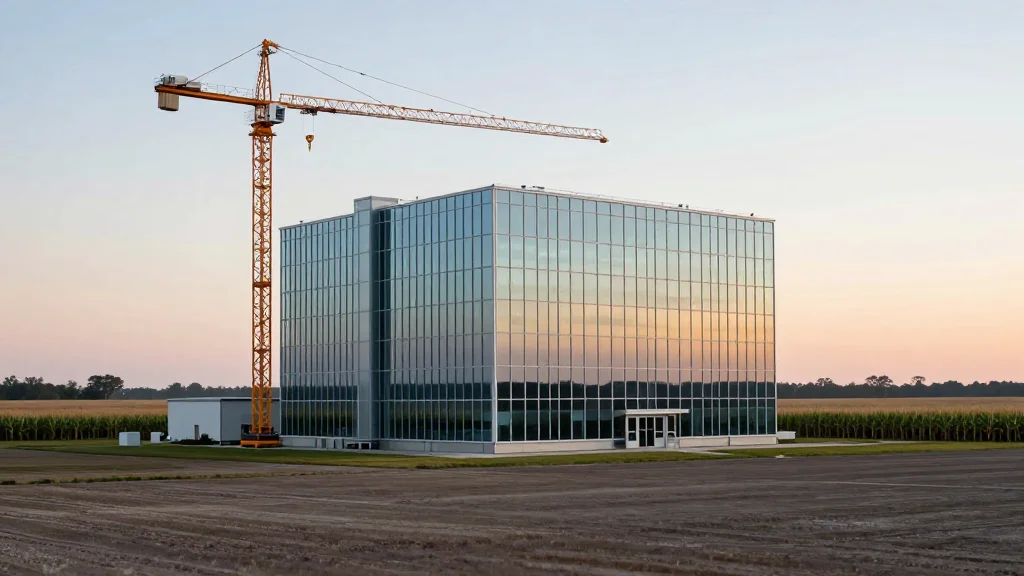
Meta’s $200 B AI Data Center Redraws Rural Louisiana Real‑Estate Map

Companies Mentioned

Why It Matters
Hyperion marks one of the largest private‑capital investments in U.S. real‑estate in recent memory, signaling that AI infrastructure is becoming a dominant driver of land‑use decisions. For PropTech firms, the project creates a live laboratory for testing tools that assess site suitability, predict property‑value shifts, and manage large‑scale construction logistics in real time. The development also raises policy questions about how rural communities can negotiate the trade‑offs between short‑term economic infusion and long‑term land‑use sustainability. As more tech firms eye similar projects, the balance between corporate ambition and community resilience will shape the next wave of real‑estate innovation.
Key Takeaways
- •Meta’s Hyperion data center will cost >$200 billion and deliver 5 GW of AI compute power
- •Construction will bring up to 7,500 workers to Richland Parish, a community of ~20,000 residents
- •Ten new gas‑fired turbines will power the campus, sparking environmental concerns
- •Local farmland values are rising double‑digit percentages as developers scramble for adjacent parcels
- •The project accelerates a PropTech trend of converting rural land into high‑tech campuses
Pulse Analysis
Meta’s decision to locate Hyperion in the deep South reflects a strategic calculus that goes beyond cheap electricity. By anchoring a 5‑GW AI hub in a region with abundant land, lax zoning, and a workforce eager for high‑pay jobs, Meta reduces exposure to the regulatory friction that has slowed similar projects in coastal metros. This geographic shift forces traditional data‑center developers to rethink site‑selection models that have historically prioritized proximity to urban fiber hubs.
From a PropTech perspective, the Hyperion rollout will likely turbo‑charge demand for AI‑enabled land‑valuation platforms. Real‑estate investors will need to quantify the impact of a megaproject on surrounding property taxes, school district funding, and infrastructure strain. Companies that can integrate satellite imagery, GIS data, and predictive analytics into a single dashboard will become indispensable partners for both developers and local governments.
Finally, the project underscores a nascent competitive dynamic: as Meta pours capital to catch up with rivals like Google and Microsoft, the race for AI compute is becoming a real‑estate race. The winners will be those who can secure land, power, and talent at scale while navigating community pushback. Hyperion is a bellwether—if it delivers on its promised economic uplift without eroding the region’s agricultural base, it could set a template for future AI‑driven urbanization of America’s heartland. If not, it may prompt stricter land‑use oversight and a reevaluation of the social license required for such mega‑infrastructure.
Meta’s $200 B AI Data Center Redraws Rural Louisiana Real‑Estate Map
Comments
Want to join the conversation?
Loading comments...