Nima and DOWG to Bridge ‘Project-to-Operations’ Data Gap
Why It Matters
By aligning data with operational outcomes, owners can cut maintenance waste, improve safety, and meet carbon targets, driving measurable value throughout a building’s lifecycle.
Key Takeaways
- •Operations phase drives 70% of building lifecycle costs
- •Collaboration introduces “Right‑to‑Left” data methodology
- •Playbook aligns ISO 19650, ISO 41001, NRM3, SFG20 standards
- •“Digital Handshake” replaces bulk data dumps at handover
- •Focus shifts to outcome‑driven data for safety and carbon performance
Pulse Analysis
The built‑environment sector has long wrestled with a disconnect between the data generated during construction and the information needed to run facilities efficiently. While project teams produce massive data sets to satisfy contractual handovers, asset owners often receive unfiltered dumps that are difficult to translate into actionable insights. This misalignment inflates operational costs and hampers efforts to meet safety and sustainability goals, especially as the operational phase consumes the majority of a building’s total expenditure.
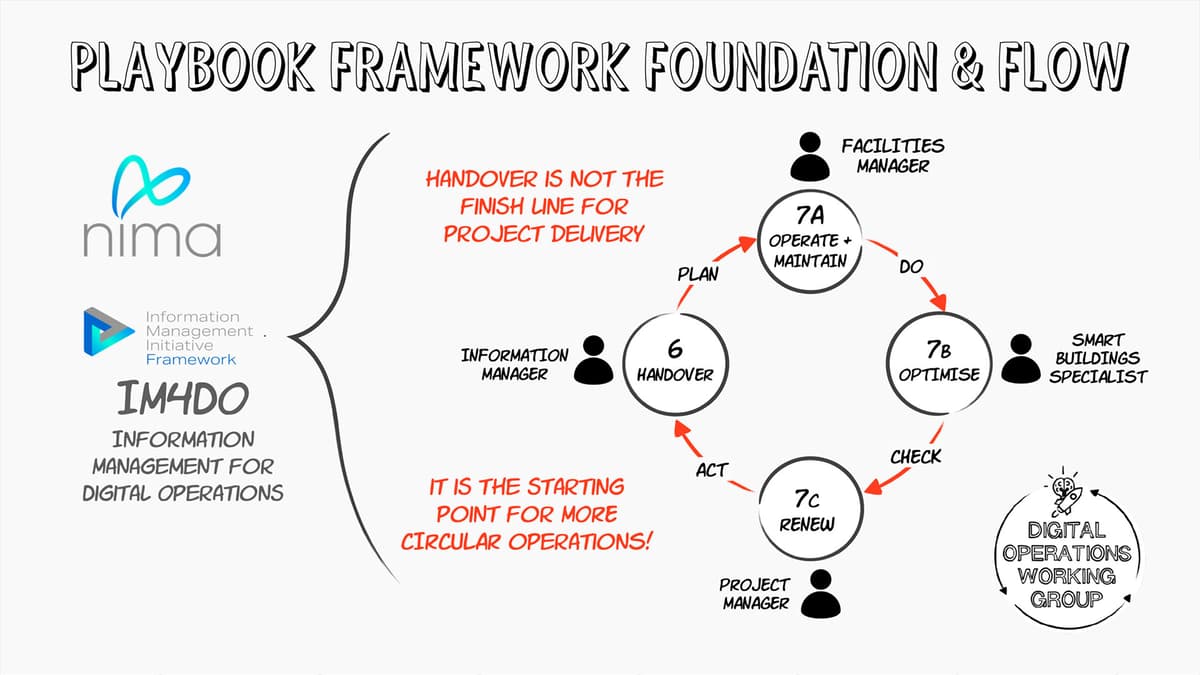
nima’s collaboration with the Digital Operations Working Group introduces a paradigm called “Right‑to‑Left” thinking, which starts with the asset owner’s performance targets and works backward to define the exact data required. The upcoming Digital Operations Playbook codifies this approach, stitching together standards like ISO 19650 for information management, ISO 41001 for facility management, and the UK’s NRM3 and SFG20 guidelines into a single, coherent framework. By doing so, the partnership promises a streamlined “Digital Handshake” that replaces generic data handovers with precise, outcome‑focused information exchanges, reducing the burden on facilities teams and improving data quality.
For the industry, this shift signals a move toward a more data‑driven, value‑based operating model. Asset owners stand to benefit from lower maintenance overhead, enhanced safety monitoring, and clearer pathways to carbon reduction. Meanwhile, technology providers and contractors can differentiate themselves by delivering interoperable, operations‑ready data packages. As digital twins and smart‑building platforms mature, the adoption of a unified, operations‑led data standard could become a competitive necessity, accelerating the broader digital transformation of the UK’s complex estates.
nima and DOWG to bridge ‘Project-to-Operations’ data gap
Comments
Want to join the conversation?
Loading comments...