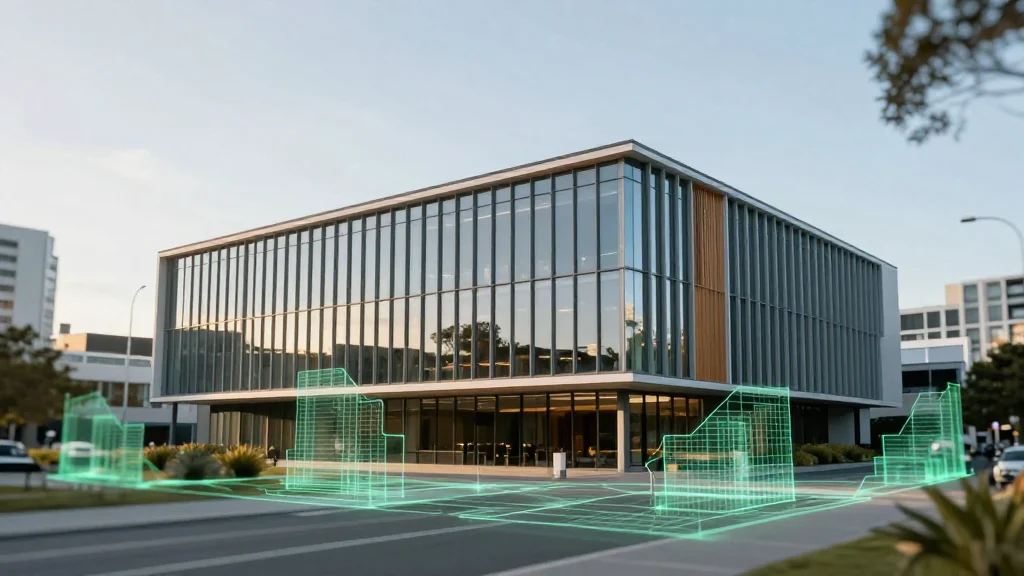
NZ’s Te Rua Project Shows 80% Emissions Cut and Halved Cost Overruns via Digital Twin

Why It Matters
The Te Rua digital twin demonstrates that advanced modelling can simultaneously address climate goals and fiscal discipline—two priorities that often compete in large infrastructure programs. By proving that emissions can be slashed by 80% while cutting contingency spend in half, the project offers a replicable template for other nations grappling with aging infrastructure and tightening carbon budgets. Moreover, the live‑asset approach transforms a static design artifact into a continuous performance engine, potentially redefining how facilities are managed over decades. If adopted widely, digital twins could reshape procurement standards, forcing contractors to deliver clash‑free models before breaking ground. This shift would raise the bar for design accuracy, reduce waste, and create new markets for software providers, data analysts, and AR hardware vendors. For New Zealand, the technology could accelerate progress toward its 2030 net‑zero targets while preserving the fiscal health of its $275 bn infrastructure pipeline.
Key Takeaways
- •Te Rua National Archives achieved an 80% reduction in operational carbon, equivalent to ~1,330 tonnes.
- •Construction contingency spend was limited to 5%, half the industry norm of up to 10%.
- •More than 20,000 assets are embedded in the digital twin for real‑time monitoring and predictive maintenance.
- •Phill Stanley, Dexus portfolio manager, highlighted the need for zero‑margin error in preserving national records.
- •The project’s success could influence upcoming hospital upgrades and other $275 bn (≈$165 bn USD) infrastructure projects.
Pulse Analysis
The Te Rua digital twin is a watershed moment for New Zealand’s construction sector, but its impact will be measured by how quickly the methodology spreads beyond flagship projects. Historically, New Zealand has lagged behind Australia and Europe in adopting BIM‑level digital twins, largely due to fragmented procurement processes and a conservative risk‑averse culture. Te Rua’s demonstrable cost savings—cutting contingency spend by 5 percentage points—provide a compelling financial argument that could overcome those cultural barriers.
From a market perspective, the success story creates a clear value proposition for software vendors like Autodesk, whose platform underpins many digital twin initiatives. Expect a surge in licensing activity and a wave of local integrators positioning themselves as specialists in clash‑free modelling and AR‑enabled construction. Simultaneously, the data‑rich twin opens opportunities for third‑party analytics firms to offer predictive maintenance services, turning a one‑off construction tool into a recurring revenue stream.
Looking ahead, the real test will be scalability. The Te Rua building is a single, high‑value asset with a clear mandate for precision. Replicating the same level of fidelity across a hospital network or a highway system will demand standardized data protocols, robust change‑management, and perhaps most critically, government‑backed incentives. If policymakers embed digital twin requirements into future tender documents, the technology could become a de‑facto standard, delivering the twin benefits of lower emissions and tighter budgets across the nation’s $275 bn (≈$165 bn USD) infrastructure pipeline.
NZ’s Te Rua Project Shows 80% Emissions Cut and Halved Cost Overruns via Digital Twin
Comments
Want to join the conversation?
Loading comments...