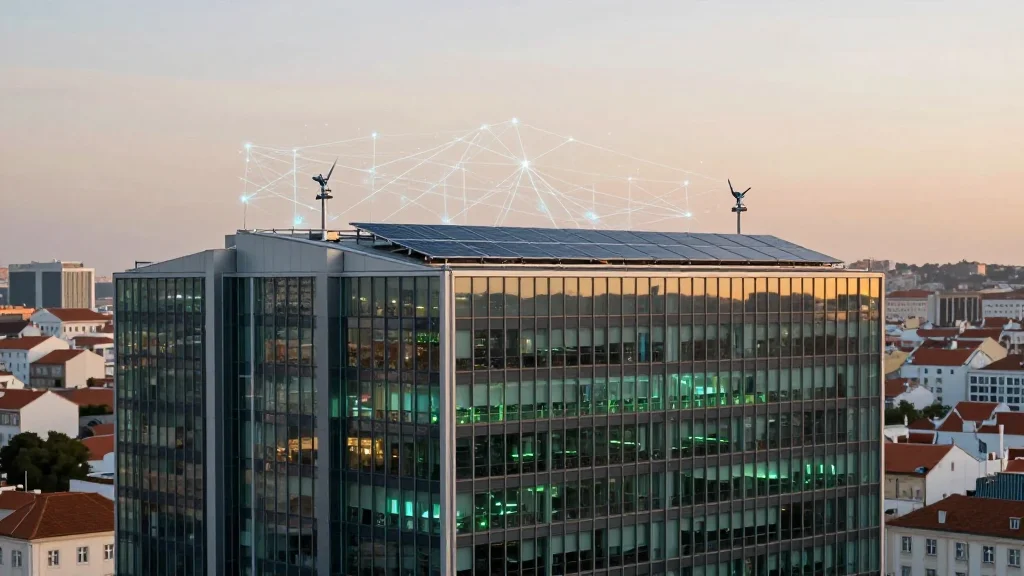
Portugal's Real Estate Shifts Focus From Buildings to Digital Infrastructure

Why It Matters
The redefinition of real‑estate as an infrastructure platform expands the addressable market for PropTech firms that provide AI‑driven asset management, energy‑efficiency analytics and digital connectivity solutions. Companies that can integrate data‑centre operations, smart‑grid management and tenant‑experience platforms stand to capture new revenue streams as investors seek assets with higher resilience and lower climate risk. For policymakers, the trend underscores the need to harmonize housing policy with infrastructure planning, ensuring that rapid digital expansion does not exacerbate affordability gaps. Aligning incentives for sustainable construction with support for high‑tech infrastructure could accelerate Portugal’s transition into a PropTech hub.
Key Takeaways
- •Portugal's real‑estate sector is pivoting from building‑centric to infrastructure‑centric investments
- •AI and digital infrastructure are becoming primary value drivers, eclipsing traditional location factors
- •Sustainability is now a core determinant of asset competitiveness
- •Portugal's renewable energy potential and geographic position attract high‑value infrastructure projects
- •Balancing infrastructure growth with urgent housing needs remains a key policy challenge
Pulse Analysis
The Portugal News piece captures a broader, global inflection point where real‑estate is morphing into a multi‑layered infrastructure ecosystem. Historically, property has been a static store of value; today, the convergence of AI, renewable energy and smart‑city technologies is turning assets into dynamic platforms that generate data, services and new revenue streams. Early‑stage PropTech startups that specialize in AI‑optimized energy management or modular data‑centre design can leverage Portugal’s favorable regulatory environment and renewable grid to test scalable models.
From a competitive standpoint, incumbents that have traditionally focused on brick‑and‑mortar development must either acquire or partner with technology firms to stay relevant. The speed of AI infrastructure rollout—highlighted by Lopes as unprecedented—means that market entrants who secure strategic locations with robust fiber and power capacity can lock in long‑term tenancy from cloud providers and fintech firms. Conversely, developers that ignore these shifts risk stranded assets as tenants prioritize connectivity and sustainability over mere square footage.
Looking ahead, the sector’s trajectory will likely be shaped by three forces: policy alignment, capital allocation, and talent pipelines. European Union funding for green and digital infrastructure could accelerate Portugal’s positioning, while private capital will chase assets that demonstrate clear ESG metrics and AI‑enabled operational efficiencies. Finally, a skilled workforce capable of integrating IoT sensors, AI analytics and renewable energy systems will be essential to translate the infrastructure vision into profitable, resilient portfolios. Stakeholders that anticipate and act on these dynamics will define the next generation of PropTech value creation.
Portugal's Real Estate Shifts Focus from Buildings to Digital Infrastructure
Comments
Want to join the conversation?
Loading comments...