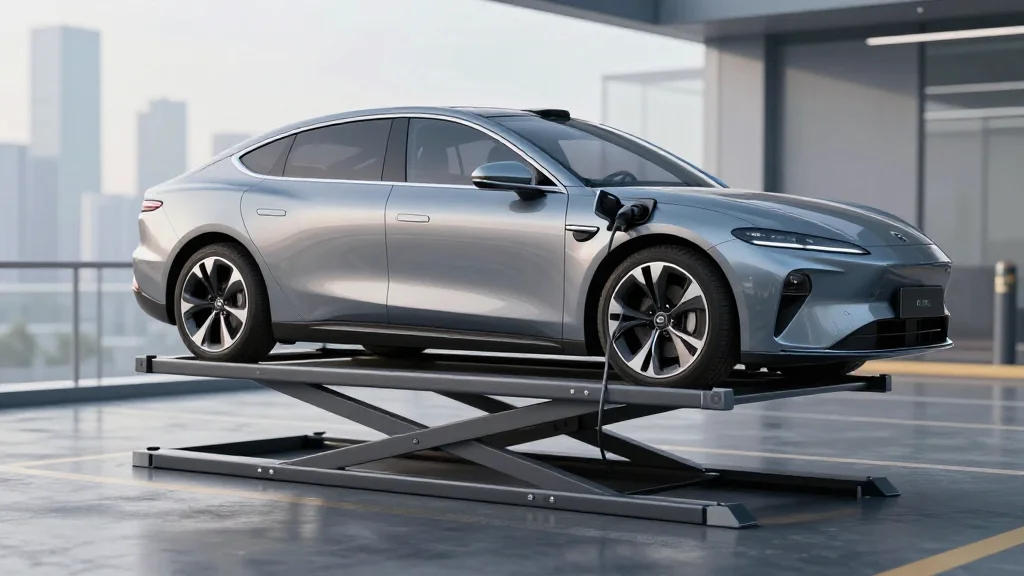
Raleigh’s Gateway Plaza Starts Building 228‑Space Automated Parking Garage

Why It Matters
The Gateway Plaza garage illustrates how cities can embed emerging mobility technologies into core infrastructure, reducing the need for later retrofits. By pairing automated parking with EV charging and a driverless‑ready design, Raleigh is positioning itself as a test market for smart‑city concepts that could be replicated nationwide. If the garage proves operationally efficient and attracts autonomous‑vehicle pilots, it could shift developer and municipal expectations, making robotic parking a standard component of new mixed‑use projects. This would free up valuable surface land for housing, retail, and green space, addressing urban density challenges while supporting sustainability goals.
Key Takeaways
- •Construction started on a 228‑space automated parking garage at Raleigh’s Gateway Plaza.
- •Robotic lift bays, supplied by AUTOParkit, include EV charging and driverless‑car readiness.
- •The garage tops a mixed‑use district with 1,400+ residential units, office, retail, hotel, and a K‑8 charter school.
- •Mayor Janet Cowell called the deck a "catalyst" for driverless‑car companies, indicating high‑level city talks.
- •Project slated for completion by the end of 2026, potentially becoming a regional smart‑mobility showcase.
Pulse Analysis
Raleigh’s decision to embed an automated, driverless‑ready garage within a large mixed‑use development signals a strategic shift from reactive to proactive urban planning. Historically, parking structures have been afterthoughts, added to accommodate vehicle growth. Here, the garage is the nucleus of the project, dictating the layout of residential, commercial, and public spaces above it. This inversion reflects a broader industry trend where mobility technology is shaping land use rather than the reverse.
The involvement of AUTOParkit, a firm with a national footprint, adds credibility and scalability to the concept. While no autonomous‑vehicle operator is currently signed, the city’s willingness to host such a hub reduces entry barriers for future pilots. If a driverless fleet were to launch from this site, Raleigh could collect valuable data on vehicle‑to‑infrastructure communication, charging demand, and user adoption—insights that are currently scarce in U.S. markets.
From a market perspective, the project may trigger a cascade of similar investments. Developers seeking to differentiate new projects will likely cite the Gateway Plaza as a benchmark, especially as investors increasingly demand sustainability and technology integration. Municipalities that lag in adopting such infrastructure could find themselves at a competitive disadvantage in attracting both residents and high‑tech firms. In short, the success—or failure—of this garage will be a litmus test for the viability of automated parking as a cornerstone of future smart‑city ecosystems.
Raleigh’s Gateway Plaza Starts Building 228‑Space Automated Parking Garage
Comments
Want to join the conversation?
Loading comments...