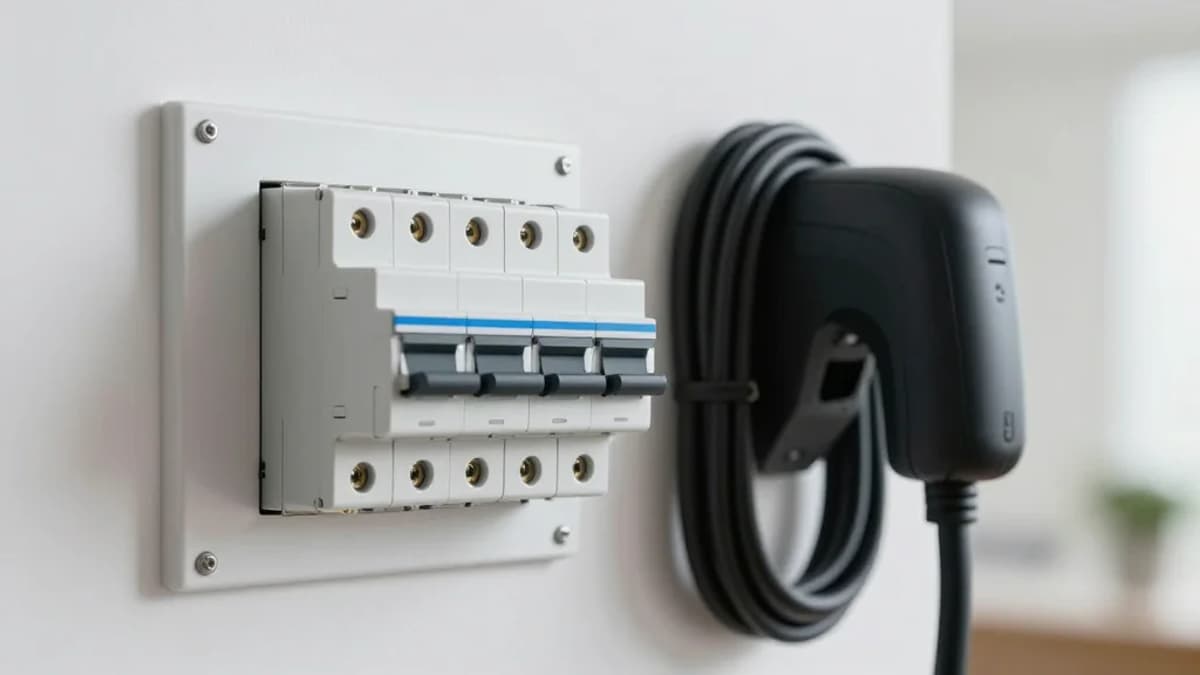
Span Looks to Cut Smart Panel Costs with $75M Eaton Partnership
•March 9, 2026
0
Why It Matters
By reducing hardware costs and leveraging Eaton’s distribution, the partnership could accelerate adoption of smart panels essential for managing growing residential electricity loads from EVs and heat pumps, shaping the future of home energy management.
Key Takeaways
- •Eaton invests $75M in Span to lower smart panel costs.
- •Smart panels priced $3,500, double traditional panels.
- •Partnership leverages Eaton’s distribution to accelerate residential adoption.
- •Joint solutions target EV chargers, heat pumps, home batteries.
- •Industry sees cost barrier; alternatives include smart meters, embedded controls.
Pulse Analysis
The rapid shift toward electric vehicles, heat‑pump heating and rooftop solar is straining legacy residential wiring. Conventional breaker boxes were never designed for the simultaneous, high‑power demand of modern appliances, prompting homeowners to face costly panel upgrades or utility‑scale infrastructure changes. Smart electrical panels, which combine real‑time load monitoring with remote control, promise to balance demand, defer grid upgrades and unlock new revenue streams for utilities. Yet their premium price—often twice that of traditional panels—has limited market penetration, leaving a gap that investors and manufacturers are eager to fill.
Eaton’s $75 million injection into Span marks one of the largest equity stakes in the nascent smart‑panel sector. Leveraging Eaton’s global manufacturing footprint, supply‑chain efficiencies and a dealer network that reaches millions of installers, the partnership is positioned to compress component costs and bring retail prices closer to the $1,500‑$2,000 range. In addition, Eaton’s AbleEdge digital circuit breakers will be bundled with Span’s panels, creating a unified hardware stack that can orchestrate EV charging, battery discharge and heat‑pump operation from a single interface. Joint solutions are slated for launch in the second half of 2026.
The collaboration signals a broader industry move toward integrated, software‑driven home energy management. While rivals such as Schneider Electric have exited the smart‑panel market, other players are betting on low‑cost smart meters or embedded controls within appliances to achieve similar outcomes. Analysts argue that a hybrid approach—combining affordable smart meters with dedicated panel hardware—may offer the best path to scale. If Eaton and Span can demonstrably lower total‑of‑ownership costs, they could set a new benchmark that accelerates residential electrification and supports utilities’ grid‑balancing objectives.
Span looks to cut smart panel costs with $75M Eaton partnership
0
Comments
Want to join the conversation?
Loading comments...