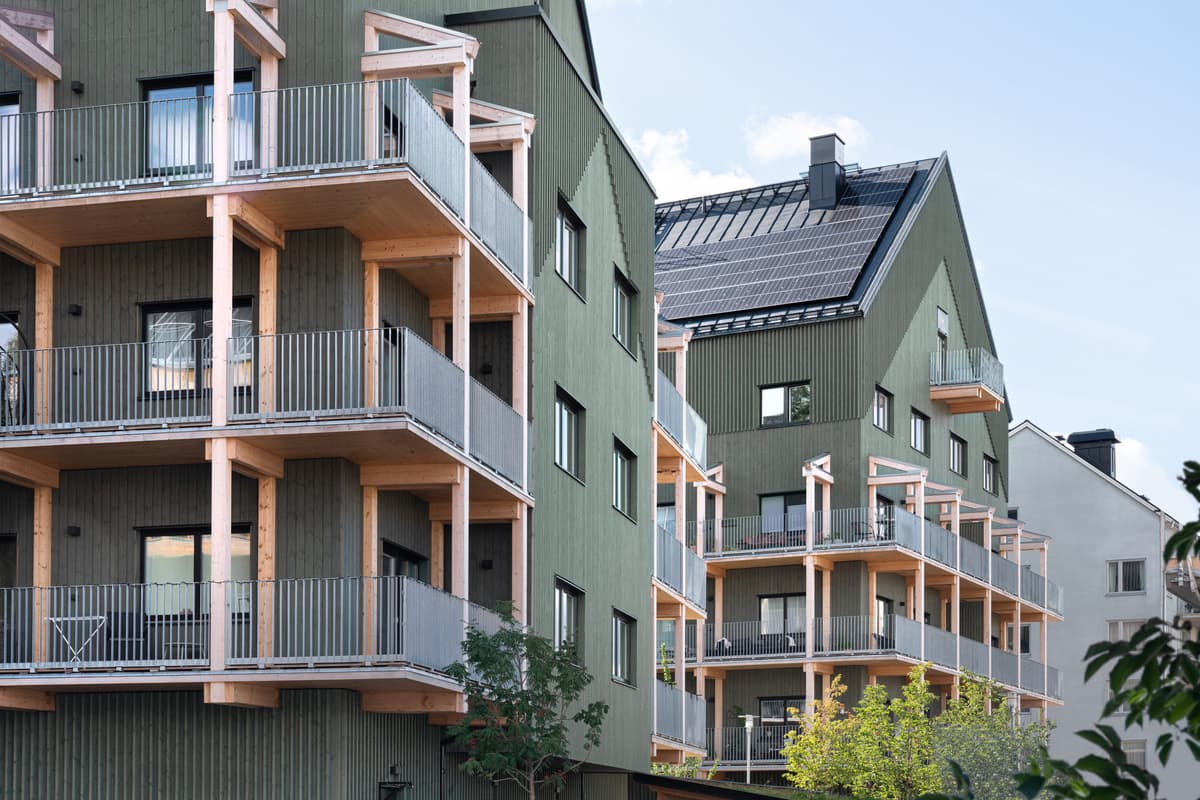
The Technical Reality of Mass Timber Housing: Five European Case Studies
Why It Matters
The shift to engineered wood offers a scalable path to lower‑carbon construction, accelerating sustainable housing delivery in dense cities and challenging sites.
Key Takeaways
- •CLT frames eliminate concrete from superstructure, cutting carbon emissions.
- •Modular timber grids create repetitive modules and regular window rhythms.
- •Protective envelope details mitigate moisture and thermal bridging.
- •Lightweight frames enable construction in tight urban sites with limited access.
- •Hybrid wood‑concrete systems address fire‑code height limits.
Pulse Analysis
Mass timber has moved from niche projects to a mainstream construction material across Europe, driven by stringent carbon‑reduction targets and supportive building codes. Cross‑Laminated Timber (CLT) and glulam panels offer up to 30 % lower embodied carbon than traditional concrete‑steel frames, while simultaneously sequestering carbon for the building’s lifespan. Governments such as Sweden’s and France’s have introduced incentives for low‑embodied‑carbon structures, encouraging developers to adopt prefabricated timber modules. This policy backdrop, combined with advances in engineered wood manufacturing, is reshaping the economics of multi‑family housing.
The five case studies illustrate how timber’s lightweight nature forces a distinct architectural logic. Prefabricated CLT grids produce clear, repetitive structural modules and regular window rhythms, while deep balconies, end‑grain sealants, and engineered joinery protect the wood from moisture and thermal bridging. Fire performance is achieved by designing timber members to char predictably, allowing structural cores to remain intact for prescribed periods. Hybrid wood‑concrete solutions, as seen in the Trévoux project, reconcile fire‑code height restrictions without sacrificing the carbon benefits of a predominantly timber envelope.
For developers, timber construction translates into faster build cycles, reduced foundation loads, and lower transportation costs, especially in dense urban sites where access is constrained. The Paris XII infill project demonstrates how a low‑mass timber frame can be maneuvered through a 3.5 m‑wide garage, unlocking otherwise unusable parcels. As the industry gathers performance data and insurance premiums adjust to proven fire safety, the United States is poised to import these European lessons, with several municipalities already revising codes to accommodate taller timber buildings. Continued material innovation and financing incentives will be pivotal in scaling mass timber to meet global housing demand.
The Technical Reality of Mass Timber Housing: Five European Case Studies
Comments
Want to join the conversation?
Loading comments...