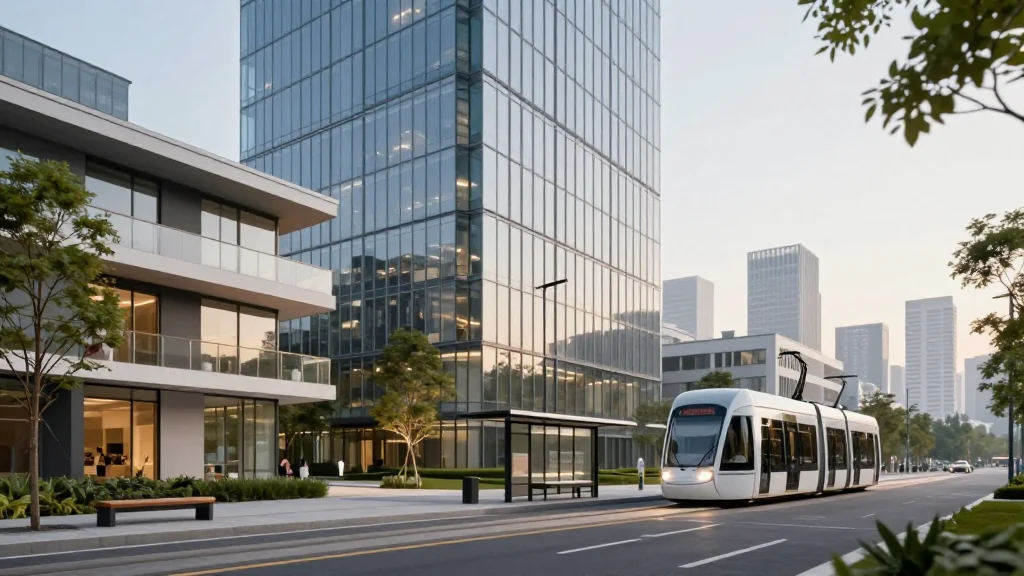
Urban Knowledge Campuses Redefine Corporate Real Estate with Multibillion‑Dollar Hubs


Why It Matters
The rise of urban knowledge campuses reshapes the proptech landscape by turning real estate from a static asset into a dynamic productivity platform. Integrated transit, smart building systems and mixed‑use amenities create a feedback loop that enhances employee performance, reduces commuting emissions and drives higher rents for developers who can deliver these experiences. For investors, the model signals a shift in capital allocation toward projects that blend technology, sustainability and community, potentially delivering stronger long‑term returns. For corporations, the campuses become a strategic lever in talent wars. By offering a seamless blend of work, life and mobility, firms can attract and retain high‑skill knowledge workers who value convenience and collaborative environments. This redefines location strategy from a cost‑of‑doing‑business decision to a core component of competitive advantage.
Key Takeaways
- •JPMorgan Chase’s 270 Park Avenue campus integrates office, retail, green space and a public plaza
- •One Vanderbilt creates a vertical neighborhood linked to Grand Central Terminal
- •London’s King’s Cross hub repurposes former rail yards for tech, media and creative firms
- •Survey of 1,200 knowledge workers links reduced commute to higher "life productivity"
- •Proptech tools—smart building, occupancy analytics, mobility platforms—are essential to campus operation
Pulse Analysis
The knowledge‑campus trend marks a convergence of real‑estate development, technology and talent strategy that could redefine urban economics. Historically, corporate headquarters were symbols of prestige, often isolated towers with limited public interaction. The new model flips that paradigm, embedding workplaces within the urban fabric and leveraging proptech to create responsive, data‑driven environments. This shift is likely to accelerate as firms seek to differentiate themselves in a tight labor market, especially in sectors where collaboration cannot be fully virtualized.
From a market perspective, developers that master the integration of transit, mixed‑use programming and smart infrastructure will command premium valuations. Traditional office REITs may see pressure to retrofit existing assets with similar capabilities or risk obsolescence. Meanwhile, technology vendors that provide seamless building‑to‑city data exchanges—such as real‑time transit updates, occupancy sensors and energy‑management platforms—stand to capture a growing slice of the proptech spend, which analysts estimate could exceed $30 billion globally within the next five years.
Looking ahead, the sustainability dimension will become a decisive factor. Campuses that achieve net‑zero targets and embed resilient design will not only meet regulatory expectations but also appeal to a workforce increasingly attuned to environmental impact. As the knowledge‑campus model matures, we can expect a cascade of secondary effects: higher urban density, reduced car dependency, and a rebalancing of city center versus suburban office demand. Companies that act now to embed these principles into their real‑estate portfolios will likely secure a competitive edge in both talent acquisition and operational efficiency.
Urban Knowledge Campuses Redefine Corporate Real Estate with Multibillion‑Dollar Hubs
Comments
Want to join the conversation?
Loading comments...