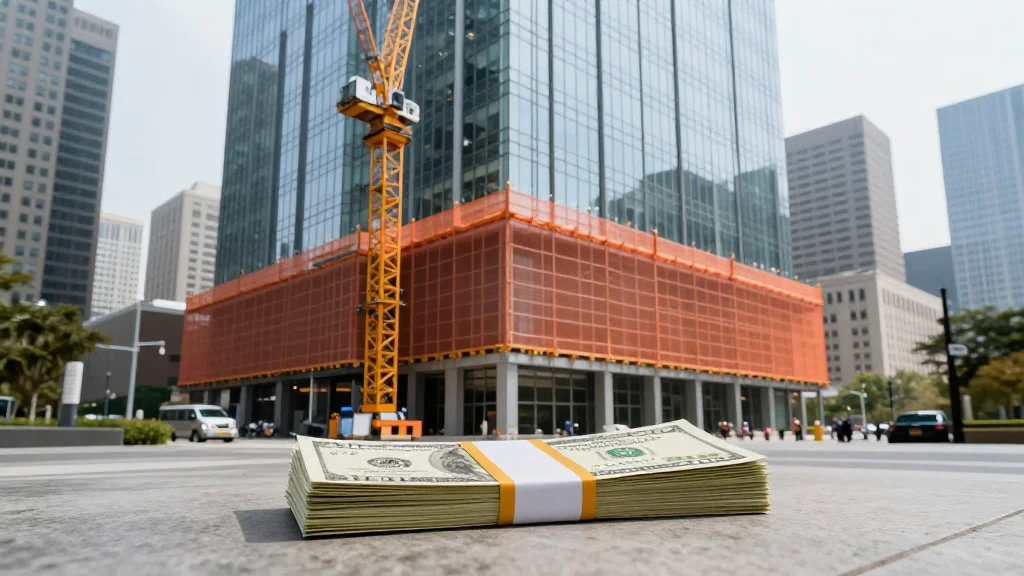
U.S. Office Building Prices Collapse Up to 90% as Distressed Sales Surge

Companies Mentioned
Why It Matters
The unprecedented discounting of office assets reshapes capital allocation across the real estate sector. Deep‑value investors can acquire prime locations at a fraction of historical costs, potentially accelerating the conversion of office stock into housing—a critical lever for addressing urban housing shortages. At the same time, lenders face heightened credit risk, prompting tighter underwriting standards that could constrain future financing for both distressed sales and new construction. For PropTech firms, the turmoil creates demand for tools that improve asset visibility, streamline due diligence, and enable fractional investment structures. Companies that can provide accurate, real‑time valuations and risk analytics stand to capture market share as investors seek data‑driven confidence in a volatile environment.
Key Takeaways
- •Chicago office tower sold for $4 M, down from $68 M a decade ago (≈90% discount).
- •Developer Asher Luzzatto purchased Denver Energy Center for $5.3 M after foreclosure.
- •Green Street reports high‑quality office assets down ~35% from peak values.
- •Over 90,000 apartment units are in the pipeline from office‑to‑residential conversions.
- •Nearly 1 M‑sq‑ft federal‑linked building sold at a fraction of its prior valuation.
Pulse Analysis
The current office price collapse is a symptom of structural shifts that began with the pandemic but have been amplified by rising interest rates and a slowdown in corporate hiring. Historically, office markets have rebounded after economic cycles, but the scale of today's discounts suggests a more permanent reallocation of space demand toward flexible and suburban locations. Investors with the liquidity to absorb losses are positioning themselves to own the future supply of mixed‑use and residential real estate, effectively rewriting the urban fabric.
From a competitive standpoint, the downturn levels the playing field for technology‑enabled platforms that democratize access to distressed assets. Fractional ownership services, AI‑driven valuation engines, and blockchain‑based title transfers can lower barriers to entry, allowing smaller investors to participate alongside traditional private equity firms. As the market consolidates, firms that can integrate these capabilities into a seamless acquisition workflow will likely become the preferred partners for both sellers seeking quick exits and buyers hunting for undervalued opportunities.
Looking forward, the trajectory of office valuations will hinge on macroeconomic policy and corporate real‑estate strategies. If inflation eases and credit conditions improve, we may see a modest stabilization of rents and a slowdown in price erosion. Conversely, a prolonged recession could push discounts deeper, prompting a wave of defaults that further depresses asset values. Stakeholders should monitor vacancy trends, financing terms, and policy signals closely, as these variables will dictate whether the current distress translates into a catalyst for long‑term transformation or a protracted period of market stagnation.
U.S. Office Building Prices Collapse Up to 90% as Distressed Sales Surge
Comments
Want to join the conversation?
Loading comments...