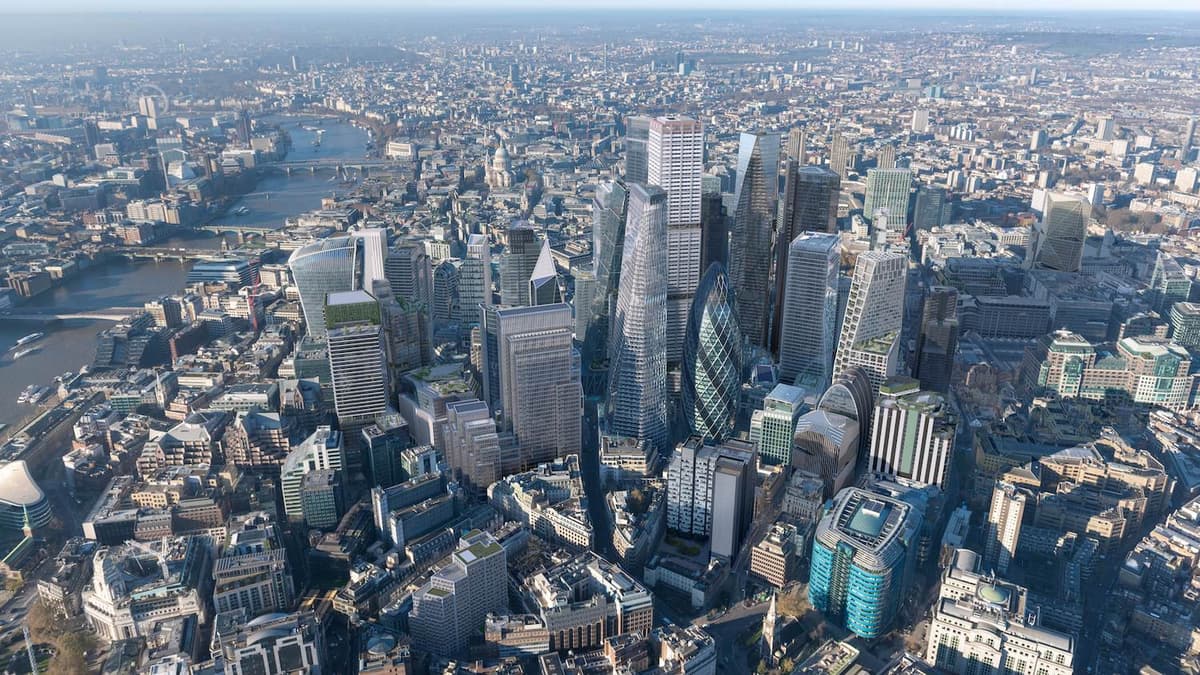
Video | CGI Maps Out London’s Changing Skyline
•February 19, 2026
0
Why It Matters
The projection signals a robust, high‑value office market in London, attracting global capital and shaping future investment and development strategies.
Key Takeaways
- •500k+ sqm office space approved, ~10 Gherkins
- •Half of approved space already under construction
- •Jan 2026 planning decisions up 84% YoY
- •Vacancy falling, prime supply extremely tight
- •Leasing activity strongest since 2019
Pulse Analysis
London’s financial core is entering a construction boom, as the City of London Corporation’s new CGI skyline illustrates. The visual aggregates every project cleared by planners in 2025, amounting to more than half a million square metres of office floor area—roughly the volume of ten Gherkin‑size towers. With half of that space already breaking ground, the pace of development outstrips many global peers, reflecting a surge in demand for high‑quality, amenity‑rich workplaces that can accommodate evolving work patterns.
For investors and developers, the data points to a market that remains exceptionally tight yet highly lucrative. Vacancy rates in the City’s core are declining, while prime office supply is scarce, driving leasing activity to its strongest level since 2019. The 84% jump in planning decisions for January 2026 versus the previous year highlights an accelerated approval pipeline, suggesting that capital is flowing swiftly into large‑scale, complex schemes. This environment reinforces the City’s reputation as a resilient hub capable of delivering projects at scale, even as global capital becomes more selective.
Looking ahead, the transformed skyline will not only reshape London’s visual identity but also influence broader economic dynamics. Increased office capacity could alleviate current scarcity, potentially stabilising rents and attracting new multinational tenants. However, developers must balance density with sustainability, integrating green building standards to meet regulatory expectations and tenant preferences. As the City adapts to changing work patterns, the forthcoming skyline will serve as a barometer for the health of the UK’s commercial real‑estate sector.
Video | CGI maps out London’s changing skyline
0
Comments
Want to join the conversation?
Loading comments...