Reveal: EDiscovery Hosting in a FedRAMP Environment
Reveal explains that eDiscovery hosting in a FedRAMP environment means deploying litigation support platforms on cloud infrastructure that meets the Federal Risk and Authorization Management Program’s security standards. While FedRAMP authorization is required for federal agencies and contractors, it does not guarantee the operational reliability needed for legal workflows. Technavio cites 99.9% system uptime as the benchmark for government cloud services, a threshold critical for uninterrupted document review. The article urges providers to look beyond certification and focus on continuous monitoring, recovery, and availability controls.

David Pemberton: Everlaw Prime Accelerates Public Records and FOIA Requests
Everlaw has launched Everlaw Prime, an end‑to‑end platform that streamlines public records and FOIA request handling for federal and state agencies. The solution replaces fragmented, manual processes with a unified intake, review, and e‑discovery workflow. By automating redaction and centralizing...

Dina Khemlani Hetherington: A DSAR Just Landed in Your Inbox. Now What?
A data subject access request (DSAR) arrives in a founder’s inbox, triggering a legal clock under UK GDPR and the Data Protection Act 2018. The request can come from any individual whose personal data a business processes—customers, employees, applicants, or...

Hanzo: A Guide to Marketing Compliance for Law Firms 2026
Hanzo’s 2026 guide highlights how law‑firm marketing has moved from traditional ads to a nonstop digital presence across websites, social media and AI‑driven interfaces. This digital shift makes content permanently visible and easily examined by regulators, competitors and the public....

Chuck Kellner and Kevin Clark, Everlaw: The Comprehensive Guide to Second Requests
Everlaw’s new guide explains how modern e‑discovery technology reshapes Hart‑Scott‑Rodino (HSR) Second Requests, which can stall multi‑billion‑dollar mergers. The piece highlights that traditional compliance timelines of weeks are now being compressed into days thanks to AI‑driven analytics and cloud‑based platforms....

Amanda Sabia, Relativity: Making Space: How Leaders Lift Others in Legal Tech
Amanda Sabia’s Relativity blog post draws a parallel between NASA’s Artemis II mission— which captured data at speeds 100,000 times faster than Apollo— and the rapid, data‑driven evolution of legal technology. She highlights how the mission’s diverse crew, especially the influx...

EDiscovery AI: AI in eDiscovery: Speed, Scale, and a Defensible Path Forward
eDiscovery AI’s latest article argues that artificial intelligence can move insight to the front of the eDiscovery workflow, delivering faster, scalable analysis while remaining defensible in court. Traditionally, teams wait until after massive data collection to identify key facts, inflating...

ACEDS Announces New Affiliate Partnership with Array
ACEDS, the leading e‑discovery certification body, announced an affiliate partnership with Array, a litigation‑support firm that leverages AI to manage data‑intensive disputes. Array provides end‑to‑end services—including eDiscovery, intelligent document review, court reporting, and paper discovery—across the United States, Canada, and...

Phil Favro, HaystackID: Getting Beyond Spreadsheets: Handling Structured Data Productions
The eDiscovery landscape is moving from a document‑centric view to treating electronic‑stored information (ESI) as structured data. Courts are increasingly ordering parties to produce relevant database content, such as relational tables, dashboards, and data‑warehouse extracts, rather than allowing avoidance through...

Hanzo: Why Contextual Search Matters in Modern eDiscovery Workflows
Contextual search is reshaping eDiscovery by connecting emails, chats, documents, and collaboration data rather than relying on isolated keywords. Traditional keyword‑based methods flood review teams with irrelevant hits, extending review cycles and increasing the risk of missed critical information. Hanzo’s...

David Pemberton, Everlaw: Digital Spoliation of Evidence: Risks, Rules, and Prevention
Digital spoliation—loss, alteration, or destruction of electronically stored information after a preservation duty—poses a major risk in modern litigation. Everlaw’s David Pemberton stresses that robust eDiscovery strategies must embed technical safeguards and clear legal‑hold procedures to avoid severe court sanctions....

Reveal: Legal Tech in the Public Sector: A Story of Transformation and Innovation
The Reveal report highlights how U.S. government legal departments are grappling with exploding electronic data volumes, heightened regulatory oversight, and aging IT infrastructure. A 2023 GAO study notes agencies struggle with records management and litigation readiness as staff mobility rises....

Carly Savar: Reliable by Design: What In-House Counsel Really Need From Legal Tech Partners
Carly Savar’s article argues that modern in‑house counsel must treat legal‑tech partners as extensions of their service team, not just vendors. The shift from a back‑office risk filter to a front‑line business ally demands rapid, reliable contract reviews and other...

Nathan Damweber: From Casebook to Copilot: Bridging Law’s AI Readiness Gap
Nathan Damweber highlights a widening gap between law schools’ curricula and the AI tools now integral to legal practice. He notes that most new associates can master substantive law but lack formal training to evaluate generative‑AI outputs. Interviews with 1L...

Cara Peterman, Courtney Quirós, and Charlotte Bohn: Can Opposing Parties See Your AI Prompts? Discovery Challenges in the AI Era
The article warns that generative AI tools used by employees to draft discovery responses can create discoverable evidence, including prompts, inputs, and outputs. In‑house counsel may unknowingly rely on external AI platforms, exposing internal strategies and data. Courts are beginning...

Sam Bock, Relativity: 3 Adversaries You Might Meet Negotiating an AI-Friendly ESI Protocol
Sam Bock’s Relativity piece warns that an AI‑friendly ESI protocol can make or break an e‑discovery project. He outlines three typical adversaries—opposing counsel, IT teams, and data custodians—who can complicate negotiations. The article stresses early collaboration between clients and technologists...

Reveal: Advanced ESI Analysis: Metadata, Timelines & Insights
Reveal’s guide stresses that effective electronic stored information (ESI) analysis starts with a clear investigative question, not indiscriminate data collection. It outlines a disciplined workflow: define custodians, date ranges, and sensitive categories, then preserve source data to protect metadata integrity....

Michael Gennaro: AI Is Outpacing the Systems Built to Govern It, Stanford Report Finds
Stanford’s 2026 AI Index reports AI adoption in nearly 90% of organizations and $286 billion in private investment, outpacing governance frameworks. The report shows U.S. software developer employment for ages 22‑25 dropped almost 20% since 2024, while older developers saw headcount...

Jon Campisi: Firms Need Capital to Pay for AI Tools. Could PE Investment Be the Solution?
Law firms, traditionally organized as cash‑distribution partnerships, often end the fiscal year with little retained earnings. This liquidity crunch hampers their ability to fund AI infrastructure or lease third‑party platforms, both of which demand significant upfront spend. Private equity firms...

While You Were Awai: EDiscovery Landscape Evolves
The eDiscovery field is shifting from email‑centric processes to a post‑email world dominated by collaboration tools like Slack, Teams and Discord. Legacy review platforms still treat chat threads as static, 24‑hour documents, breaking conversational flow and impairing search accuracy. This...

Agentic AI Liability: Managing Accountability in Autonomous Legal Workflows
Agentic AI is moving legal work from discrete, human‑driven tasks to autonomous, end‑to‑end workflows that can research, draft, and file without constant supervision. While firms retain full professional liability, the risk profile shifts from isolated output errors to systemic failures...

Elza Hayyat, Relativity: Hidden to Handled: Detecting Confidential Business Information in aiR for Review
Relativity has introduced a new Confidential Business Information (CBI) analysis type within its aiR for Review platform, leveraging generative AI to automatically surface sensitive data such as contracts, pricing models, and product roadmaps. The feature tackles the labor‑intensive, line‑by‑line review...

Hanzo: How to Preserve Slack and Teams Data Without Disrupting Workflows
Collaboration platforms like Slack and Microsoft Teams now hold critical business conversations, files, and decision‑making context, making them subject to legal preservation obligations. When litigation, investigations, or regulatory inquiries arise, companies must retain this data as electronically stored information (ESI)...

Lisa Willis: Florida’s AI Rules Signal New Era of Accountability for Lawyers
Florida has become a national frontrunner in regulating legal AI by issuing new Bar rules and court orders that mandate attorney oversight of AI tools. The directives cover everything from research platforms to AI‑generated court filings, insisting that technology assist...

Krishnan Nair: When Clients Learn to Love AI
Krishnan Nair observes that clients are increasingly turning to AI for quick legal answers and to streamline costly Big Law services. While AI can draft queries and provide preliminary research, it cannot assume liability for outcomes. The article argues that...

Reveal: From Costs to Gains: Measuring Legal Efficiency with AI eDiscovery
Reveal’s latest article explains how AI‑driven eDiscovery can turn legal operations from a cost center into a measurable profit driver. By embedding analytics that track review speed, workflow efficiency and risk mitigation, the platform gives corporate counsel concrete ROI data....

David Pemberton, Everlaw: Digital Spoliation of Evidence: Risks, Rules, and Prevention
David Pemberton’s Everlaw article warns that electronically stored information (ESI) is vulnerable to digital spoliation—loss, alteration, or destruction once a preservation duty arises. He outlines how courts can impose sanctions on parties that fail to safeguard relevant data. The piece...

Chris Wade, Cellebrite: The Myths of Claude Mythos and the Future of Digital Forensics: Evolution, Not Revolution
Anthropic unveiled Claude Mythos, touting autonomous vulnerability discovery and exploit creation, but the claims remain unverified. Access to Mythos is limited to a small group of defensive partners, including Apple, Google, Microsoft, and the Linux Foundation. Cellebrite’s Chris Wade counters...

Jae Um: In the AI Era, Coherent Investment Is the Cost of Entry
Jae Um argues that in the AI era legal services are becoming a utility rather than a discretionary tool, making coherent investment the baseline cost of entry. AI’s impact varies by user capability and is hard to measure, breaking the...

Navigating Career Pitfalls and Possibilities in an AI Era
The ACEDS webinar underscored that artificial intelligence is reshaping the legal sector, but human judgment remains indispensable. Panelists warned that the primary career risk is complacency, not job loss, and urged lawyers to master AI‑enhanced tools and workflows. They highlighted...

AI, Work Product, and the Protective Order Problem: What Morgan V. V2X, Inc. Means for Every Litigator
On March 30, 2026, a Colorado magistrate judge issued the most detailed federal ruling on AI‑generated work product in litigation, holding that Rule 26(b)(3) protects AI outputs created by a pro se plaintiff. The decision rejected the argument that using...
Riley Brennan: ‘Figuring Out How to Deal With This’: How Are Courts Grappling With Disciplining AI Hallucinations?
Courts across the United States are wrestling with how to discipline attorneys who rely on artificial‑intelligence tools that produce "hallucinations"—fabricated citations or erroneous legal arguments. Recent cases show a split approach: some judges have imposed formal reprimands, while others hesitate,...

Katie Pecho, Relativity: Scaling Smarter: An Energy Legal Team’s Progression to AI-Driven Work
AES Corporation, a global energy producer, began experimenting with generative AI for its legal department in 2022 after recognizing the technology’s potential. The company teamed with Relativity to build a scalable AI platform and enlisted strategy firm PLUSnxt to design...

Grace Herman, Reveal: Reveal Backs Private Deployment with a 50% Investment Increase as Enterprises Seek Data Control
Reveal announced a 50% boost in investment for its Private Deployment (RPD) solution, adding over 35 engineering and product specialists. The move enables regulated enterprises—financial services, government, healthcare—to run Reveal’s AI‑powered document review on their own infrastructure. Consilio is also...

Chris Finley, Opus 2: AI in Litigation: Use Cases, Advice, and Technology
Law firms are increasingly embedding AI into litigation workflows, moving beyond simple task automation to strategic insight generation. Early adopters gained a competitive edge, but the advantage is narrowing as AI tools become mainstream. Chris Finley’s Opus 2 article outlines how...

Marianna Wharry: UPL Claim Against ChatGPT Faces Hurdles, but Social Media Addiction Verdicts May Bolster Liability
Nippon Life Insurance Co. of America has filed a lawsuit against OpenAI, alleging that ChatGPT provided unauthorized legal assistance that generated 44 frivolous motions and $300,000 in legal costs. The complaint, lodged in the Northern District of Illinois, frames the...

Michael J. Epstein: No Forewarning Necessary? The AI Line the Courts Are Drawing—And Why It Won’t Stay Put
Gartner’s latest report warns that AI-related incidents are accelerating, with "death by AI" lawsuits projected to surpass 2,000 worldwide by the end of 2026. Traditional commercial policies are increasingly carving out AI liabilities, leaving firms exposed to costly claims. To...

Justin Smith, Everlaw: Morgan V. V2X, Inc. Decision Sets Precedent on AI Disclosure in Discovery
The U.S. District Court for Colorado issued a landmark protective order in Morgan v. V2X, Inc., requiring parties to disclose any use of generative AI on confidential discovery materials. The ruling addresses data‑privacy concerns rather than the traditional focus on...

ACEDS Australia & New Zealand: Lawyers, Not Just Adoption Technology
ACEDS Australia & New Zealand’s latest newsletter stresses that successful eDiscovery depends more on lawyer judgement than on technology adoption alone. As organisations rush to integrate generative AI, many still rely on outdated TAR‑era protocols, creating uncertainty around validation and...

HaystackID: Protecting Privilege and Work Product in Discovery After Heppner and Warner
Recent rulings in United States v. Heppner and Warner v. Gilbarco illustrate how courts are grappling with the intersection of generative AI and evidentiary protections. Heppner held that AI‑generated content, created without direct attorney instruction, is not shielded by lawyer‑client...

Exterro: The High Cost of Chaos: 5 Ways a Proactive Litigation Playbook Reclaims Your Budget
Exterro’s recent article highlights how unchecked litigation data can balloon costs, citing Marathon Petroleum’s experience of amassing 100 terabytes of largely redundant information. The legal‑ops leader, Greg Gruic, describes the unsustainable storage expense caused by preserving everything “just in case.”...

Petra Pasternak, Everlaw: Simplify DSAR Responses with Time-Saving Technology
Petra Pasternak of Everlaw warns that organisations are underestimating the growing cost and risk of data subject access requests (DSARs). Recent UK legislation – the Data (Use and Access) Act 2025 – together with updated ICO guidance and the Ashley...

Reveal: EDiscovery Deployment Options: Processing at Source Vs. Cloud
Reveal highlights that most litigation failures stem from poor data control rather than data scarcity. As data volumes surge and regulations tighten, organizations must choose between processing eDiscovery at source—on‑premises or private infrastructure—and migrating workloads to a shared or public...
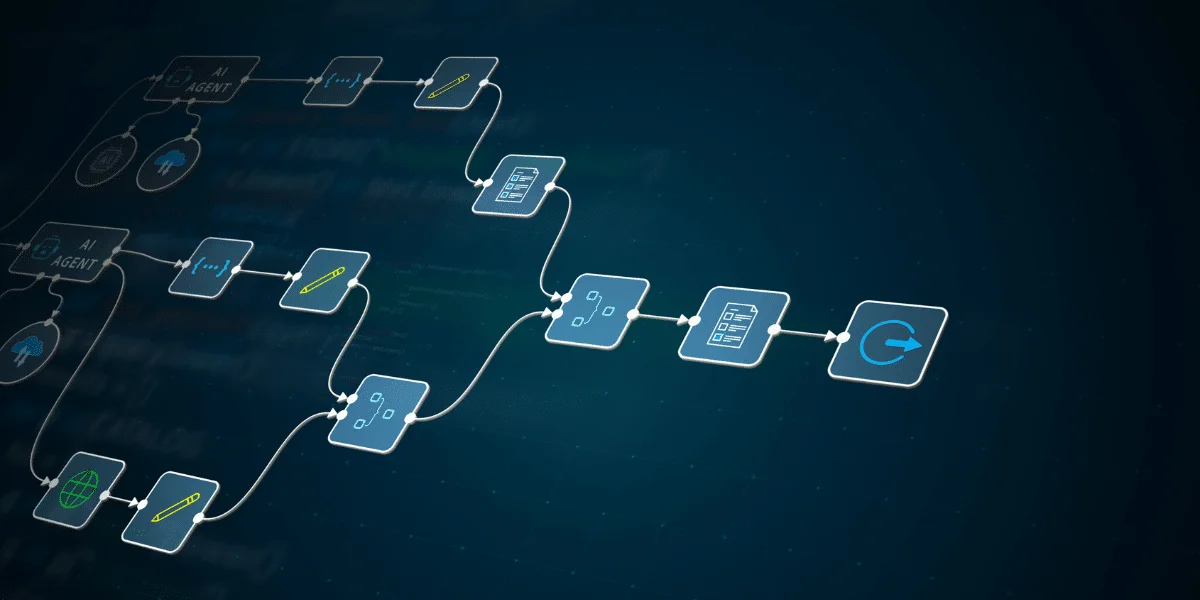
AI Vs. Automation in eDiscovery: What’s Different, What’s the Same, and Why It Matters Now
The article clarifies that AI and automation, while related, serve distinct roles in eDiscovery. Automation executes repeatable, rule‑based tasks such as legal‑hold notifications and workflow routing, whereas AI interprets data, classifies documents, and generates insights. Legal teams are urged to...

ACEDS Announces ChronoTracer as New Affiliate Partner
ACEDS announced ChronoTracer as a new affiliate partner via its Emerging Partner Program. ChronoTracer provides technology that structures evidence into searchable, chronological timelines, handling cases with tens of millions of documents and complementing existing e‑discovery platforms. The partnership reflects a...

Beyond the Judicial Panel: What Else Stayed With Us From Legalweek 2026
Legalweek 2026 opened with high‑profile keynotes before a judicial panel anchored the event in safety, independence and the rule of law. Throughout the week the conversation shifted from AI hype to disciplined governance, operational readiness and measurable client value. Attendees...

Exterro: Am I Ready to Bring Document Review In-House?
In-house legal teams face rising litigation, investigations, and tighter budgets, with document review consuming roughly 75% of e‑discovery costs. Over 70% of companies generating more than $1 billion in revenue already have or plan to acquire document‑review technology. Exterro argues that...

Justin Smith, Everlaw: How London & Naor P.C. Leveraged Everlaw to Deliver Big Results with a Small Team
London & Naor P.C., a boutique civil litigation and white‑collar defense firm in Oakland, used Everlaw’s cloud‑based e‑discovery platform to handle terabytes of data and complex cases with a lean staff. By leveraging Everlaw’s AI‑driven document review, analytics, and collaborative...

Opus 2 Empowers Law Firms to Extend Innovation Beyond Disputes with Its Adaptable, AI-Enabled Software Platform
Opus 2 announced that its AI‑enabled intelligent legal solution platform is now available to law firms beyond litigation, allowing them to design custom workspaces, trackers, and client portals. The adaptable platform combines structured data worksheets, collaboration portals, dashboards and AI...

Joe Calve: Judgment as a Service: The Business Model That Replaces the Billable Hour
Legal analyst Jordan Furlong predicts that AI will become the productivity engine for law firms, shifting lawyers from billable‑hour tasks to relationship‑building, empathy, advocacy, and judgment. Joe Calve argues that this shift creates a new business model—"Judgment as a Service"—where...