The Human First AI Compass for Hotels
Hospital operators are turning to artificial intelligence to offset chronic labor shortages and rising payroll pressure, but many adopt tools without a clear strategy. The article proposes an "AI Compass" that positions AI as a judgment‑amplifier rather than a replacement, emphasizing transparency and human oversight. It highlights how poorly explained AI can erode staff trust, increase fatigue, and destabilize revenue management. By reframing AI as a decision‑support system—especially for scheduling and pricing—hotels can boost capacity, protect guest experience, and retain talent while avoiding the hidden costs of automation.

AI for Small Hotels: What’s Different About Implementing AI in a 30-Room Property
The article outlines a practical roadmap for 30‑room independent hotels to adopt AI, emphasizing that their needs differ from large chains. It highlights that data capture, not coordination, is the primary hurdle and recommends starting with AI‑driven guest communication before...
From OTAs to AI Booking Agents: The New Travel Distribution Funnel
The travel‑distribution landscape is shifting from OTA‑driven search funnels to AI‑powered booking agents that interpret intent and make single‑step recommendations. OTAs once unified fragmented hotel inventory, but their comparison‑heavy model now creates choice overload and erodes traveler confidence. Generative AI...

The Vendor Problem: Why Most Hotel AI Advice Has a Conflict of Interest
Most hotel AI guidance is funded by vendors with a sales agenda, meaning conferences, webinars, white papers and consultants often have referral relationships that bias recommendations. Because AI tools evolve faster than evaluation frameworks, this conflict of interest can lead...
How to Reduce OTA Dependency Using AI: A Guide for Independent Hotels
Independent hotels rely on OTAs for 63.4% of bookings, paying 15‑25% commissions and facing double‑rate cancellations. AI is emerging as a direct‑booking catalyst, with travel assistants already handling 3‑5% of reservations and projected to reach 10‑15% by 2028. By optimizing...

What Is a Hotel AI Readiness Score? (And Why Every GM Should Know Theirs)
Hotel operators can now gauge their AI preparedness with the AIDURIX Hotel AI Readiness Assessment, which scores properties across five dimensions—strategic clarity, operational readiness, team capability, data maturity, and technology foundation. The assessment places each hotel in one of three...

Do Hotels Need an AI Policy, Regulations, or a Strategy? Why the Wrong Question Is Costing the Industry Its Future
Hospital operators are rushing to draft AI policies, but without a clear strategy the rules merely push AI use underground, creating shadow AI. The article argues that leadership must first define how AI will enhance guest experiences, staff productivity, and...

How to Start Using AI in Your Boutique Hotel: A Practical Guide That Actually Works
Boutique hotel owners recognize AI’s potential but struggle to begin because the real hurdle is decision‑making, not technology. The guide proposes a five‑step framework—cataloguing repetitive guest questions, building a consistent knowledge base, selecting a single use case, piloting the solution,...
The Hotel Concierge Is Not Being Replaced by AI. They’re Being Tested by It.
The article argues that hotel concierges are not being eliminated by artificial intelligence, but are instead being tested by it. It stresses that AI should serve as an amplifier of the concierge’s expertise rather than a replacement. When concierges own...
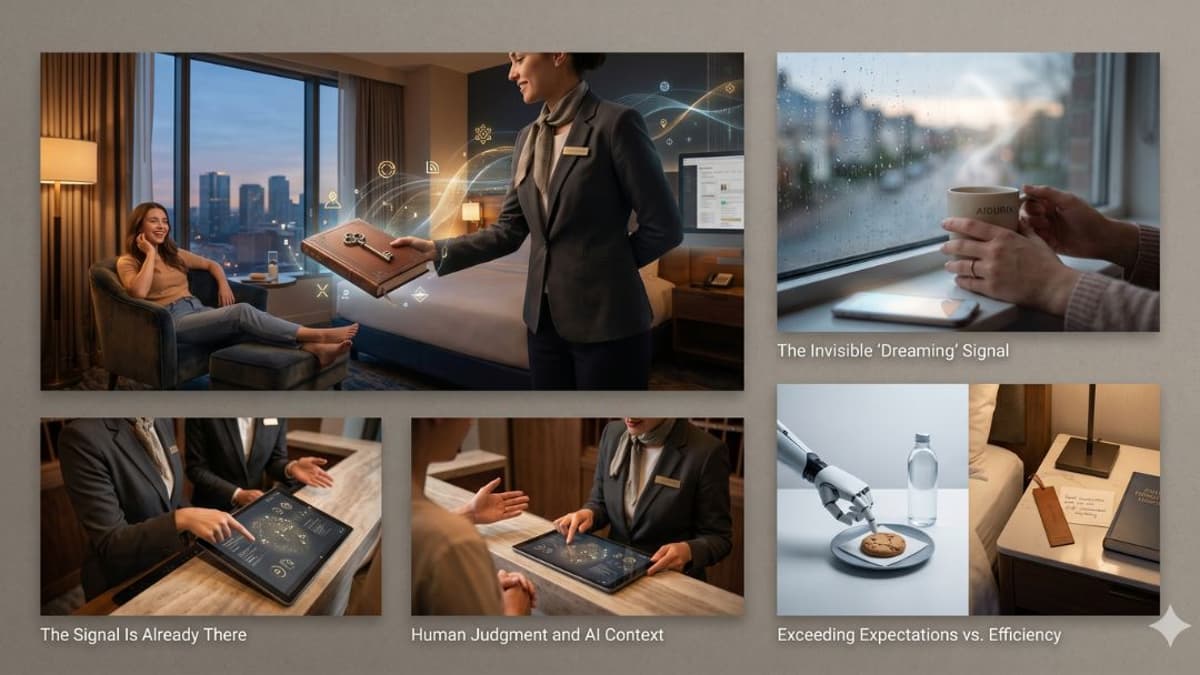
The Signal Is Already There. The Question Is Whether Your Hotel Is Listening.
The article argues that hotels are missing a critical early‑stage signal – the traveler’s dreaming and planning searches – and that capturing these insights can unlock true hyper‑personalization. By combining AI’s ability to aggregate thousands of subtle data points with...
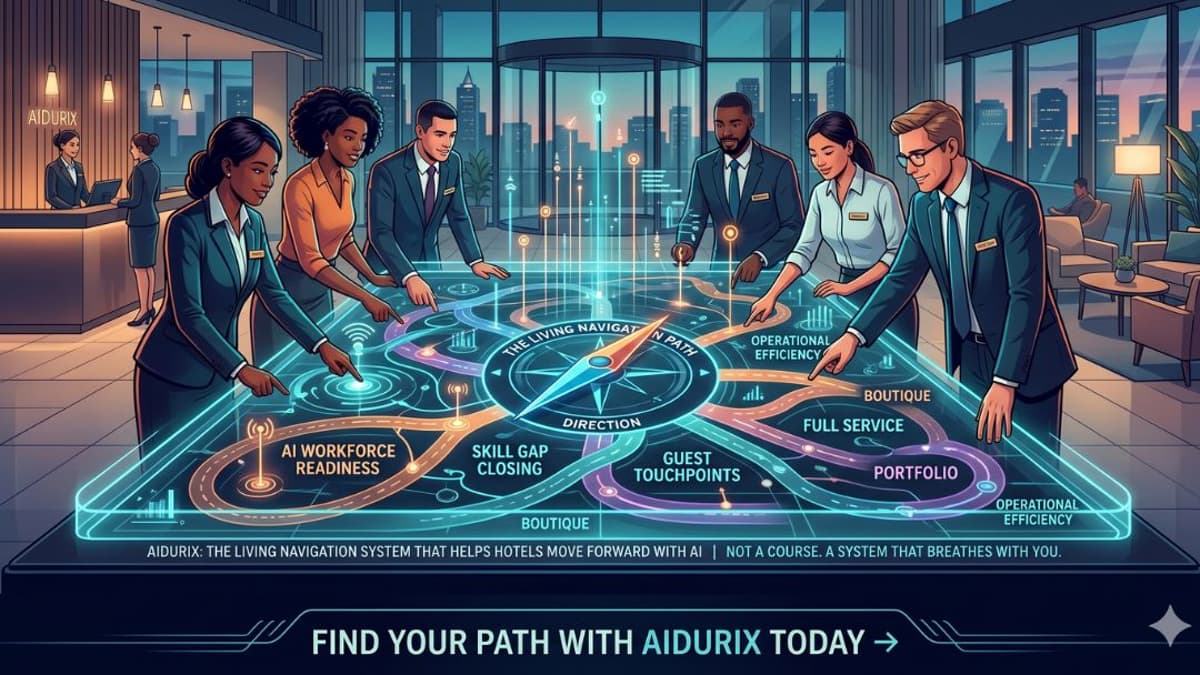
AIDURIX: The Living Navigation System That Helps Hotels Actually Move Forward With AI
AIDURIX launches a living navigation system designed to bridge the gap between AI ambition and practical adoption in hotels. The platform tailors AI roadmaps to each property's size, culture, and leadership capacity, emphasizing fair process and continuous reinforcement. By positioning...

AI Will Not Save Your Hotel, But It Will Decide What Hospitality Means Next
Hospitality’s long‑running digital transformation has optimized processes but failed to reshape guest experience. AI is now forcing hotels to question why existing workflows exist, shifting focus from efficiency to anticipatory service. Early adopters like Hilton and Marriott use AI to...

From Data to Foresight: How AI Is Rewiring the Way Hotels Collect Guest Intelligence
AI is reshaping hospitality by turning fragmented PMS, POS, CRM and IoT feeds into a continuous, predictive intelligence layer. The technology listens to guest interactions, external signals and operational data, delivering real‑time foresight such as churn risk or upgrade potential....

Unlock Hidden Hotel Revenue by Enhancing Accessibility and Guest Service
Hospital operators are being urged to treat accessibility as a revenue driver rather than a compliance checkbox. The article highlights that roughly half of hotels still make accessible booking difficult, creating friction that costs bookings. AI‑assisted scripts, clear online room...