

Tube Marking Printer PT1010 Powerup & Testing
The video walks viewers through the initial power‑up and basic configuration of the PT1010 tube‑marking printer, highlighting the device’s front‑panel controls and menu navigation. First, the operator presses the power button, accesses the main menu, and selects the appropriate tube diameter and length. After confirming the size, the USB port is used to link the printer to a computer, enabling software control and data transfer. The presenter then demonstrates loading a tube into the feeder, noting that the machine automatically advances the tube once inserted. A quick test print is executed, showing clear, legible markings and confirming that the printer’s firmware and connectivity are functioning as expected. Proper setup and verification reduce downtime and ensure consistent, traceable labeling on production lines, making the PT1010 a practical solution for manufacturers needing reliable tube identification.

Efficiency Starts Where You Are: Getting More Value From Automation You Already Have
The article argues that lasting efficiency gains in industrial automation start by fixing degraded automation, unstable process control, and poor data visibility before deploying new digital tools. Most losses stem from basic issues such as instrument drift, bypassed control strategies,...

ABB Releases IE6 Hyper-Efficiency Motors in New Sizes and Power Ranges
ABB has launched its IE6 Hyper‑Efficiency Synchronous Reluctance (SynRM) motors in large‑frame sizes ranging from 110 kW to 450 kW. The magnet‑free design eliminates rare‑earth metals, making the units fully recyclable and a direct drop‑in replacement for standard induction motors. ABB claims...

Why Platform Consolidation Pays Off
Manufacturers increasingly recognize that juggling multiple best‑of‑breed automation platforms drives hidden costs far beyond initial equipment spend. Training a single technician on five disparate systems can exceed $50,000, inflating a plant’s training budget to a million dollars. Consolidating onto a...

You Can't Manage What You Can't See: Network Management Strategies for Today’s Connected Industry
Manufacturers are merging IT and OT networks, requiring visibility beyond simple ping checks. Platforms like Hirschmann’s HiVision provide topology mapping and detect hidden devices, enabling faster troubleshooting. Bulk configuration, multivendor support, and intent‑based networking streamline management of thousands of endpoints...

EChem Expo 2026 Releases Full Conference Program
eChem Expo 2026 has released its full two‑day program, scheduled for April 8‑9 at the MeadowView Resort in Kingsport, Tennessee. The agenda features eight focused technical tracks—from Capital Effectiveness and Operational Excellence to Industrial AI and Workforce Development—delivering over 20 hours of...

How Emerson Applies Automation to Deliver Custom Pneumatic Valves Within 5 Days
Emerson’s Bonneville facility has digitized its entire valve‑making workflow, turning customer configurations into production‑ready CNC programs in about ten minutes and cutting manual engineering time by two to four hours. The system automatically creates 3D CAD models, machining instructions and...

Virtual PLCs Explained: Why Manufacturers Are Revisiting Their Approach to Controllers
Virtual programmable logic controllers (PLCs) run control logic in containerized software on standard servers, offering automatic failover and reduced downtime. By moving PLC functions to a software‑defined environment, manufacturers can develop, test, and validate code virtually before commissioning, cutting time...

How Software Licensing Transforms Industrial OEM Revenue: From Hardware Complexity to Recurring Profits
Industrial automation OEMs are abandoning costly hardware variants in favor of software‑driven product differentiation. By consolidating devices onto core platforms and licensing features, manufacturers can slash component, production, and support expenses. Modular licensing—flat‑rate, usage‑based, or hybrid—lets OEMs toggle capabilities, creating...

Why Even the Most Automated Factories Still Need the Human Touch
The article examines the rise of "lights‑out" or dark‑factory manufacturing, where robotics, AI, and machine‑vision enable production with minimal human presence. While high‑volume, low‑variability lines—such as Chinese EV plants—show impressive productivity gains, the piece warns that full automation falters in...

How to Blend OT Expertise with Custom Software Development
Industrial automation is moving beyond traditional COTS SCADA and MES platforms toward custom software that delivers richer user experiences and cross‑domain insights. This shift requires new capabilities such as UX design, DevOps pipelines, and API development that many OT teams...
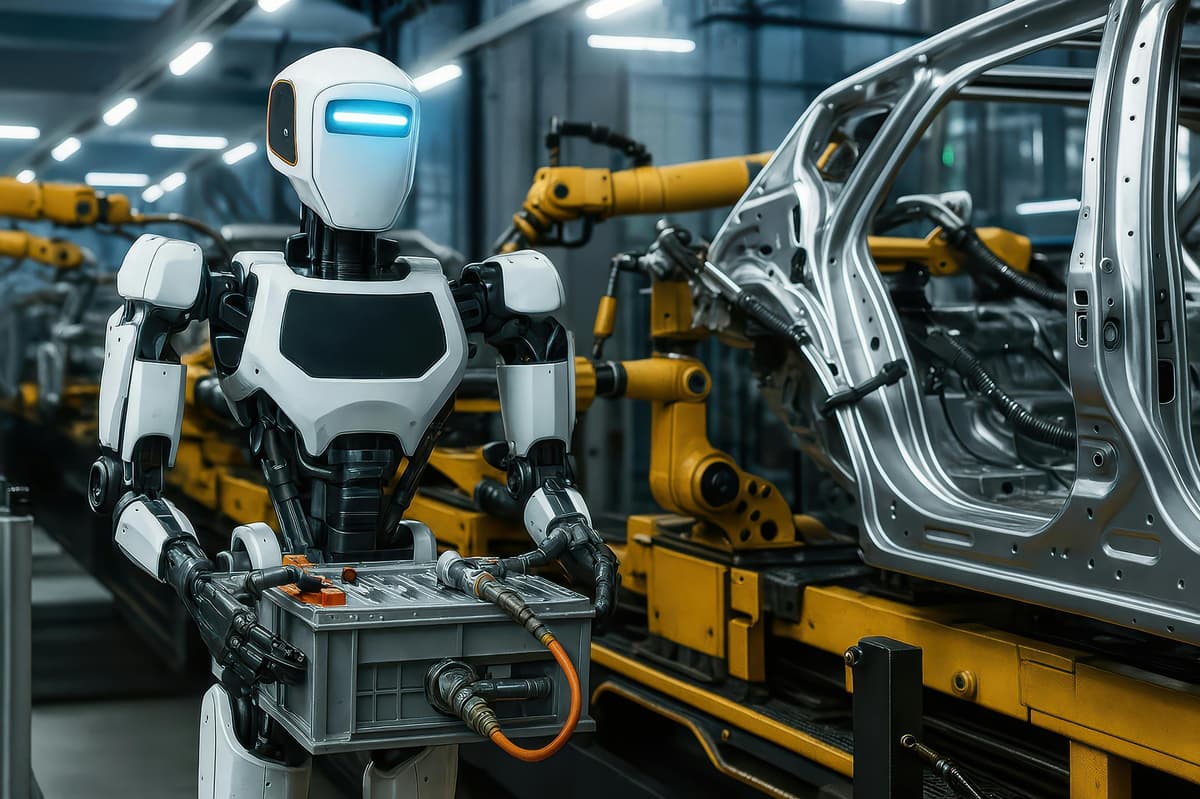
Why Humanoid Robots May Be the Wrong Bet for Industrial Automation
Humanoid robots captivate investors but inherit the human body’s stability, agility and durability limits. Their ~200 degrees of freedom create mechanical complexity that reduces uptime compared with 6‑DoF industrial arms. Safety assessments under ISO 13849‑1 show that preventing falls requires high...
How SCADA and Analytics Software Improve OEE
Manufacturers and OEMs are turning to integrated SCADA and analytics software to boost overall equipment effectiveness (OEE). Real‑time visibility into availability, performance, and quality replaces manual PLC checks and paper logs, enabling instant downtime tracking and quality monitoring. The combined...

How Automation Addresses Industry’s Worker Shortage While Improving Safety and Job Satisfaction
Manufacturers are turning to collaborative robots and machine‑tending automation to combat a persistent labor shortage. By moving workers from repetitive, ergonomically‑dangerous tasks—such as single‑cell welding or CNC loading—to supervisory roles across multiple cells, firms boost productivity and job satisfaction. Safety‑driven...

How to Integrate Decades-Old Modbus Devices Without Regret
Modbus remains the dominant industrial communication protocol, with the market expected to grow from $1.2 billion to $2.5 billion by 2033. Integrating legacy devices is cost‑effective using gateways, historians, or edge gateways, avoiding expensive rip‑and‑replace projects. Security must be addressed at the...