
To Ban or Not to Ban? UK Debates Age Restrictions for Social Media Platforms
The UK Parliament’s Science, Innovation and Technology Committee held a three‑round evidence session on imposing age‑restriction measures on major social‑media platforms, mirroring Australia’s recent Social Media Minimum Age Act. Advocates cited alarming parental polling – 93% deem social media harmful – and clinical data linking platform use to mental‑health crises, sexual exploitation and misinformation. Lawmakers debated whether to enforce a ban, a delay, or robust age‑assurance technology, while highlighting gaps in current UK Online Safety Act enforcement. International examples, especially Australia’s early‑stage rollout, were presented as a blueprint for a coordinated global regulatory effort.

Evaluations of Corsight Live Facial Recognition Follow Essex Police Trial
The UK Information Commissioner’s Office (ICO) audited Essex Police’s live facial recognition (LFR) system, confirming reasonable data‑protection compliance but highlighting ongoing accuracy and bias concerns. A National Physical Laboratory (NPL) evaluation of Corsight’s Apollo 4 software recorded an 89% true‑positive identification...

Sierra Leone’s ‘Brokers of Citizenship’ Recognized in Digital Identification Project
An academic study highlights the crucial role of local “brokers of citizenship” in Sierra Leone’s digital ID rollout. These intermediaries—chiefs, teachers, justices of the peace, and document brokers—facilitate enrollment, verification, and updates for underserved populations. While they enable legal identity...

Veriff, Prove, alongID Strengthen Executive Teams
Three digital‑identity leaders announced senior hires as enterprises pour capital into trust infrastructure. Veriff appointed Rob Brazier as Chief Product Officer to broaden its offering from pure ID verification to a continuous‑trust platform that includes biometric checks and reusable credentials....

Trump Cyber Plan Leaves Identity Gap Unresolved
The White House released a seven‑page cyber strategy that prioritizes offensive capabilities, zero‑trust architecture, AI security, blockchain protection, and deregulation, but it stops short of outlining a national digital identity framework. The plan frames cyberspace as a geopolitical battleground and...

South Korea Urged to Review Biometric Mandate for Mobile Phone Numbers
South Korea’s National Human Rights Commission has asked the Ministry of Science and ICT to reconsider its plan to mandate facial‑recognition authentication for all new mobile phone numbers, set to launch on March 23. The watchdog recommends three fixes: a...

Consultation Questions, Companies House Incident Highlight UK IDV Industry’s Fears
The UK government’s consultation on a national digital identity system omits private Digital Verification Service (DVS) providers, prompting the Association of Digital Verification Professionals (ADVP) to warn of data‑ownership and market‑distortion concerns. Simultaneously, a security breach at Companies House exposed...

Leaked Records and Smart Glasses Expose DHS Surveillance Drift
The Department of Homeland Security’s Office of Industry Partnerships (OIP) has formalized a pipeline that awarded over 1,400 contracts worth $845 million to more than 6,800 firms for AI‑driven biometric and video‑analysis tools. Leaked records show projects ranging from smartphone‑based fingerprint...

Zoom Expands Pindrop Deepfake Detection to Customer Service
Zoom is extending its partnership with voice‑biometrics firm Pindrop by embedding Pindrop Passport authentication and Pindrop Protect risk analysis into its Zoom Contact Center. The move adds real‑time deepfake detection, previously offered via Pulse for Meetings, to the platform’s customer‑service...

Pakistan Upholds Legal Acceptance of Digital ID with Official Guidance
Pakistan’s National Database and Registration Authority (NADRA) has issued official guidance confirming that its digital identity credentials, including the Pak ID, are legally equivalent to physical CNICs. Under the NADRA Digital Identity Regulations 2025, public authorities and service providers are...

Ambitious Biometrics Projects Need Clear Roles for Success
The UK government announced it will design and operate a national digital ID and wallet in‑house, reflecting growing public preference for state‑run solutions over big‑tech providers. Sweden is set to launch a government‑issued e‑ID that will rank highest under eIDAS,...

Who Holds the Keys to Digital Sovereignty? It Might Not Be Who You Think
At MOSIP Connect 2026 in Rabat, officials and tech leaders debated digital identity sovereignty, emphasizing the tension between cloud agility and national control. AWS showcased Outposts, a sovereign‑cloud rack for countries without a native region, while the UN’s UNICC introduced...

Spain’s Digital Transformation Ministry Backs Sybol with €500k
Spain’s Ministry for Digital Transformation, through the SETT agency, has invested €500,000 in Madrid‑based startup Sybol, which builds secure digital identity platforms based on international verifiable‑credential standards. The funding is part of a broader public‑private effort that exceeds €1 million and...

Ethiopia’s Digital ID Joins Sovereign Wealth Fund as Weekly Enrollments Reach 1M
Ethiopia’s Fayda digital ID program is enrolling roughly one million citizens each week, bringing total registrations to over 37 million and aiming for 90 million by year‑end. The initiative has been incorporated into Ethiopian Investment Holdings with a 10 billion‑birr authorized capital and...
UK Fraud Strategy Considers Business Digital Identity and IDV
The UK Home Office released the Fraud Strategy 2026‑2029, committing £250 million to combat fraud and cyber‑crime, with a focus on digital identity and biometric verification. The plan introduces a £30 million Online Crime Centre, tighter KYC for company directors, and a...

Turks and Caicos President Unveils Major Digital Transformation Agenda
Prime Minister Charles Washington Misick announced a $6 million, three‑year digital transformation agenda for the Turks and Caicos Islands. The plan includes a national Digital ID system slated for rollout this year, AI‑driven 24/7 threat detection, and a sovereign government network...

Deepfakes Force Enterprises to Rethink Cybersecurity
Enterprises face rising deepfake threats as generative AI matures, prompting a shift from simple detection tools to layered security strategies. Current detection systems achieve only about 80% accuracy and lack explainability, limiting legal and public trust. Vendors such as GetReal...

CBP Moves to Modernize Fingerprinting at National Scale
U.S. Customs and Border Protection is issuing a single‑source blanket purchase agreement to contract a nationwide electronic fingerprinting service for all employees, contractors and applicants. The contract, targeted at under $9 million, will require the vendor to operate collection sites, provide...

Dormakaba Splurges to Expand Biometric Access Control Market Reach
Swiss security leader dormakaba announced a strategic investment in U.S. access‑control platform SwiftConnect, adding to recent acquisitions of Vintech, Avant‑Garde Systems, RealSense and any2any. The move aims to create an open, interoperable network that links physical access hardware with identity...

Mantra Softech Taps $14M Investment to Accelerate Development
Mantra Softech, an Indian deep‑tech firm, secured $14 million in an initial funding round led by India SME Fund II and Motilal Oswal Principal Investments. The capital will fund AI‑enabled digital identity solutions, next‑generation biometrics, liveness detection, and a Centre of...

0% False Negative for Dermalog in NIST FRIF Identification Flats Evaluation
Dermalog announced that its fingerprint biometric algorithms achieved a zero false‑negative identification rate (FNIR) in the NIST FRIF Technology Evaluation Class B, while maintaining a false‑positive identification rate (FPIR) of ≤0.001. The company is one of only two participants to reach...

NIST Concept Paper Explores Identity and Authorization Controls for AI Agents
NIST’s National Cybersecurity Center of Excellence released a draft concept paper urging stakeholders to treat software and AI agents as identifiable entities within enterprise identity and access management systems. The paper proposes adapting existing IAM standards—such as OAuth, OpenID Connect,...

Age Assurance Community Sets New Goals with Standard Published and Use Exploding
The Global Age Assurance Standards Summit 2026 will focus on practical deployment of age‑verification, estimation and inference technologies, building on the newly published ISO/IEC 27566‑1 standard. The draft summit communiqué adds a sixth principle—Human Rights and the Best Interests of...

Bunnings Introducing Facial Recognition to 42 New Zealand Stores
Bunnings will deploy facial recognition technology (FRT) across its 42 New Zealand stores, beginning with a mid‑April pilot at two Hamilton locations. The rollout follows a surge in retail crime, with the retailer reporting a 9.5% rise in threatening incidents and...

Egypt Pilots Selfie Biometrics to Streamline Access to Digital Govt Services
Egypt has launched a pilot of the MOIEG-PASS app, a selfie‑biometric platform that combines national‑ID scanning with facial recognition to authenticate users for select government services. The initiative is a joint effort by the Ministries of Interior and Communications and...

Anonyme Labs Partners with Utah Valley University to Introduce Student Digital Wallet
Anonyme Labs has teamed with Utah Valley University to launch a pilot digital wallet that stores student IDs and other academic credentials as verifiable credentials. The solution leverages Open Badges 3.0, OpenID4VC and DIDComm protocols, allowing cryptographically secure sharing from smartphones....

EU Kicks Off Panel Discussions on Social Media Age Restrictions
On Thursday the European Commission convened its first expert panel to discuss age‑restriction policies for social media, gaming, messaging apps and AI. Simultaneously, the EU is piloting its privacy‑preserving Age Verification app in five member states—Denmark, Greece, Spain, France and...

EU Can Rein in AI Agents with EUDI Wallets and Business Wallets: WE BUILD
The WE BUILD consortium urges the EU to adopt a coordinated framework that embeds AI agents within the European Digital Identity (EUDI) and Business Wallet ecosystems. By leveraging verifiable credentials and cryptographic signatures, the proposal aims to secure agentic commerce—transactions...

Indonesia to Ban Under-16s From Social Media, Implement Standard-Based Age Checks
Indonesia will ban social‑media access for users under 16, deactivating accounts on Facebook, Instagram, TikTok, X, Threads, YouTube, Bigo Live and Roblox starting March 28. The policy follows the 2025 Regulation No. 17 on electronic system governance and aligns the country with...
Biometrics Back Digital Government Gains Around the World
Biometric technologies are accelerating digital government transformations worldwide, highlighted by the OECD’s latest Digital Government Index showing strong gains for countries such as Portugal and Chile. The University of Cambridge launched a Digital Identity Regulatory Programme backed by the Gates...

MOSIP Delves Into Biometric Data Quality Considerations
At MOSIP Connect 2026 in Rabat, the open‑source tool openbq was unveiled as the MOSIP implementation of the BQAT biometric quality investigation platform. The launch highlights MOSIP’s focus on biometric data quality, especially for brownfield migrations where legacy data can...

Scotland Explores Non-Biometric IDV for ScotAccount
Scotland’s ScotAccount digital identity platform is broadening verification beyond biometrics by introducing knowledge‑based verification (KBV) and tapping alternative public‑sector data sources. Existing alternatives such as landline‑based two‑factor authentication for older users, the Young Scot NEC, and a CivTech‑sponsored vouching pilot already...

Florida House Passes Bill to Relaunch mDL Program
Florida’s House of Representatives approved HB 543, a sweeping transportation package that includes provisions to revive the state’s mobile driver’s license (mDL) program. The bill, passed 107‑1, introduces strict data‑privacy safeguards, limiting how businesses can use digital ID information and requiring...
Fourthline, GLEIF and AU10TIX Appoint New C-Suite Leaders
The digital‑identity market is reshaping its leadership as Fourthline, GLEIF and AU10TIX announce new C‑suite appointments. Fourthline named Paul Stoddart CEO to drive geographic and vertical expansion amid the upcoming EU AMLR. GLEIF created a combined Chief Operating and Financial...
Shanghai Launches Cross-Border Digital Authentication for Foreign Business Registration
Shanghai has rolled out a cross‑border digital identity platform that enables foreign firms, starting with Singaporean investors, to register online. The new system replaces paper‑heavy notarisation with distributed identifiers, verifiable credentials and blockchain checks, shrinking registration time from a week...

Network International Seals Deals to Streamline Digital Payments in Egypt, Libya
Network International announced two strategic deals to deepen its footprint in North Africa. In Libya, it partnered with Al Seraj Islamic Bank to deliver an end‑to‑end digital payments platform, Visa sponsorship and prepaid issuing capabilities. In Egypt, the firm enabled...

Iran’s Authorities Using NtechLab’s Live Facial Recognition to Crush Dissent
Iranian authorities have integrated Russia’s NtechLab FindFace facial‑recognition system into a live surveillance network, accessed through local partners Rasad, Kama and BPO. The technology is deployed in Tehran’s university entrances, Mashhad’s subway, and other public venues to identify and detain...

Idemia Public Security, Proof Partner on Single Portable Digital Credential
Idemia Public Security and Proof have announced a strategic partnership to launch a verifiable digital credential (VDC) that merges biometric verification with PKI‑based digital signatures. The solution delivers a single, portable credential that is user‑controlled, privacy‑preserving, and revocable, leveraging selective...

HID Debuts Cloud‑based Visitor Verification System for Healthcare
HID Global unveiled a cloud‑based visitor verification platform at HIMSS 2026, designed for hospitals to authenticate and track visitors in real time. The solution integrates directly with major electronic health record systems such as Epic and Oracle Health, enabling photo capture,...

Liberia Govt Agencies Agree on Framework for Refugee Biometric ID
Liberia’s Refugee Repatriation & Resettlement Commission, National Identification Registry and Immigration Services have signed a Memorandum of Understanding to create a biometric identification framework for refugees, beginning with Ivorian nationals. The agreement operationalises President Joseph Boakai’s Executive Orders 144 and...

Cambridge Launches Initiative to Align, Improve Digital Identity Regulations
The University of Cambridge has launched the Cambridge DPI Regulatory Programme to help governments align digital identity regulations. The initiative, led by the Cambridge Centre for Alternative Finance and its spinoff Financial Innovation for Impact, will produce four reports and...

South Korea, Australia, Portugal Top OECD Digital Government Index for 2025
The OECD’s 2025 Digital Government Index (DGI) places South Korea at the top with a 0.95 composite score, followed by Australia (0.88) and Portugal (0.86). Korea is the only nation to break the 0.9 threshold across all six assessment categories,...

Preview of UK DVS Trust Framework 1.0 Shows What ‘Good Digital Identity Looks Like’
The UK government has released a pre‑release of Digital Verification Services (DVS) Trust Framework 1.0, superseding the Digital Identity and Attributes Trust Framework for business readiness. The new framework aligns formally with the Data (Use and Access) Act 2025 and...

Swiss E-ID Delayed to December, Renewed Focus on Security and Trustworthiness
Switzerland’s e‑ID programme, which barely passed a referendum with 50.39 % support, has been postponed to December 2026 to address security and trust concerns. The delay follows criticism over encryption gaps and data‑privacy safeguards, prompting new requirements such as a public register...
Ireland to Digitize 100% of Key Digital Public Services by 2030
Ireland aims to digitise 100% of its key public services by 2030, leveraging a Life Events approach that groups services around citizen milestones. The Digital Public Services Plan 2030 outlines 20 objectives and 90 deliverables, targeting 90% digital uptake for...

Japan Opens My Number Card to Private App Integration by Toshiba in Digital ID Shift
Japan has authorized Toshiba Digital Engineering to install private‑sector applications in the unused space of the My Number Card’s IC chip, turning the national ID into a platform‑style digital identity. The move allows regulated businesses to run services on the...

St. Lucia Launches Authentication Framework to Ease Access to Digital Public Services
St. Lucia has unveiled the National Authentication Framework (NAF), a centralized digital identity system that provides a single sign‑on experience for accessing public services through the DigiGov portal and a forthcoming mobile app. The first phase targets citizens and legal...
Next Steps in Papua New Guinea’s DPI Rollout Include Digital ID for KYC, AI Adoption
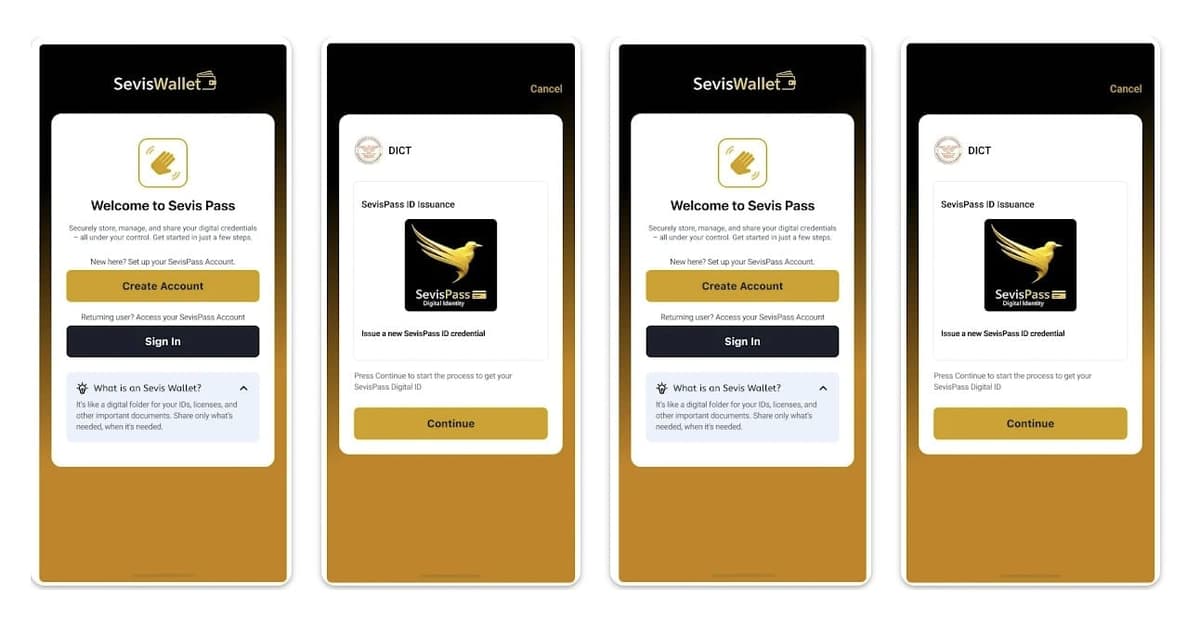
Papua New Guinea is advancing its digital public infrastructure (DPI) with a pilot that uses the SevisPass digital ID and SevisWallet app to enable remote KYC for online bank account openings, led by MiBank and the government. The rollout is...

Patent Lawsuit Challenges DHS Deployment of Integrated Biometric Surveillance Tools
SecureNet Solutions Group, a Florida‑based patent assertion firm, has sued the Department of Homeland Security (DHS) in the U.S. Court of Federal Claims, alleging that DHS agencies infringed five of its surveillance patents. The complaint links the patents to DHS’s...

Incode Aces iBeta Level 3 Biometric PAD Test for Both iOS and Android
Incode’s Deepsight liveness detection software passed iBeta’s Level 3 presentation‑attack detection tests on both iOS and Android, achieving zero errors for APCER and BPCER. The evaluation, based on ISO/IEC 30107‑3, involved 900 sophisticated attacks, including advanced masks and AI‑generated faces. Incode previously...