
Arts at CERN and Nobel Prize Museum Announce the Collide Stockholm International Residency Award Recipient and Two Honorary Mentions
Arts at CERN and the Nobel Prize Museum have selected Lithuanian artist Emilija Škarnulytė as the Collide Stockholm residency award winner, with Morehshin Allahyari and Wendi Yan receiving honorary mentions. The open call attracted 908 applications from 89 countries. Škarnulytė will spend one month at CERN and one month at the Nobel Prize Museum in autumn 2026, developing work that probes invisible particle‑physics infrastructure and the museum’s narrative of scientific discovery. The residency underscores a growing partnership between high‑energy physics and contemporary art.
CERN’s Medipix3 Technology on Track to Help More Patients
Medipix3, a hybrid pixel detector technology originally created at CERN, now powers MARS Bioimaging’s portable photon‑counting CT scanner for upper‑limb imaging. The scanner received FDA 510(k) clearance, allowing it to enter the U.S. health market and expand clinical adoption. Photon‑counting...
ATLAS Sets Record Limits on Higgs Boson’s Self-Interaction
The ATLAS experiment has released its most stringent limits yet on the Higgs boson’s self‑coupling, using the full Run 2 dataset and a partial Run 3 sample that together exceed 300 inverse femtobarns of proton‑proton collisions. By focusing on the “golden” HH→γγbb̄ decay...
ATLAS Acts as a Cosmic-Ray Laboratory
The ATLAS experiment at CERN performed its first proton‑oxygen collisions in July 2025, recreating cosmic‑ray interactions with Earth’s atmosphere. By tracking charged particles from these collisions, ATLAS measured production rates, multiplicities, energies and angular distributions with a few‑percent precision. The...
CMS Looks Deep Inside Quarks
The CMS experiment at CERN has examined proton‑proton collisions to test whether quarks possess an internal substructure. By analyzing the angular distribution of dijet events from LHC Run 2, researchers probed distances as small as 10⁻²⁰ metres. The data showed no deviation...
Inclusion Matters: CERN’s New Participatory Inclusion Initiative
CERN has launched “Inclusion Matters,” a five‑year Diversity & Inclusion programme that follows the 2025‑ending “25 by ’25” effort. The new initiative commits to delivering 50 concrete inclusion actions between 2026 and 2030, roughly one each month, with a focus...
Accelerator Report: Excellent Performance at the LHC
The Large Hadron Collider (LHC) reached its nominal Run 3 intensity of 1.8 × 10¹¹ protons per bunch, completing the ramp‑up phase in March. After a week of record‑high luminosity, the machine entered a three‑week low‑μ run aimed at reducing pile‑up for high‑precision...
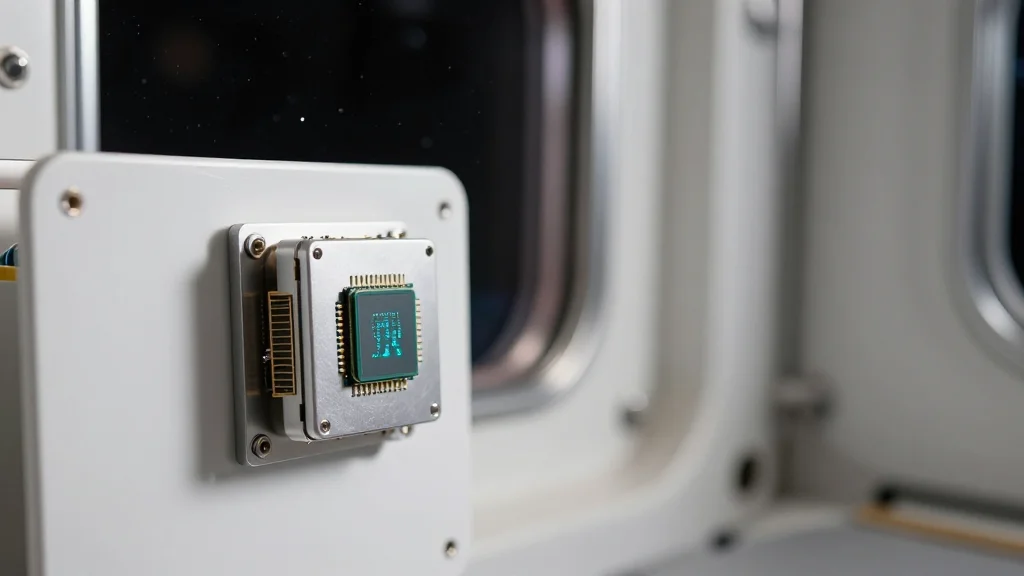
CERN Timepix Chips Fly to the Moon
Artemis II launched with six CERN‑developed Timepix chips integrated into NASA’s Hybrid Electronic Radiation Assessor (HERA) system. The detectors will monitor real‑time radiation composition, intensity, and energy as the crew passes through the Van Allen belts and encounters galactic cosmic rays....

Chile Becomes an Associate Member State of CERN
Effective 2 April 2026, Chile became an Associate Member State of CERN, following ratification of the 2025 Associate Member Agreement and accession to CERN’s privileges and immunities protocol. The new status grants Chile representation on the CERN Council, Finance Committee and Scientific...
Accelerator Report: HiLumi LHC Beam Reliability Runs Pave the Way to the Future
The LHC injector complex completed its LIU upgrades during LS2, boosting beam brightness and nearly doubling intensity to meet High‑Luminosity LHC requirements. In 2026, dedicated reliability runs in the SPS demonstrated that the upgraded machines can deliver nominal HiLumi parameters,...

Watch ESA Astronaut Sławosz’s Talk at CERN
On 12 March, ESA astronaut Sławosz Uznański‑Wiśniewski delivered a talk at CERN about his 26 June‑14 July 2025 stay aboard the International Space Station. He detailed the Ignis mission, a Polish‑led scientific program conducted with ESA, and explained how a CERN‑developed space‑radiation monitor was installed...
13 New Projects at CERN Funded by Europe in 2026
CERN has secured European Union Horizon Europe funding for 13 new projects slated to start in 2026, with the laboratory leading coordination of five flagship initiatives: ATTRACT EXPAND, EPITA, iRIS, PRISMAP+ and RADNEXT 2030. ATTRACT EXPAND will channel support to 30 high‑potential technologies...
CERN to Host Flagship European Open Access Publishing Platform
CERN will host the Open Research Europe (ORE) platform beginning autumn 2026, providing the technical backbone for a five‑year pilot. Initiated by the European Commission and backed by research funders from eleven CERN member states, ORE expands beyond Horizon 2020/Europe to any...
CMS Strengthens the Case for Toponium
The CMS Collaboration announced a five‑sigma observation of a top‑antitop bound state, toponium, at the Moriond 2026 conference. By analyzing events where one top decays leptonically and the other hadronically, researchers measured unusually low relative velocities, a hallmark of binding....
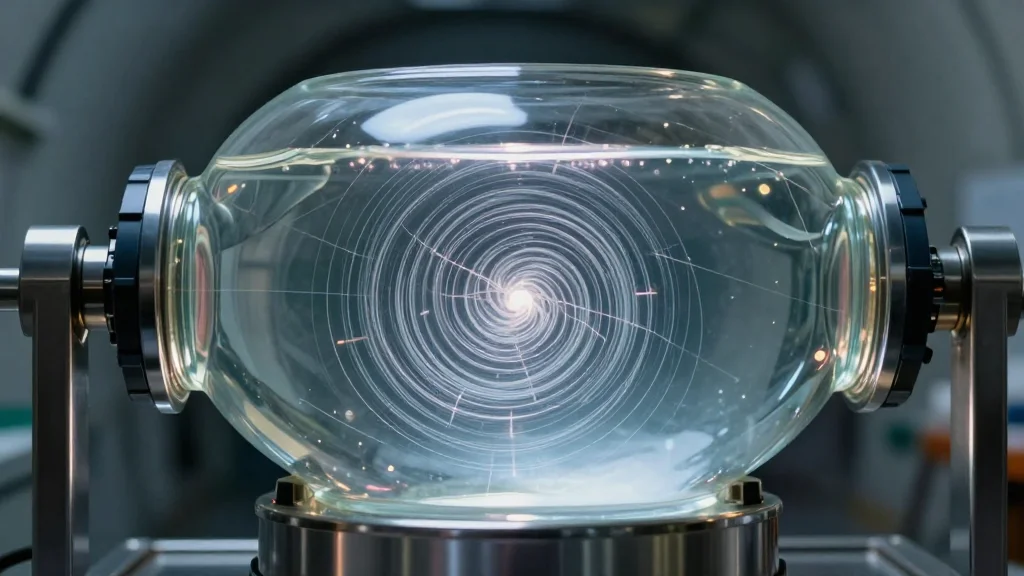
ATLAS Sets Strong Limits on Supersymmetry
The ATLAS experiment at the Large Hadron Collider used advanced machine‑learning algorithms to probe supersymmetric particles in two new Run 2 analyses. One search focused on disappearing‑track signatures from chargino decays, while the other targeted low‑momentum leptons from neutralino cascades. Neither...