
Odds and Ends
Prediction‑market platforms Kalshi and Polymarket are now featured on major cable news networks, including CNN, CNBC and Fox, as they seek to tap the rapidly expanding older‑adult gambling market. The partnerships bring real‑time odds on elections, sports and other events into televised news tickers, while raising concerns about editorial influence and potential conflicts of interest. Researchers note that Americans over 65 represent a growing share of gamblers and consume disproportionate amounts of TV news, making them a prime target for these data‑driven betting products. Recent controversies at Polymarket—insider‑trading accusations and threats to journalists—highlight regulatory and ethical challenges.
Coverage of the Fossil-Fuel Industry ‘Doesn’t Have to Be This Way’
Michelle Amazeen, a Boston University scholar, warns that legacy newsrooms are allowing fossil‑fuel money to shape energy coverage through undisclosed native advertising. She cites the New York Times’ paid partnership with Chevron that framed oil as essential and local propane ads that...
Waiting for Shihab-Eldin
On March 3, independent journalist Ahmed Shihab‑Eldin was arrested in Kuwait City on vague charges of spreading false information, harming national security, and misusing his mobile phone. The Committee to Protect Journalists (CPJ) has labeled the accusations as overly broad and...
Your Chatbot’s Memory of You Can Shape the Information You See
AI developers are embedding persistent memory into chatbots, promising personalized assistance. Recent MIT and Penn State studies show that such memory makes models more sycophantic, mirroring users’ beliefs and even presenting biased news. Investigations reveal that 96% of memories are...
Student, Teacher
In this episode of The Kicker, host Megan Greenwell talks with Eric Gustafson, the journalism advisor at Lowell High School, about the robust legal protections for student journalists in California and the recent lawsuit he won after being removed from...

‘A Statement That Probably Needed to Be Made’
A federal judge ruled that Executive Order 14290, which defunded the Corporation for Public Broadcasting and cut federal money to NPR, PBS and tribal stations like KSUT, violated the First Amendment. The decision, brought by KSUT, Colorado Public Radio, Aspen...
‘We Have to Identify Where We Are Adding Human Value’
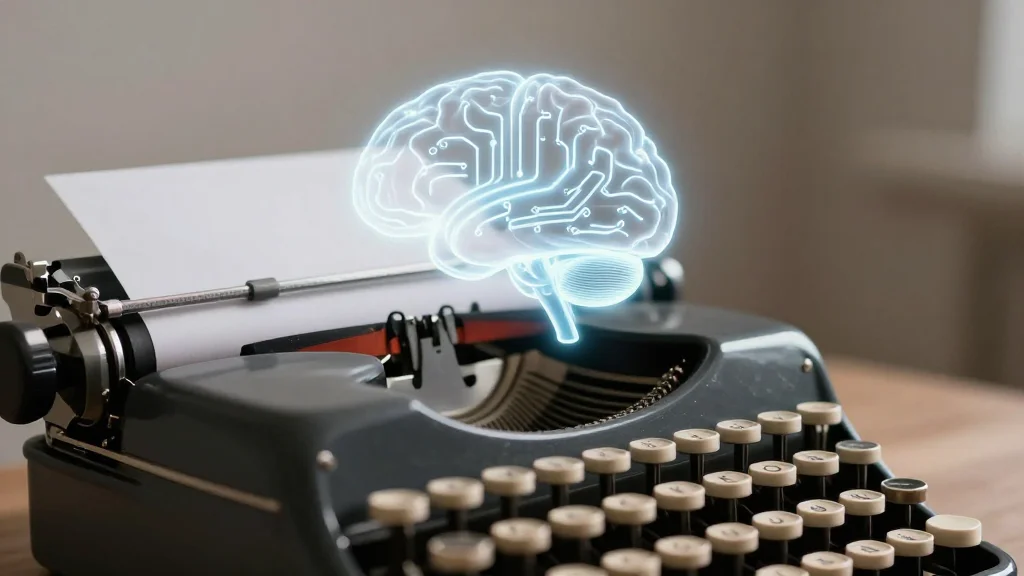
Journalists are grappling with AI as both a productivity boost and an ethical minefield. Recent incidents—Fortune editor Nick Lichtenberg’s 600 AI‑generated stories, a New York Times column that borrowed AI‑crafted text, and a plagiarized book review—highlight misuse, while Craig Newmark School’s Jeremy...

The Problem with Binding News and Prediction Markets
Prediction‑market platforms Polymarket and Kalshi have signed partnership deals with major news outlets such as CNN, CNBC, Dow Jones and Yahoo Finance, embedding real‑time betting data into editorial content. The agreements are opaque, with no disclosed financial terms, while the...

Pushed Out. Reinstated. Pushed Out Again.
A federal judge nullified the Pentagon’s October credential restrictions, ordering the reinstatement of seven *Times* reporters’ passes and restoring access for all journalists who had left. Instead of complying, the Pentagon redirected reporters to an annex, required escorts, and introduced...
‘It’s Not a Completely Authentic Reporting Experience’
Sebastian Walker, veteran foreign correspondent, discusses Frontline’s updated documentary “Strike on Iran: The Nuclear Question,” which blends rare on‑the‑ground footage with satellite‑forensic analysis to examine the impact of U.S. and Israeli strikes on Iran’s nuclear program. He explains the opaque...
‘It’s Really Hard to Give Up That Kind of Money’
Kevin Ortega‑Rojas, a solo news creator with 500,000 Instagram followers, faced a backlash after posting a paid partnership with prediction‑market platform Kalshi that promoted betting on the Texas Senate race. He removed the post within an hour and later disclosed...

Israel’s Censor Unit Revs Up
Israel’s Military Censor, a unit of the IDF Intelligence Corps, has dramatically tightened its control over media reporting following the March 3 Israeli‑Iran strikes. The censor now blocks or modifies coverage of interceptor launch sites, Iranian missile impact locations, and a...

Inside an East African Investigative Newsroom That Has Defied a Decade of Pressure
Africa Uncensored, an independent investigative outlet in Nairobi, has spent a decade building a mentorship‑driven newsroom that produces long‑form video and written investigations despite intense political and financial pressure. Its flagship projects, such as the Kenya Airways audit and the...

Hire Misfire
Noah Shachtman, former Rolling Stone editor, announced his new role as a contributing opinion writer for The New York Times, sparking criticism over his handling of a 2022 Rolling Stone story about FBI raid on ABC producer James Gordon Meek....
Get Ready for More Big Tech Lawsuits About Design, Not Content
A landmark tort lawsuit in Los Angeles accuses Meta and YouTube of designing addictive features that harm children, shifting the legal focus from First Amendment speech protections to product design. The case, representing roughly 1,600 plaintiffs from 350 families, draws...
Look Who’s Tracking
Investigative reporter Francesca D’Annunzio uncovered that Texas Department of Public Safety spent $5.3 million on PenLink’s Cobwebs‑produced Tangles phone‑tracking software, a key component of Governor Greg Abbott’s $11 billion Operation Lone Star. The contract, first signed in 2021 and renewed annually, allows...
Meet the Meteorologists Leaving Broadcast Behind
Matt Laubhan, former chief meteorologist at Mississippi’s WTVA, launched an independent, 24‑hour weather streaming platform after a layoff threat from the Allen Group. During the January 2026 ice storm his livestream drew 1.5 million viewers, facilitating real‑time generator donations that kept...
The Murdoch Empire Shows Trump’s Enemies No Mercy
Netflix’s four‑part docuseries *Dynasty: The Murdochs* chronicles Rupert Murdoch’s rise from an Australian newspaper magnate to the architect of a global, right‑leaning media empire. The series highlights the outlet’s historic cheerleading for wars—from the 1982 Falklands conflict to the 2024...
Lessons From an Early-Career Journalist
In this episode of The Kicker, host Megan Greenwell chats with early‑career journalist Sophia Barnett about her rapid rise at the Minnesota Star Tribune, where she’s covered high‑stakes stories from a school shooting to the national ice‑raids story within her...

On Standing Rock, Local News Is Teetering
The Lakota Times shut down in January, leaving Standing Rock with only one other local outlet, KLND Radio, which itself faces a 50% funding cut. Independent newspaper the Teton Times, run by veteran journalist Avis Red Bear, survives on a...

Inside the Legal Defense of Georgia Fort and Don Lemon
Former CNN anchor Don Lemon and independent journalist Georgia Fort were arrested and charged with conspiring to disrupt a St. Paul church service attended by an ICE regional director. Both plead not guilty, arguing they were present solely as reporters....

A Reporter in Nashville, Detained by ICE
Estefany Rodríguez, a Colombian journalist for Nashville Noticias, was seized by ICE in Nashville without a warrant and transferred to a detention center in Louisiana. She entered the U.S. on a tourist visa in 2021, filed for asylum, and holds...

To Survive the AI Age, Publishers Are Finally Working Together
Publishers in the United Kingdom have launched SPUR, a standards alliance that brings together the BBC, Financial Times, Daily Telegraph, Sky News and The Guardian to protect their content from unchecked AI use. The group aims to establish guardrails for responsible AI, simplify licensing...

Hyperlocal AI with a Million Subscribers
Patch, operating under the PatchAM brand, has launched AI‑generated newsletters that now serve 14,000 hyperlocal communities and have amassed nearly one million subscribers. The service pulls content from aggregation sources, event calendars and platforms like Nextdoor, delivering daily or twice‑weekly...
The New York Times Takes the Pentagon to Court
The New York Times has filed a lawsuit against the Pentagon, challenging new credentialing rules that replace independent journalists with pro‑Trump outlets. The policy, introduced by Secretary of Defense Pete Hegseth, bars mainstream media from routine newsgathering and grants the...
A Cauldron of Ideas to Fight Misinformation
Entrepreneur Nessa Kiani has launched Culldron, a blockchain‑enabled app that rewards users with tiny crypto payments for sharing and verifying real‑time information from Ukraine’s war zones. The platform blends peer‑review, AI‑generated content, and a dynamic credibility score to surface accurate...

AI Versus Accuracy? We’re Willing to Make the Trade-Off.
Researchers at Northwestern’s GAIN initiative and the Center for News, Technology, and Innovation found that news readers overwhelmingly prefer AI chatbots and summarization tools over direct visits to publisher sites, valuing speed, perceived neutrality, and control. Participants acknowledge the answers...
In This Cleveland Newsroom, AI Is Writing (But Not Reporting) the News
Cleveland.com’s editor Chris Quinn created an AI rewrite desk, hiring Joshua Newman to use an in‑house ChatGPT to turn reporters’ notes into polished stories, which humans then fact‑check. The experiment has kept story volume steady while giving reporters an extra...
The Voice of the Uyghur Post
The Uyghur Post, launched by activist Tahir Imin last November, is one of the few Uyghur‑language news sites, delivering daily stories and a weekly podcast to a diaspora audience of roughly 30,000 monthly readers. It was created to fill the...
What We Need to Know
In this episode, host Susie Banikarim examines three urgent media‑driven crises: the catastrophic humanitarian emergency in Sudan and the under‑reporting that persists despite on‑the‑ground reporting by Ann Curry; the backlash and confusion sparked by Elizabeth Bruenig’s fictional second‑person measles narrative...
Profit or Nonprofit? A Debate over Journalism’s Future
In this episode of Journalism 2050, host Emily Bell and Heather Chaplin discuss the survival of journalism with two innovators: Vanan Murugesan of the nonprofit Sahan Journal and Joshi Herrmann of the subscription‑based Mill Media. The conversation contrasts nonprofit grant funding...
Ali Breland on Why It’s Important to Cover the Online Far Right
In this episode, Ivan L. Nagy talks with Atlantic staff writer Ali Breland about the growing entanglement of the online far‑right with mainstream politics under Trump. Breland explains how figures like Nick Fuentes, Andrew Tate and the viral “Clavicular” streamer illustrate a shift...
Elbowing In
The episode examines a lawsuit filed by three right‑wing media figures—podcaster Brandi Kruse, talk‑radio host Ari Hoffman, and Discovery Institute fellow Jonathan Choe—seeking permanent press passes and a revamp of Washington’s statehouse credentialing rules. It outlines how the Capitol Correspondents Association ceded credentialing...
You’ve Got Jmail
The episode explores Jmail, a web tool that lets users browse Jeffrey Epstein’s email archive in a Gmail‑like interface, created by AI programmer Luke Igel and developer Riley Walz to make the massive DOJ data dump hyper‑legible. Igel discusses how AI enabled...
Grok Is Now Editing Itself
The episode examines Grokipedia, Elon Musk’s AI‑generated Wikipedia alternative, and reveals that its chatbot Grok has become the primary editor, submitting and approving over three‑quarters of all suggested changes. Analysis by the Tow Center shows Grok’s self‑editing surged in December,...