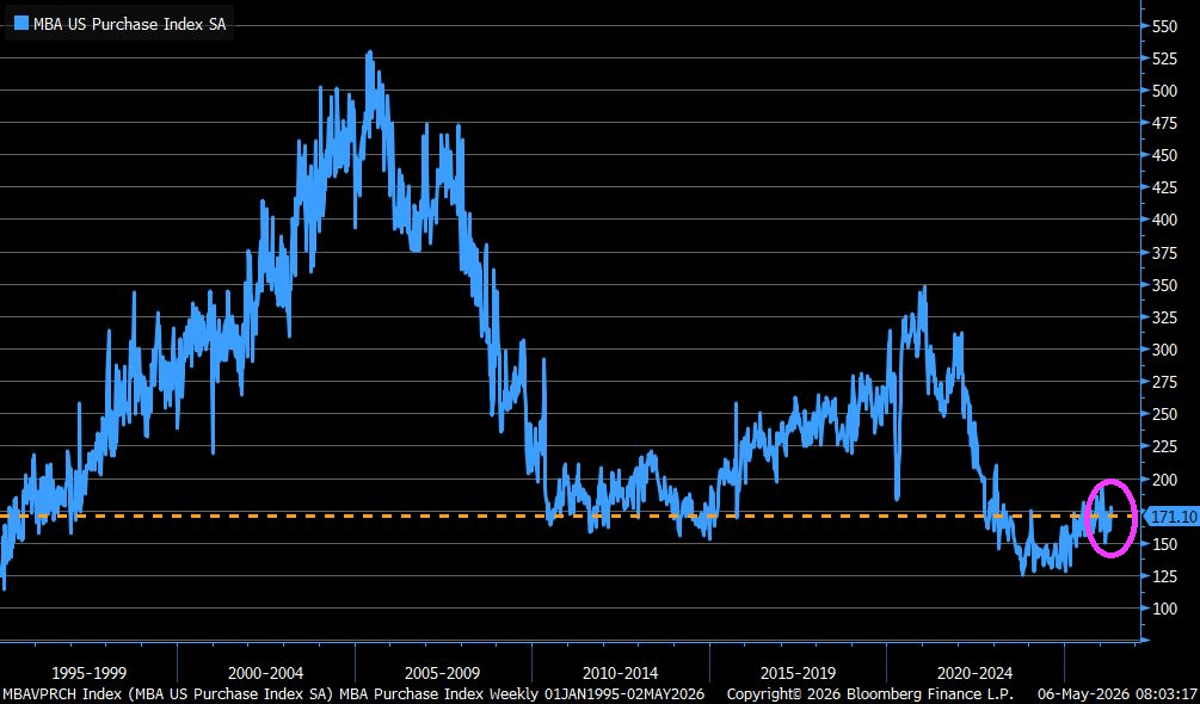
MBA Mortgage Purchase Application Down -3.7% As Mortgage Rates Rise
The Mortgage Bankers Association (MBA) Mortgage Purchase Index slipped 3.7% last week after a 1.2% gain the week before, signaling a quick reversal in mortgage‑originator sentiment. The decline coincided with the 30‑year Treasury‑linked mortgage rate climbing to 6.45%, the highest level in a month. Higher rates are dampening buyer demand and increasing pressure on the already tight housing market. The trend underscores the sensitivity of mortgage activity to short‑term rate movements as the Federal Reserve maintains a restrictive stance.
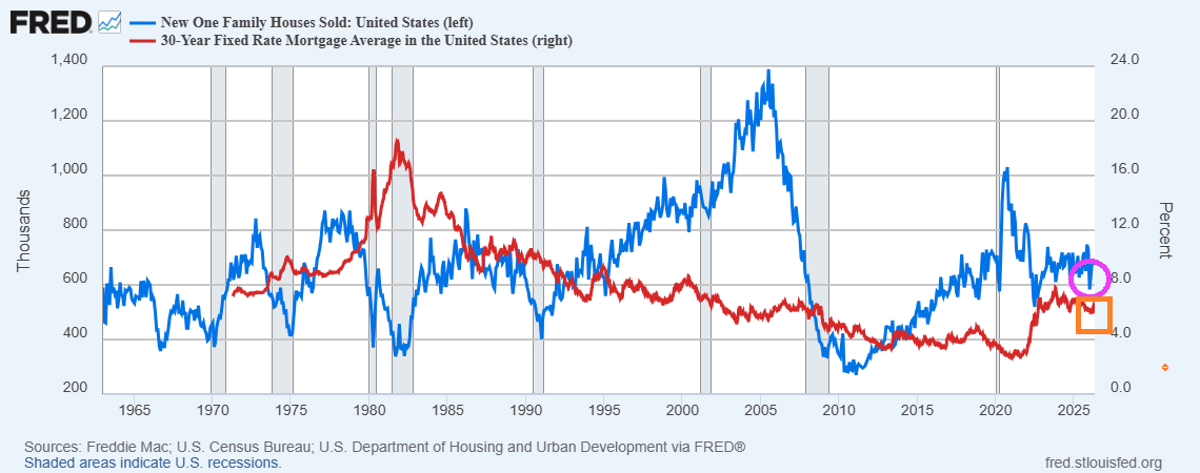
New Home Sales Rise In March Despite Rising Mortgage Rates
U.S. new single‑family home sales rose by about 47,000 units in March 2026, marking the first notable uptick since the pandemic slump. Mortgage rates edged higher, hovering near 6.8%, yet the market absorbed the cost increase. At the same time,...

March Existing Home Sales MEDIAN PRICE Falls -6.2%YoY, Worst March Since 2009 (Rent Growth Slowing To 1.8% YoY)
The median price of new single‑family homes dropped 6.2% year‑over‑year to $387,400 in April, the lowest level since July 2021. Existing‑home sales in March hit their weakest performance since 2009, marking a broad market slowdown. Meanwhile, rent growth decelerated to 1.8%...

US Debt To GDP Ratio At 1.22 (Nothing Has Been The Same Since 2020 Covid Outbreak)
The United States’ federal debt now stands at $39.204 trillion against a $32.090 trillion GDP, yielding a debt‑to‑GDP ratio of 1.22—the highest level since the post‑COVID era began. Historically, ratios above 1.0 were viewed as unsustainable, yet each recession since the 1960s...
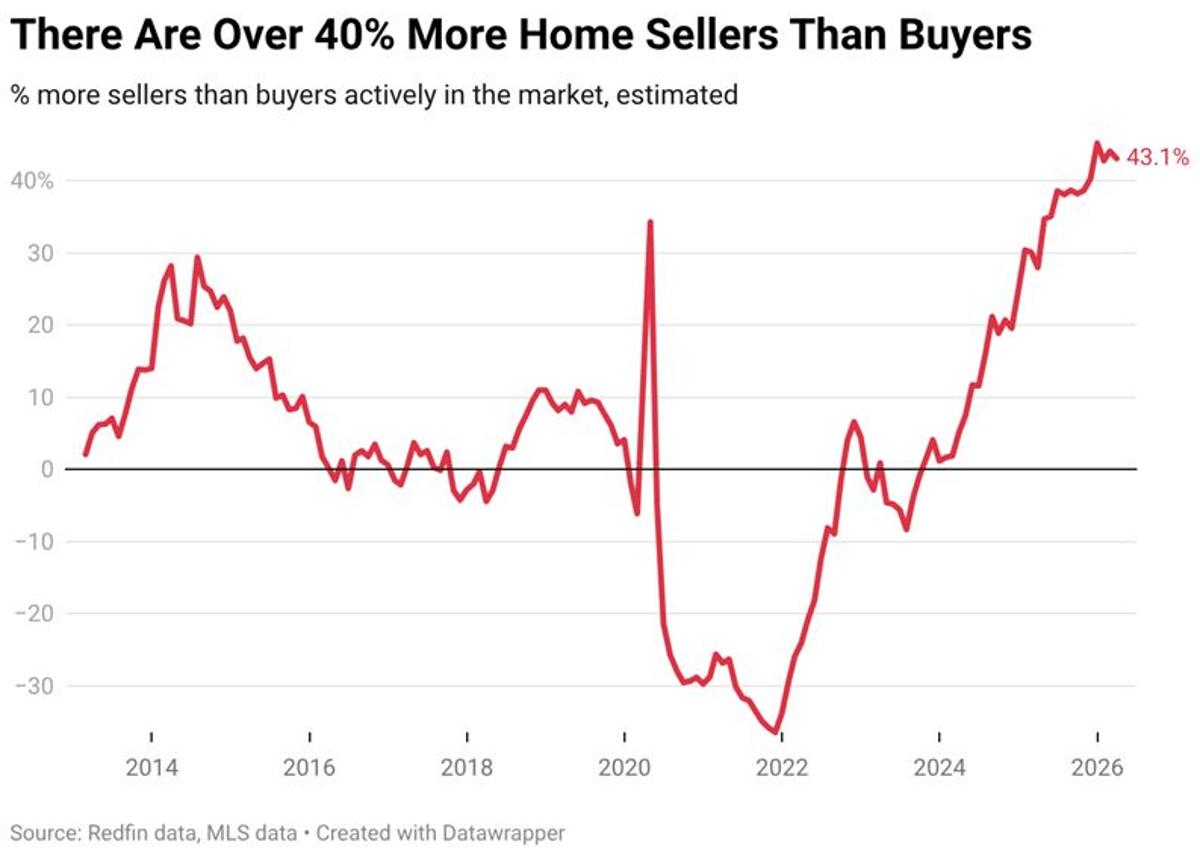
40% More Home Sellers Than Buyers (Credit Quality Of Mortgages Deteriorating)
Redfin data show that in March 2026 home sellers outnumbered buyers by 43.1%, a gap that has widened from 28% a year earlier and sits just below the December record of 45.2%. The surplus of sellers reflects a cooling demand...
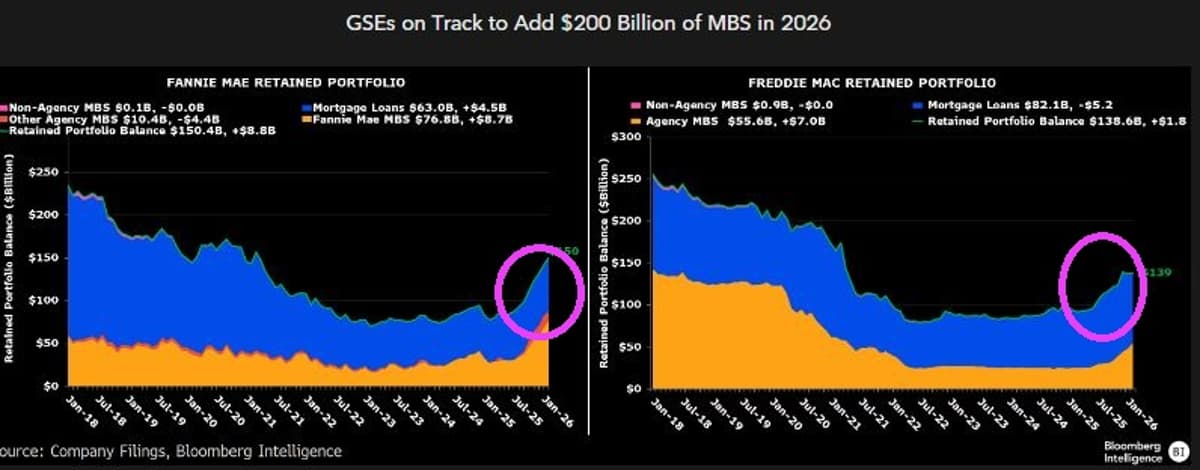
What Happened To The “Shut Down Fannie And Freddie” Movement? (Both Fannie And Freddie Are GROWING Their Retained Portfolios)
The retained portfolios of government‑sponsored enterprises Fannie Mae and Freddie Mac, once on a steady decline, have begun expanding sharply since late 2025. Calls to privatize the GSEs and reduce these balances to zero resurfaced after the 2024 Trump election and a...

US Treasury Yield Curve Upward Sloping As Iran Conflict Continues (Strait Of Hormuz Effectively Closed)
The U.S. Treasury yield curve has returned to a classic upward slope, with long‑term rates climbing faster than a year ago. The shift coincides with heightened geopolitical risk as the Strait of Hormuz—key for global oil shipments—has effectively shut down...

Trump Threatens To Bomb Iran Back To The Stone Age, Crude Oil And US Gasoline Prices Return To Obama/Biden Era...
President Donald Trump warned of a full‑scale bombing campaign against Iran following recent Israeli and U.S. strikes, reigniting geopolitical tension in the Middle East. The conflict has pushed crude oil to roughly $80 per barrel, a price level last seen...

US Industrial Production Rises For 4th Straight Month In February (0.2% MoM, 1.4% YoY)
U.S. industrial production posted a fourth consecutive monthly gain in February, rising 0.2% month‑over‑month and 1.44% year‑over‑year, outpacing the 0.1% consensus. Manufacturing output mirrored the broader trend, also expanding 0.2% MoM, with durable goods edging up 0.1% and nondurables up...
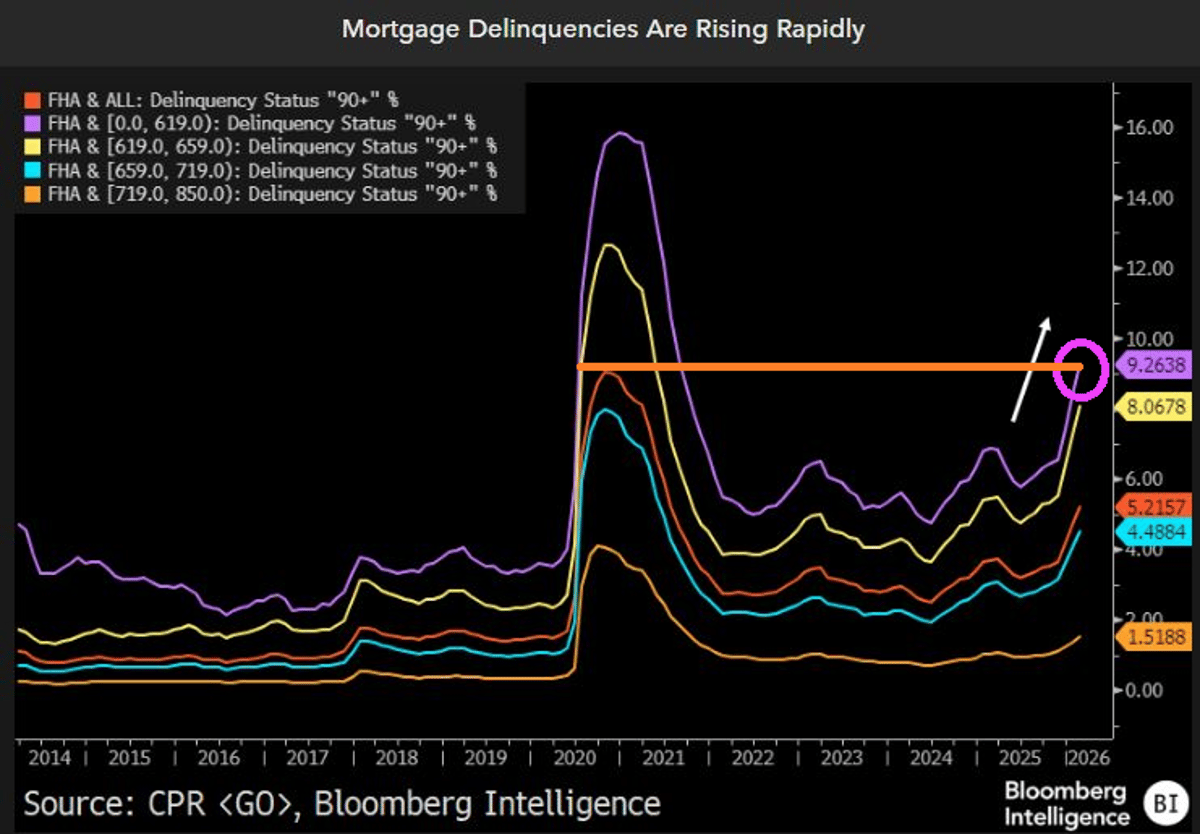
Simply Unaffordable! FHA Lower Credit Score Borrowers (0-619) Suffer Escalating Mortgage Delinquency Rates
FHA loans held by borrowers with credit scores between 0 and 619 are experiencing a sharp rise in 90‑day delinquency rates, the steepest since the program’s inception. The surge follows a post‑COVID fiscal stimulus that drove home prices to record...

US Pending Home Sales Collapse To Lowest Level Since 2001
U.S. pending home sales have fallen to their lowest level since 2001, marking a sharp reversal that began in 2021 and accelerated through early 2026. The decline coincides with mortgage rates that remain well above historic averages, squeezing buyer affordability....

Average Homeowner Tenure Rises To 8.6 Years (Americans Aren’t Moving Much)
The average U.S. homeowner now stays in a property for 8.6 years, the longest stretch since the early 2000s. Rising home prices and persistently high mortgage rates are forcing owners to hold onto homes longer, while the share of Americans...