
What Apple’s CEO Transition Got Right And Why Most Boards Overlook This Lesson
Apple’s orderly handoff from Tim Cook to John Ternus is being hailed as a model of CEO succession, but the smooth public announcement masks years of disciplined pipeline building, cultural oversight, and candid board‑CEO dialogue. The article argues that most boards treat succession as a reactive event, whereas Apple treated it as a continuous discipline. By auditing selection criteria, governing culture like financials, and maintaining honest relationships with the CEO, Apple created a pipeline that delivered a seamless transition. The piece warns that without this unseen work, most companies will continue to stumble at the announcement stage.

How To Set Strategy At The Speed Of Disruption
The article outlines a framework for executives to craft and execute strategy at the pace demanded by rapid market disruption. It recommends adopting continuous scenario planning, leveraging real‑time data analytics, and empowering cross‑functional teams to make swift decisions. The piece...

Leadership Transitions Demand Honesty, Not Just Press Releases
The article argues that leadership transitions demand genuine honesty rather than polished press releases. It warns that boards often default to surface‑level messaging, leaving critical performance gaps and cultural issues unaddressed. By embedding transparent dialogue and data‑driven assessments into succession...

When Board Meetings Become Routine, CEOs Lose A Strategic Advantage
CEOs often let quarterly board meetings devolve into a performance‑review checklist, sidelining forward‑looking discussion. The article argues that this routine approach erodes a critical strategic advantage and recommends three concrete shifts: set agenda time for AI‑related strategic questions, adopt a...

A Board For All Seasons
McKinsey’s Carolyn Dewar released "A CEO for All Seasons," a playbook distilled from research on 83 top‑performing CEOs that defines four distinct leadership phases—preparation, transition, momentum, and exit—and the board’s role in each. The book stresses proactive succession planning, a...
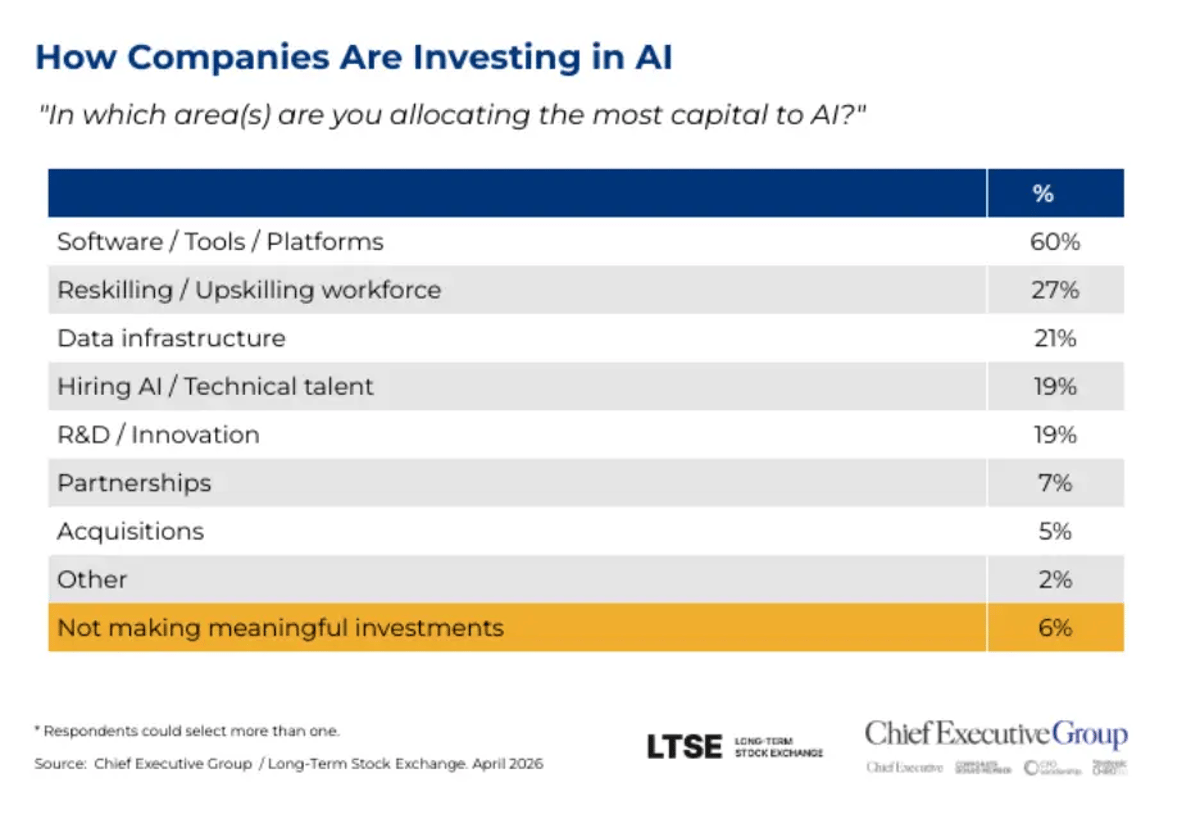
CEO-Board Survey Finds Big Workforce Changes Ahead Due To AI
A new survey of 1,200 CEOs and board directors finds artificial intelligence will trigger the most significant workforce transformation in a decade. Over two‑thirds say AI will fundamentally alter job functions within three years, and 45% anticipate headcount cuts as...

Mastering The Five Phases Of Transformation
Change initiatives routinely fail, wasting trillions and eroding organizational capacity. Kristy R. Ellmer and co‑authors outline a five‑phase framework—starting, planning, launching, persisting, and ending—to dramatically improve transformation odds. The model stresses active board oversight at each stage, from validating strategy...

How To Break Up With China
The article outlines a strategic playbook for U.S. firms seeking to reduce dependence on Chinese manufacturing and market exposure. It highlights three core steps: mapping critical supply‑chain nodes, building alternative sourcing hubs in Southeast Asia and Mexico, and renegotiating contracts...

Delaware Disclosure Dilemma
Corporate lobbyists celebrate the Ninth Circuit injunction blocking California’s climate‑risk disclosure law, but the EU’s upcoming Corporate Sustainability Due Diligence Directive (CS3D) poses a far larger challenge. Starting in 2027, companies generating more than €1.5 billion (≈ $1.6 billion) in EU sales must...

Board Briefing: Data at Risk: What Boards Are Missing on Cyber, AI & Regulation
Corporate Board Member Network is hosting a one‑hour virtual briefing on April 23, 2026, titled “Data at Risk: What Boards Are Missing on Cyber, AI & Regulation.” The session features privacy‑law expert Kwabena Appenteng, who will explain where companies are...

What To Expect From The SEC In 2026
The SEC’s 2026 agenda emphasizes tighter ESG and climate‑risk disclosures, expanded oversight of digital assets, and heightened enforcement around AI‑driven market manipulation. It will roll out new reporting templates for sustainability metrics and require clearer provenance for crypto‑related securities. The...

Security, DEI And Tariffs: Executive Compensation Insights From Late 2025 And Early 2026 Proxy Filers
A review of 37 S&P 500 proxy filings for fiscal years ending August‑November 2025 shows CEO security and aircraft perquisites climbing, DEI/ESG language being rebranded, and tariffs barely affecting executive pay. Median security perks rose 16 percent and aircraft benefits 31 percent, while 22 percent...

Innovation And Incentives: What High-Performing Sectors Reveal About Pay Design
Pearl Meyer’s review of the three highest‑returning S&P 500 sectors—information technology, consumer discretionary and communication services—shows that innovation‑driven firms largely retain conventional incentive structures. Long‑term incentive plans continue to rely on two metrics, typically relative total shareholder return plus a financial...

Strategic Lessons From Trump’s 10 Commandments
The article distills Donald Trump’s self‑styled "10 Commandments" into actionable strategic principles for CEOs and boards. It highlights how Trump’s focus on branding, media dominance, aggressive negotiation, and loyalty can be repurposed for corporate growth. The piece also warns that...

In An Era Of Constant Investment Pressure, Quarterly Reports Aren’t The Problem
The article argues that quarterly reports are merely a symptom of a deeper issue: relentless investment pressure that forces executives to chase short‑term metrics. While earnings releases remain a useful transparency tool, they are not the root cause of strategic...