New Cuba Sanctions Expansion: Broader Targets, Secondary Risk, and Compliance Implications
On May 1, 2026 President Donald Trump issued an executive order that dramatically widens U.S. sanctions on Cuba. The order adds sector‑based designations, targets individuals involved in corruption or human‑rights abuses, and introduces secondary sanctions against foreign banks that facilitate transactions for designated Cuban parties. It gives Treasury and OFAC broad authority to expand the list of restricted sectors over time. The measure forces global companies to reassess Cuba‑related exposure across supply chains, financial partners and governance controls.
Tariffs, OFAC and the DOJ (Part 1)
The Department of Justice and U.S. regulators are intensifying enforcement of trade compliance, zeroing in on both import and export violations. Civil and criminal penalties are climbing, with tariffs now a focal point under the False Claims Act. Export controls...
Episode 410 — Building a Best-in-Class AI Use Policy
In the latest Corruption, Crime & Compliance podcast, Michael Volkov outlines how firms can craft a best‑in‑class AI Use Policy to mitigate emerging AI risks. He argues that traditional governance models are inadequate for AI’s rapid deployment across functions. Volkov...

Episode 407 — FinCEN’s AML Reform Proposal — A Shift Toward Risk, Clarity and Innovation
FinCEN released an April 2026 proposed rule that overhauls AML/CFT compliance under the Bank Secrecy Act. The rule introduces a two‑pronged framework separating program design from implementation and raises the enforcement bar by targeting systemic failures. It also expands risk‑based...
What Is the ‘Ethics Premium’?
The article introduces the “ethics premium,” a concept that ethics and compliance programs generate measurable financial benefits rather than being mere cost centers. Citing overwhelming research, it argues that robust compliance frameworks improve revenue stability and overall profitability. The piece...

GE’s $36 Million ITAR Penalty — A Wake-Up Call for Export Control Compliance
The U.S. State Department’s Directorate of Defense Trade Controls fined General Electric $36 million for 116 ITAR violations spanning 2018‑2024, including unauthorized export of F‑35 engine data to China. The breaches stemmed from misclassifying items, faulty licensing, and inadequate controls over...

Treasury Proposes AML/CFT and Sanctions Compliance Requirements for Permitted Payment Stablecoin Issuers
The U.S. Treasury, working with OFAC and FinCEN, issued a Notice of Proposed Rulemaking that would bring permitted payment stablecoin issuers under the Bank Secrecy Act AML/CFT framework. The proposal mandates written compliance programs approved by the board, a U.S.-based...

Episode 406 — AI Risks and Compliance – Building a Governance Framework
Artificial intelligence is reshaping enterprise workflows, but it also brings heightened legal, ethical and compliance exposures. The podcast highlights accelerating AI risks such as data leakage, algorithmic bias, over‑reliance on flawed outputs, and hidden third‑party vulnerabilities. It argues that AI...
Is Your AI Risk Assessment Ready? (Part 1)
The article warns firms against handing compliance duties to ChatGPT without a structured approach. It outlines the first three steps of an AI risk assessment: establishing an enterprise‑wide governance body, performing a use‑case specific risk assessment, and pinpointing whether risks...
BIS Imposes Civil Penalty on Thales Defense & Security for Antiboycott Violations
The U.S. Department of Commerce’s Bureau of Industry and Security (BIS) issued an order against Thales Defense & Security, Inc., finding the firm admitted to three antiboycott violations under the Export Administration Regulations. The violations stemmed from a 2019 UAE...

Episode 405 — DOJ Balt Declination: Individual Accountability in Action
The U.S. Department of Justice declined to prosecute Balt Medical despite a multi‑year foreign‑bribery scheme, citing the company’s prompt self‑disclosure, full cooperation, and effective remediation. Simultaneously, DOJ charged two individuals alleged to have orchestrated the payments to a state‑owned hospital...

BIS Imposes $1.6 Million Civil Penalty in Enforcement Action Involving Unlicensed Exports to Entity List Parties
The U.S. Department of Commerce’s Bureau of Industry and Security (BIS) imposed a $1.6 million civil penalty on Solventum Corporation for exporting EAR99 liquid‑cel membrane contactors to Entity List firms without the required licenses. The violations involved shipments to Semiconductor Manufacturing...

Episode 404 — Venezuela Sanctions Update
The U.S. Treasury’s Office of Foreign Assets Control (OFAC) has issued a suite of new general licenses that partially reopen Venezuela’s oil, gas, and mineral sectors to American and allied companies. The framework is not a full sanctions lift; it...

Proactive Compliance Requires More Than Automation — It Demands AI-Driven Strategy
Compliance is moving from a reactive, post‑incident model to an AI‑driven, forward‑looking strategy. The Optro report shows that high‑maturity firms are six times more likely to embed AI across GRC functions, with 72% using it for proactive risk tracking and...

Episode 402: Paul Allen: The Promise of AI, Governance and Public Trust
In the latest episode of *Corruption, Crime and Compliance*, entrepreneur Paul Allen—founder of Ancestry.com and Soar.com—introduces CitizenPortal.ai, an AI‑driven civic intelligence platform designed to make government activity more transparent and accountable. Allen argues that artificial intelligence should augment, not replace,...

OFAC’s TradeStation Enforcement Action: A Case Study in “Set It and Forget It” Compliance Failures
The U.S. Treasury’s Office of Foreign Assets Control (OFAC) fined TradeStation Securities about $1.1 million after the broker processed 481 trades totaling roughly $4.4 million for users in Iran, Syria and Crimea. Although TradeStation had a layered sanctions‑compliance framework, a 2018 mobile‑app...

The Continuing Threat of Individual FCPA Enforcement Actions in 2026
The final quarter of 2025 saw a modest resurgence in FCPA activity after the June 2025 DOJ guidelines, but the key trend is that individual enforcement remains robust. While the revised Corporate Enforcement Policy encourages corporate leniency through self‑disclosure and...

Episode 400 — Reopening 9/11 — A UK Supreme Court Battle Over Truth, Power, and Accountability
Matthew Campbell’s quest to reopen the inquest into his brother’s death at the World Trade Center has reached the UK Supreme Court. The Attorney General denied a fresh inquest, and lower courts upheld that refusal, raising the question of whether...
Webinar: AI Risks, Ethics & Compliance Programs — Building a Defensible Governance Framework
The Volkov Law webinar on April 7, 2026 will guide legal and compliance leaders through building a defensible AI governance framework. It distinguishes AI risk from traditional technology risk, highlighting high‑stakes decision‑making systems versus productivity tools. The session outlines board‑level...

BIS Fines Navy Contractor for Illegally Sharing Controlled Military Specifications With Chinese Manufacturer
The U.S. Department of Commerce’s Bureau of Industry and Security imposed a $374,474 civil penalty on California‑based satellite supplier Vizocom for illegally exporting controlled technical data on UHF military antennas to a Chinese manufacturer. Vizocom uploaded detailed specifications to a...

Third-Party Risk Management Must Now Confront AI, Cybersecurity, and Technology Risk Head-On
Third‑party risk management is undergoing a fundamental shift, requiring AI, cybersecurity and broader technology risk to be embedded in core vendor assessments. Traditional categories like corruption and sanctions remain relevant but are insufficient as vendors now provide cloud services, AI...

Episode 399 — Vera Cherepanova on Boards of the Future
Vera Cherepanova, a Chartered Accountant and award‑winning ethics specialist, appears on Episode 399 to discuss her work with Boards of the Future, a nonprofit that advises corporate boards on ethics, risk and compliance. She highlights the growing need for directors with strong...

Episode 398 — Anik Shah, Sandisk Head of Compliance: Anti-Corruption Developments and Managing Risks
Episode 398 features Anik A. Shah, Sandisk’s Director of Anti‑Bribery and Anti‑Corruption, discussing the latest anti‑corruption developments and risk‑management strategies. Shah draws on more than 15 years of experience, including a tenure at the SEC where he led multi‑jurisdictional investigations...

U.S. Issues New OFAC and BIS Guidance on Cuba: What Exporters Need to Know
The U.S. Treasury’s OFAC announced a favorable licensing policy for resales of Venezuelan oil destined for Cuba, while the Commerce Department’s BIS clarified that the EAR’s License Exception SCP can cover petroleum shipments to eligible Cuban private‑sector and humanitarian end‑users....

Cybersecurity’s New Frontline: What the 2026 CrowdStrike Global Threat Report Reveals
The 2026 CrowdStrike Global Threat Report shows attackers leveraging generative AI to accelerate breach timelines, with average breakout time now just 29 minutes—a 65% increase in speed. AI‑enhanced reconnaissance, phishing, and automated evasion are compressing response windows, while identity compromise...
Episode 397 — LRN’s Program Effectiveness Report
LRN’s 2026 Ethics & Compliance Program Effectiveness Report, titled “The Next Leap: Technology, Trust, and the Transformation of Compliance,” surveys over 2,500 compliance professionals and employees worldwide. The study reveals that while compliance programs are increasingly sophisticated and tech‑enabled, many...
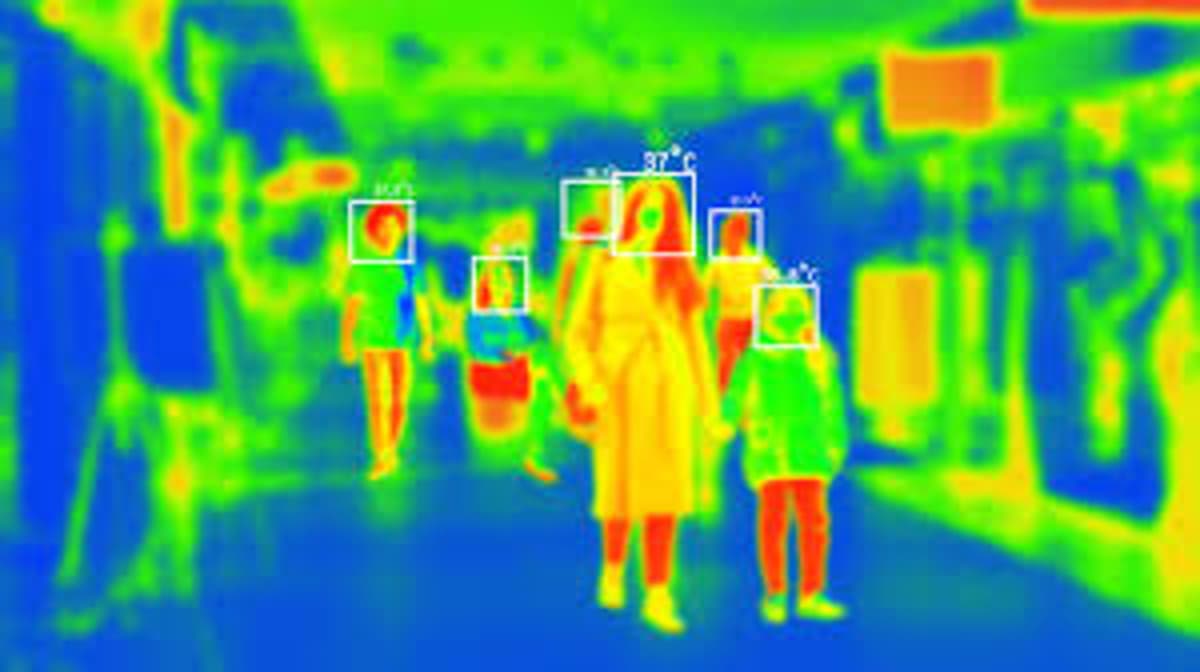
BIS Fines Thermal Camera Exporter $1 Million for China Export Violations: De Minimis Miscalculations and Compliance Gaps
The U.S. Bureau of Industry and Security fined Teledyne FLIR $1 million for 19 Export Administration Regulations violations, chiefly misapplying the de minimis rule to thermal camera exports bound for China and Hong Kong. The company undervalued U.S.-origin components, excluded lenses from product valuations,...
FCPA Enforcement in 2025 (Part I of II): A Slowdown, a Policy Reset, and What the Numbers Really Mean
In 2025, FCPA enforcement slowed dramatically, with fewer publicly announced cases and no new SEC actions. The DOJ paused investigations early in the year and issued revised guidance that emphasizes selectivity toward high‑impact bribery and national‑security concerns. Despite the overall...

When Conflicts Become Compliance Crises: SEC and DOJ Enforcement Lessons From the Real World
Regulators are treating conflicts of interest as operational threats rather than abstract compliance check‑boxes. Over the past 18 months the SEC has levied multi‑million penalties on advisers for undisclosed incentive structures, while the DOJ has pursued criminal cases where personal...
Episode 393- When Financial Controls Fail: The SEC’s ADM Settlement and the Cost of Misleading Investors
The SEC charged Archer‑Daniels‑Midland (ADM) and three former executives with accounting and disclosure fraud, culminating in a landmark 2026 enforcement action. ADM was found to have materially overstated its nutrition segment by recording intersegment transactions on non‑market terms, inflating profitability....

Episode 392 — The Importance of Managing Conflicts of Interests
Conflicts of interest are increasingly recognized as critical compliance risks that can undermine employee trust, skew decision‑making, and expose firms to litigation and reputational damage. Recent scandals involving supervisor‑subordinate relationships illustrate how personal ties can cascade into enterprise‑wide failures when...

The Tilt Toward Corporate Voluntary Disclosures
Under the Trump administration, the DOJ has refined its corporate enforcement policy to more actively reward voluntary disclosures of misconduct. Companies that promptly self‑report, fully cooperate, and remediate can receive declinations and potentially avoid disgorgement, as illustrated by recent False...
UFLPA Enforcement: When a “Red Light” Turns Yellow
The Uyghur Forced Labor Prevention Act, enacted in 2021, created a rebuttable presumption that Xinjiang‑origin goods are barred from the U.S. market. U.S. Customs data show a sharp drop in UFLPA‑related detentions, from roughly $1.58 billion in 2023 and $1.40 billion in...