
Identity Fraud Among Home-Care Workers Puts Patients at Risk
Home‑care workers are increasingly sending unqualified friends or relatives to patient visits under false identities, a trend highlighted by recent fraud convictions and court cases in the U.S. and U.K. The Department of Health and Human Services reported 298 personal‑care attendant convictions in 2024, while individual incidents show caregivers swapping phones and passwords to fake electronic visit verification. Biometrics combined with geofencing is proposed as a robust countermeasure, yet many providers still rely on weak, single‑factor checks. The problem is widening as labor shortages make the sector ripe for abuse.

A Cybersecurity Playbook for AI Adoption
Artificial intelligence now powers 60 % of enterprise security stacks, accelerating data collection, anomaly detection, and risk scoring across the NIST CSF identify and detect functions. However, the article warns that AI’s nondeterministic nature makes it unsuitable for direct enforcement actions...

SonicWall Edge Access Devices Hit by Zero-Day Attacks
SonicWall disclosed a medium‑severity zero‑day vulnerability, CVE‑2025‑40602, affecting the SMA1000 access platform’s management console. The flaw, rated 6.6 CVSS, is being actively exploited in chained attacks that also leverage the critical CVE‑2025‑23006 vulnerability. SonicWall released hotfixes in firmware versions 12.4.3‑03245...

Dormant Iran APT Is Still Alive, Spying on Dissidents
Iran’s long‑standing state‑level threat group, known as Prince of Persia or Infy, has resurfaced after years of apparent inactivity. SafeBreach’s latest report shows the APT has been continuously spying on Iranian citizens and dissidents across Iraq, Turkey, India, Europe and...

'Cellik' Android RAT Leverages Google Play Store
Cellik is a Remote Access Trojan offered as a service that automatically wraps malicious payloads around legitimate Android apps downloaded from the Google Play Store. The RAT provides full device control, including screen streaming, keylogging, file system access, and encrypted...

Securing the Network Edge: A Comprehensive Framework for Modern Cybersecurity
Enterprise computing is rapidly moving to the edge, with analysts forecasting more than $100 billion in annual edge spend by 2030. The proliferation of IoT, AI, 5G and data‑sovereignty mandates is pushing workloads beyond centralized clouds, creating latency, cost and compliance...

'Fake Proof' And AI Slop Hobble Defenders
Exploitation attempts have surged around the React2Shell vulnerability, a CVSS 10.0 flaw in the popular React UI library. While researchers have published roughly 145 public exploits, many are AI‑generated proof‑of‑concepts that fail to trigger the flaw. These fake PoCs mislead...
_jvphoto_Alamy.jpg?width=1280&auto=webp&quality=80&disable=upscale)
The Future of Quantum-Safe Networks Depends on Interoperable Standards
Quantum key distribution is transitioning from laboratory‑scale, point‑to‑point links to multi‑node, carrier‑grade networks. Recent pilots in London and Paris, led by BT, Toshiba, HSBC and Orange Business, demonstrate real‑world QKD deployments combined with post‑quantum cryptography. Industry groups such as ETSI’s...

Attackers Use Stolen AWS Credentials in Cryptomining Campaign
Attackers compromised AWS Identity and Access Management (IAM) credentials and used them to launch cryptomining workloads on Amazon EC2 and ECS within ten minutes of initial access. AWS GuardDuty flagged the activity, revealing a coordinated campaign that leveraged dry‑run API...

Afripol Focuses on Regional Cyber Challenges, Deepening Cooperation
Law‑enforcement officials from more than 40 African countries gathered in Algiers for Afripol’s sixth heads‑of‑national‑liaison meeting, focusing on cross‑border cybercrime, equipment standardisation, and investigator training. The forum highlighted a surge in digital adoption that has produced an average of 3,153...
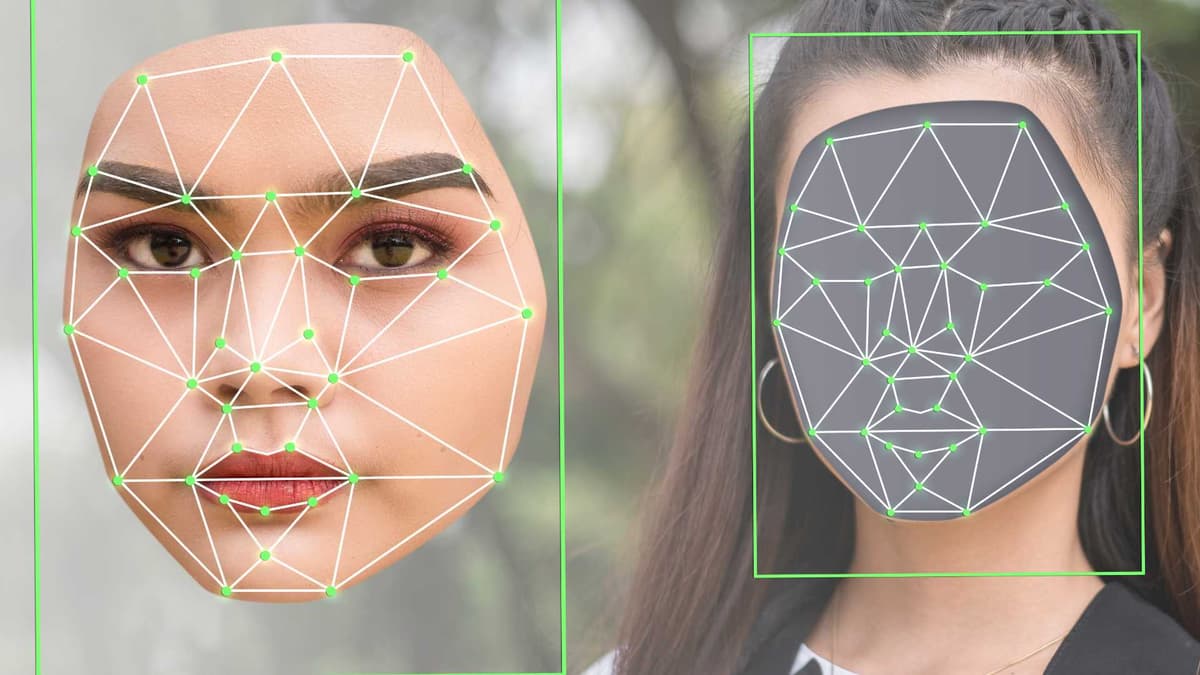
Why a 17-Year-Old Built an AI Model to Expose Deepfake Maps
A California high‑school junior, Vaishnav Anand, built an AI model to detect manipulated satellite imagery after becoming a victim of a personal deepfake. He presented his research at MIT’s IEEE Undergraduate Research Technology Conference, highlighting a largely unexplored field known...

Why You Should Train Your SOC Like a Triathlete
The article likens SOC development to triathlon training, urging teams to boost data coverage, standardize evidence, and apply AI selectively. It highlights that limited retention (7‑14 days) hides attacker dwell time, and that inconsistent log definitions stall investigations. By extending...