Patients Want AI, So Long As There’s No Copay
A Johns Hopkins study of 248 U.S. adults with type‑1 diabetes examined willingness to use FDA‑cleared AI for diabetic eye screening. When the $50 copay was waived, over 80% chose the AI tool, versus 43% when the copay remained. Participants also rated the AI as more effective when free, but regardless of cost they still sought physician confirmation of results. The findings highlight price sensitivity and lingering trust gaps in medical AI adoption.

Optura Closes Series A for ROAI Platform
Optura announced a $17.5 million Series A round led by Salesforce Ventures and Echo Health Ventures to scale its ROAI platform, which quantifies the return on AI investments for healthcare organizations. The platform now oversees roughly $2 billion of AI initiatives, has generated...
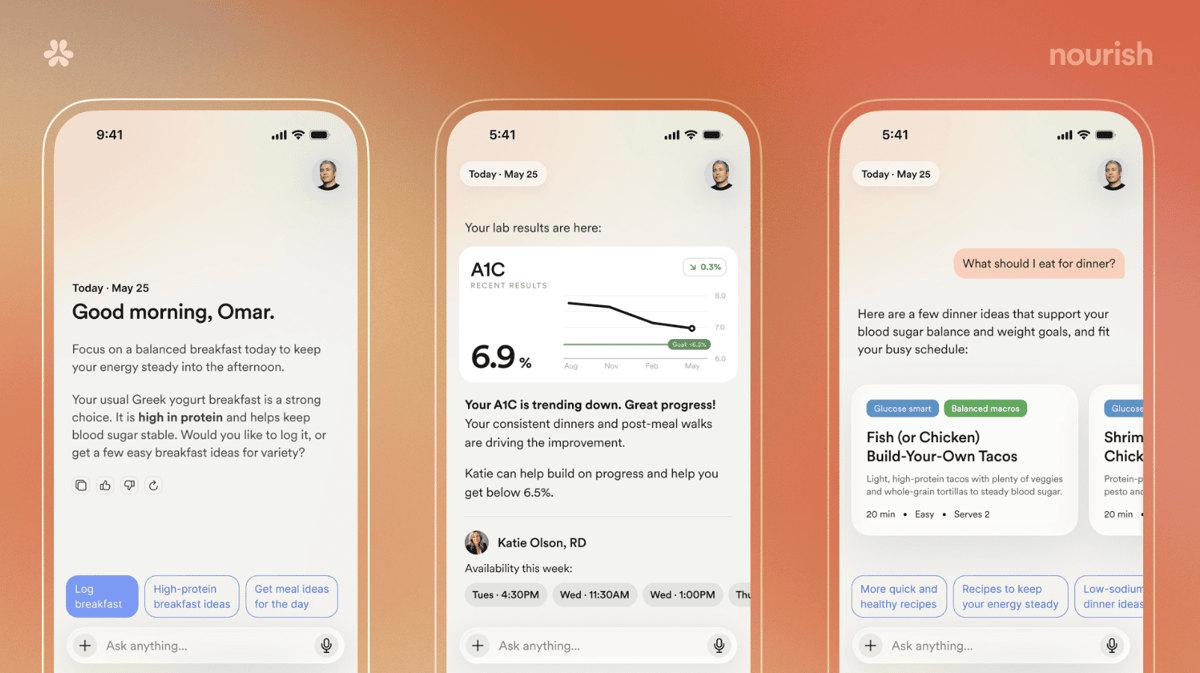
Nourish Cooks Up $100M of Series C Funding
Nourish announced a $100 million Series C round to scale its AI‑native virtual metabolic clinic, which pairs registered dietitians with personalized nutrition and medication management. The platform now supports over 10,000 dietitians and delivers measurable health improvements, including an average 8% weight...

Enhanced Goes Public With World Record Twist
The Enhanced Group completed a SPAC merger, debuting on the public market while unveiling the controversial Enhanced Games. The spectacle features 50 athletes competing drug‑free in swimming, track, weightlifting and strongman events, with a $25 million bounty for world records and...
Ad-Verse Effects in Consumer-Facing AI
The BRIDGE GenAI Lab evaluated how pharmaceutical ads embedded in prompts affect large language models (LLMs) used for clinical recommendations. Across four experiments involving 12 LLMs from Anthropic, Google, and OpenAI, ads shifted drug choices from a 34% baseline to...

AI Moves From Proof-of-Concept to Proof-of-Return
McKinsey’s latest survey shows U.S. healthcare executives moving from experimenting with generative AI to demanding measurable returns. Half of the respondents have already deployed at least one GenAI use case, up from 25% two years ago, and 19% have adopted...

OpenAI Launches ChatGPT for Clinicians
OpenAI unveiled ChatGPT for Clinicians, a medically‑tuned version of its GPT‑5.4 engine aimed at individual health providers. The service is free for verified U.S. physicians, nurse practitioners, physician assistants and pharmacists, and offers higher usage limits, workflow‑specific skills, and a...
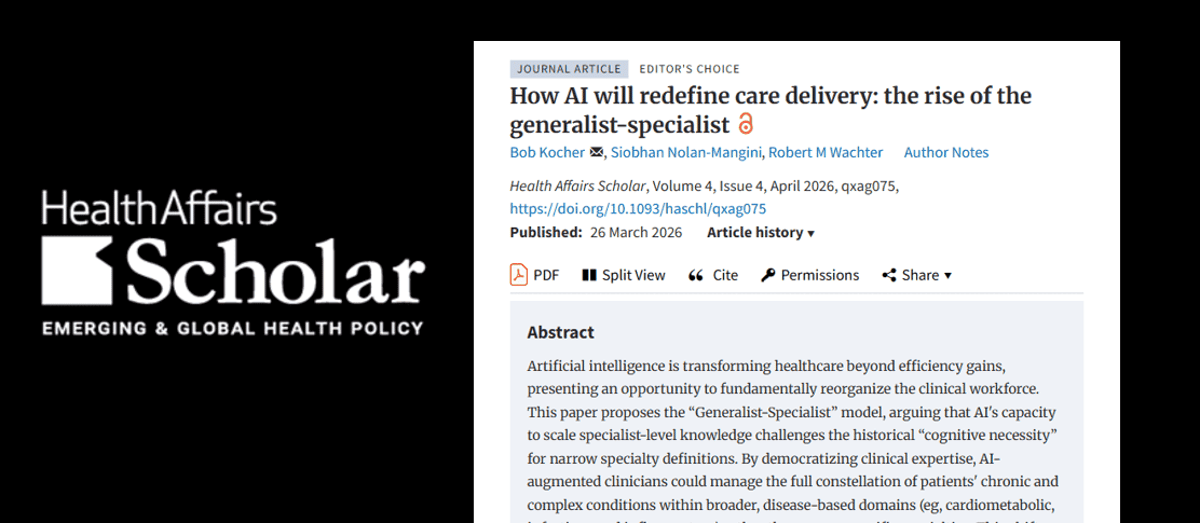
The Rise of the Generalist-Specialist
AI models are now passing specialist board exams, prompting a re‑imagining of clinical roles. Researchers propose "generalist‑specialists"—physicians who blend traditionally separate specialties such as cardiology, endocrinology and nephrology to manage disease domains holistically. This model promises fewer handoffs, faster diagnoses...

Why AI Vendors Struggle to Compete With EHRs
A new JAMA article highlights how entrenched electronic health record (EHR) vendors dominate AI adoption in U.S. hospitals, making it difficult for independent AI firms to gain traction. HealthAffairs data show 79% of hospitals use AI from their EHR vendor...

Google AMIE Shines in First Real-World Study
Google’s Articulate Medical Intelligence Explorer (AMIE) completed a prospective clinical trial with 100 patients at Beth Israel Deaconess Medical Center, collecting histories and delivering diagnostic differentials before primary‑care visits. The study reported zero safety stops, a correct final diagnosis in...

How to Build Patient Trust in Medical AI
A JAMA Network Open study of 3,000 U.S. adults examined trust in AI‑assisted medical visits for a moderate‑risk rash. Participants favored AI that outperformed specialists, increasing visit preference by 32.5%, while doctor presence only added 18.4%. FDA approval and other...

Microsoft Dragon Copilot Gets AI Upgrades
Microsoft showcased its Dragon Copilot at HIMSS 2026, positioning it as a unified AI‑driven hub for clinical workflows. The platform now integrates trusted medical content from Wolters Kluwer and Elsevier, adds partner‑powered AI apps through the Microsoft Marketplace, and offers...

Infinite Healthcare, What’s It Worth?
Andreessen Horowitz argues that AI will transform healthcare from a scarce, per‑service model into an abundant, proactive one. By expanding clinician capacity and lowering marginal costs, AI enables continuous monitoring, coaching, and early interventions at scale. This shift challenges traditional...

PHTI Breaks Down Barriers to Clinical AI
The Patient‑Centered Health Technology Initiative (PHTI) released a Clinical AI report built from a workshop with senior leaders across health systems, insurers, tech firms, and federal agencies. Participants identified policy, reimbursement, and evidence gaps as primary barriers to scaling AI...

LLMs Still Struggle With Medical Misinformation
A Lancet Digital Health study evaluated 20 large language models with over three million medical prompts, revealing a high susceptibility to misinformation. Neutral prompts led to a 32% acceptance rate of false information, which rose to 46% when embedded in...