
eCommerce Fastlane
Weekly podcast and blog that provides Shopify merchants with proven marketing strategies and app recommendations to accelerate growth. Hosted by Steve Hutt (Shopify expert and former Merchant Success Manager) sharing insights from top DTC founders and tech partners

How Oral-Care Brands Win With Smarter DTC Merchandising
Oral‑care brands are moving from commodity shelf‑ware to direct‑to‑consumer (DTC) models that embed the toothbrush into a daily habit rather than a one‑off purchase. By bundling starter kits, offering scheduled brush‑head replacements, and creating tiered product ecosystems, they turn a $30‑$200 device into a recurring revenue stream. The DTC approach also provides real‑time consumer feedback, enabling rapid product iteration and personalized merchandising. Ultimately, these strategies extend customer lifetime value and shift growth drivers from price competition to routine retention.

Human in the Loop Systems: Designing Feedback Loops That Improve Model Judgment
Deploying AI models in production introduces operational, regulatory, and policy risks when model behavior drifts unchecked. Structured human-in-the-loop (HITL) systems provide a governance layer that captures uncertain outputs, routes them for expert review, and feeds validated corrections back into training...

What Is Agentic Shopping and What It Means for Your Store
Agentic commerce lets AI assistants act as autonomous personal shoppers, handling product research, comparison, and checkout without the user leaving the chat. McKinsey estimates these agents could generate $3‑5 trillion in global commerce by 2030, creating a new high‑intent sales channel...

How to Market Your Business on Social Media in 2026
In 2026, businesses must treat social media as a measurable growth engine rather than a guessing game. A clear strategy that ties each post to specific goals, audience research, and a content calendar is essential. Selecting platforms based on where...

What Is Prospecting and How Can It Grow Sales? (2026)
Sales prospecting is the disciplined process of identifying, researching, and contacting potential buyers before they enter the sales funnel. By defining an ideal customer profile and prioritizing leads based on fit, intent, budget, and timing, teams can personalize outreach across...

Shopify Productivity Tools For Sellers Who Work Across Multiple Time Zones
Shopify sellers operating across multiple time zones can eliminate costly delays by consolidating to a single store time zone and leveraging a lightweight stack of productivity tools. Recommended tools include a world‑clock widget, focus‑timer apps, proxy services for regional testing,...

How to Use TikTok Stories to Engage Followers (2026)
TikTok Stories let brands share 24‑hour photo or video updates, providing a low‑pressure way to stay visible between feed posts. Marketers can use Stories to test new ideas, showcase behind‑the‑scenes moments, tease product launches, and create a sense of exclusivity....

Deepseek For Ecommerce: How AI Chatbots Are Transforming Online Business
Deepseek for ecommerce is an AI‑powered chatbot platform that leverages deep learning and natural‑language processing to deliver real‑time, personalized customer interactions. It integrates with shopping carts, CRM systems, and payment gateways, enabling 24/7 support, product recommendations, order tracking, and automated...

Choose the Best Event Calendar App for Ecommerce (2026)
Shopify merchants can now turn launches, workshops, and pop‑up events into revenue streams by adding a dedicated event calendar app to their storefront. The article outlines how apps vary from simple listings to full‑featured ticketing and appointment‑booking solutions, and it...

Build a Better Cash Wrap Counter for More Sales (2026) – Shopify
Shopify’s 2026 guide explains how a well‑designed cash wrap can turn the final checkout moment into a revenue engine. It outlines layout tactics, from placing the register near exits to creating impulse‑product displays that lift average ticket size. The article...

Text App Review: Is This AI Customer Service Tool Right for Your Shopify Store?
Text is an AI‑powered customer‑service platform that adds a live‑chat widget, shared inbox, ticketing system, and autonomous AI agent to Shopify merchants. For stores generating $500 K to $5 M annually with 2‑10 support staff, the tool can resolve up to 89 %...

How Can an AI Recommendation System Increase Sales?
AI recommendation systems transform browsing data into personalized product suggestions, boosting discovery and average order value. By leveraging content‑based, collaborative, or hybrid models, merchants can match algorithm complexity to their data volume and traffic. Real‑world cases like Orveon Global’s 10‑15%...

Best AI Agents for Sales: How AI Sales Agents Actually Work
AI sales agents are software that automate routine sales tasks such as abandoned‑cart recovery, lead qualification, and personalized follow‑ups, allowing merchants to operate 24/7 without expanding staff. They connect to ecommerce platforms, CRMs, and email tools via APIs, executing actions...
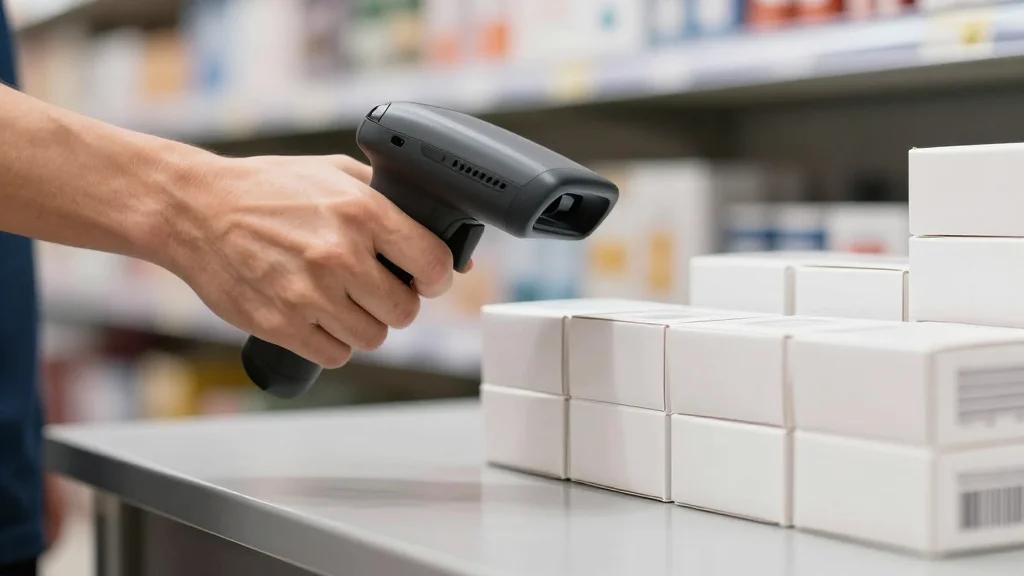
How To Do Inventory Counts with Shopify POS
Shopify is retiring the Stocky app, removing it from the App Store on February 2 2026 and ending functionality on August 31 2026. Retailers must shift to the built‑in Quick Count extension included with POS Pro, which lets staff scan and adjust inventory directly...

How Your Product Margins Should Dictate Your Ad Budget
Shopify dropshippers often set ad spend arbitrarily, ignoring the decisive role of product margin. By calculating break‑even ROAS—selling price divided by profit per unit—stores can determine the minimum return needed to avoid losing money. Analysis of 211 products shows most...

How Ecommerce Brands Should Budget for Penetration Testing in 2026 Without Under-Scoping Risk
E‑commerce brands in 2026 must treat penetration testing as a revenue‑protection expense rather than a simple compliance line‑item. Modern stacks combine headless front‑ends, APIs, third‑party services, and mobile apps, expanding the attack surface far beyond the public storefront. Budgeting errors...

How AI-Powered Music Can Transform Content Creation in 2026
AI‑generated music has moved from a novelty to a core production layer in 2026, with major platforms shifting toward licensed models and stricter transparency rules. Creators can now generate dozens of soundtrack variations in minutes, ensuring brand‑consistent audio while maintaining...

Implementing Salesforce in Your Company: CRM System and Cloud
Implementing Salesforce transforms a company by consolidating sales, marketing, and service data into a single cloud‑based CRM, enabling faster decision‑making and scalable automation. The rollout follows defined stages—analysis, design, configuration, testing, and adoption—each aimed at minimizing risk and controlling costs....

Making Value Legible: How Heritage Brands Win in Ecommerce
Heritage brands often see weak ecommerce performance, mistakenly attributing it to pricing. The article argues that the real issue is the inability to make a product's value legible online, especially for premium items. THORENS exemplifies how visible mechanical design and...

ElevenLabs Eleven V3 Review: A More Expressive Voice Model For Creators and Developers
ElevenLabs unveiled its flagship Eleven V3 model, marketed as the most expressive AI voice engine for creators and developers. The model introduces inline audio tags that let users dictate tone, emotion, and non‑verbal cues directly in the script. It also...

Product Transparency: The Ecommerce Trust Signal You’re Ignoring
Product transparency is emerging as a core conversion lever for ecommerce brands, moving beyond basic FAQs to verifiable, data‑rich disclosures about sourcing, testing and manufacturing. The article highlights how niche players like Herbilabs use batch‑specific Certificates of Analysis to turn...

How to Choose Influencer Marketing Services for Your Brand
Choosing the right influencer marketing service hinges on whether a brand needs a DIY platform, a niche agency, or a full‑service partner. Platforms supply creator databases and outreach tools but leave strategy and execution to internal teams, while full‑service agencies...

Top 6 Translation Companies for E-Commerce Localization
The article ranks six translation providers—Tomedes, Smartling, Phrase, Translated, Gengo, and Weglot—tailored for Shopify merchants expanding internationally. It underscores that 76% of shoppers prefer buying in their native language and 40% will never purchase from a non‑native site, making localization...

How to Start a Wine Business in 10 Steps
The article outlines how to launch a wine business, detailing six business models—from owning a vineyard to operating a subscription service—and a ten‑step checklist covering vision, market research, financing, branding, location, licensing, suppliers, website, and marketing. It highlights that the...

How Ecommerce Brands Scale Profitably Without Heavy Ad Spend?
E‑commerce brands are moving away from costly paid‑media models toward strategies that emphasize customer retention, organic visibility, and operational efficiency. By leveraging email automation, loyalty programs, and post‑purchase support, companies can increase lifetime value while spending less on acquisition. SEO,...

Promo Party Pro Review: The Free Gift With Purchase App Built by Shopify’s Most Trusted Voice
Promo Party Pro is a Shopify app that enables merchants to run free‑gift‑with‑purchase (GWP) promotions without any coding. Developed by Ethercycle’s Kurt Elster, it costs $19 per month and offers auto‑add, variant‑picker, discount‑code compatibility, and scheduled campaigns. Early adopters report...

8 Free Project Management Tools for Small Businesses
Small ecommerce businesses can boost productivity without spending by using free project‑management tools. The article lists eight options—including Shopify Flow, Trello, Asana, Google’s suite, ClickUp, Freedcamp, Notion, and Jira—detailing their core features, user limits, and integration possibilities. While free tiers...

How Saatva Pulled Back the Covers on TV-Driven Phone Sales
Saatva partnered with Tatari and Invoca to integrate phone‑call data into its TV attribution model, allowing the luxury mattress brand to trace calls back to specific TV ads. The solution uses a Tatari session ID captured on the website and...

RFID Warehouse Management System: The Modern Guide To Real-Time Visibility And Operational Efficiency
RFID warehouse management systems enable real‑time, hands‑free tracking of inventory through tags, readers, and software integration, dramatically improving accuracy and labor efficiency. While offering superior range, bulk scanning, and data capacity over barcodes, full RFID deployments require significant hardware, software,...

8 Conversion Rate Mistakes Killing Your Shopify Dropshipping Store (And How to Fix Them)
The article outlines eight common conversion‑rate mistakes that cripple Shopify dropshipping stores and provides data‑backed fixes drawn from 26,500 builds. It warns that many operators focus on traffic while neglecting product focus, generic design, missing trust signals, slow mobile speed,...

How Google Ads Quality Scores Work: Boost Your Quality Score
Google Ads Quality Score, a 1‑to‑10 metric, gauges keyword, ad and landing‑page relevance and directly influences ad rank and cost‑per‑click. A high score can elevate ads to premium positions while reducing fees, whereas a low score may prevent ads from...

DevOps Digital Transformation: From Maintenance Trap to Market Speed (2026) – Shopify
Engineering teams devote 60‑80% of their time to maintaining infrastructure, leaving little capacity for customer‑facing innovation. While DevOps promises faster delivery, many enterprises add layers of pipelines and tooling without addressing the underlying maintenance burden, causing initiatives to stall. The...

How AI Is Automating Everything in 2026 — Including How Professionals Apply for Jobs
AI-driven platforms like RoboApply now automate the entire job‑search workflow, allowing candidates to generate and submit 50‑100 customized applications each week. By continuously scanning major job boards, tailoring resumes and cover letters to ATS requirements, and tracking response data, these...

Pipeline Management Best Practices + Improvement Tips
Sales teams lose deals due to disorganized pipelines; a structured sales pipeline provides visual deal tracking and stage clarity. Research from the 2024 Sales Performance Scorecard shows companies with formal pipeline processes achieve win rates about 8% higher. Effective pipeline...

What Is Distributed Order Management? How Shopify Supports DOM (2026)
Distributed order management (DOM) lets retailers route orders to the optimal fulfillment node—store, warehouse, or 3PL—based on real‑time inventory, cost, and delivery windows. In 2026, 68.99% of brands aim to ship U.S. orders within two to three days, making precise...

Best AI Lip Sync and Video Dubbing Tools in 2026: A Side-by-Side Comparison
A new 2026 comparison evaluates four AI lip‑sync and video dubbing platforms—Dubly.AI, HeyGen, Rask AI, and Vozo—for Shopify merchants and DTC brands seeking multilingual video content. Dubly.AI’s purpose‑built Lip Sync 2.0 achieved a 96.4 benchmark score, far outpacing HeyGen’s 76.8 and...

Trend Analysis 101: How To Perform a Trend Analysis
E‑commerce entrepreneur Elyse Burns leveraged TikTok comments to launch a bestselling Kindle case, illustrating how real‑time customer insights can spark profitable product trends. The article defines trend analysis as the systematic review of quantitative metrics such as sales, web traffic,...

How DTF Printing Services Are Reshaping Scalable Ecommerce Production Models
Direct‑to‑Film (DTF) printing lets Shopify and DTC apparel brands replace fixed‑cost, bulk inventory with an on‑demand, variable‑cost model by outsourcing film transfers to regional suppliers such as those in Chicago. The technology separates high‑resolution printing from the heat‑press step, removing...

Google AI Mode Vs. ChatGPT Shopping: Which Channel Should Shopify Merchants Prioritize?
Shopify merchants now have two live AI‑driven shopping channels: Google AI Mode, which embeds shoppable results in Google Search and the Gemini app, and ChatGPT Shopping, which lets shoppers buy through OpenAI’s chat interface. Google’s model currently carries no extra...

Shopify Tinker: What It Actually Means for Your Content Budget
Shopify launched Tinker, a free mobile creative studio that bundles over 100 AI tools for product photography, logo design, and short‑form video. The app eliminates the need for separate AI subscriptions and costly freelance shoots, promising zero‑dollar production costs for...

How Review Syndication Works: Technical Guide
Review syndication links direct‑to‑consumer feedback with major retail platforms, turning social proof into a conversion engine. Leveraging SMS‑based review requests can lift collection rates 66% versus email, while photo‑rich reviews increase purchase intent by 137%. Even a modest set of...

What Is Rolling Inventory? How to Manage It With Shopify (2026)
Rolling inventory treats trailers, containers and roll cages as mobile storage, letting inbound freight wait in the yard until needed. Developed at UMass Amherst, the strategy cuts labor by avoiding repeated unload‑reload cycles and eases congestion in increasingly expensive warehouse...

What Is an H1 Tag? How To Write H1 Tags For Readability and SEO
The H1 tag is the primary headline HTML element that tells both readers and search engines what a page is about. Including the target keyword in a concise, under‑70‑character H1 improves relevance and aligns with user search intent. A single...

For Brands – Affiliate Vs. Influencer Vs. Creator Marketing: What’s The Difference (And Which One Do You Need)?
The article breaks down affiliate, influencer, and creator marketing, highlighting how each model differs in compensation, goals, and content style. Affiliate programs are performance‑based, delivering an average ROI of $6.50 per dollar and influencing 16% of global e‑commerce sales. Influencer...

18 Product Management KPIs and How To Track Them
The article outlines 18 essential product‑management KPIs grouped into business revenue, growth, customer satisfaction, development, and user engagement categories. It explains how each metric—such as MRR, CAC, NPS, and feature adoption—provides concrete insight into product health across its lifecycle. Practical...
Enterprise Open Source: The Real Cost of Free and When It Makes Sense (2026) – Shopify
Open‑source software underpins modern enterprise stacks, but its zero‑price license masks substantial hidden expenses. Shopify’s guide outlines a spectrum from raw community projects to fully managed platforms, showing how total cost of ownership expands across infrastructure, implementation, maintenance, security, and...

Magento 2 Loyalty Program: Build A Retention Engine
Magento 2’s loyalty program is evolving from simple discount codes to a sophisticated retention engine that blends data‑driven automation with experiential rewards. Merchants can leverage native GraphQL fields, real‑time webhooks, and virtual‑product attributes to recognize milestones, eliminate redemption friction, and capture...

Imagine Affiliate Review: Is This the Right Affiliate Agency for Your DTC Brand?
Imagine Affiliate is a boutique agency that helps Shopify DTC brands earning $20K‑$500K per month build true customer‑acquisition affiliate programs, avoiding coupon‑driven revenue cannibalization. By recruiting SEM affiliates, content publishers, and media buyers, it shifts the channel from discount redistribution...
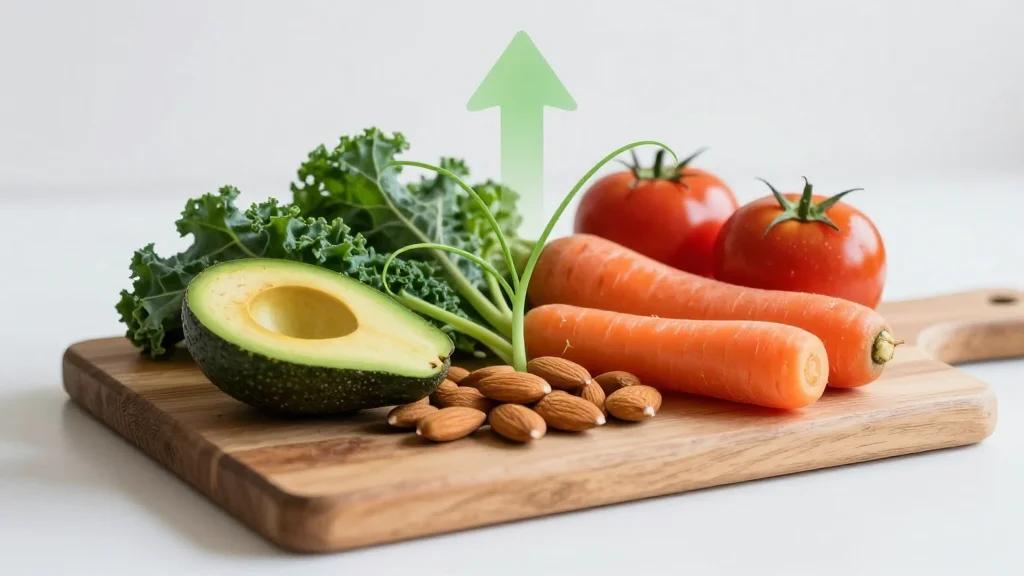
Vegan Branding 101: How To Develop a Vegan Brand Identity
The vegan market has surged, with U.S. plant‑based retail sales more than doubling from $3.9 billion in 2017 to $8.1 billion in 2024. While only about 1% of Americans are fully vegan, 59% have purchased plant‑based foods, creating a broad audience that...

“No” Is a Complete Sentence: Why the Best Ecommerce Operators Say It More Than Anyone
The article urges Shopify and DTC founders to treat "no" as a growth lever, arguing that unchecked yes‑es drain time, energy, and opportunity cost. It cites Apple, Netflix and Warren Buffett to illustrate how disciplined refusal fuels compounding success. A...