
Canada’s Bill C-22 Is a Repackaged Version of Last Year’s Surveillance Nightmare
Canada’s Bill C-22, dubbed the Lawful Access Act, revives the failed Bill C‑2 by forcing digital services to retain a full year of metadata and expanding data‑sharing with foreign governments. The legislation authorises the Minister of Public Safety to demand backdoors in services, provided they do not create a “systemic vulnerability,” while prohibiting companies from disclosing such orders. Definitions of “encryption” and “systemic vulnerability” are deliberately vague, giving authorities broad leeway to bypass security safeguards. Major tech firms including Apple and Meta, as well as US congressional committees, have publicly condemned the bill.

EFF to Fourth Circuit: Electronic Device Searches at the Border Require a Warrant
The Electronic Frontier Foundation, joined by the ACLU, state affiliates and the National Association of Criminal Defense Lawyers, filed an amicus brief urging the Fourth Circuit to require a warrant for all electronic device searches at U.S. borders. The brief...
Congress Narrowed the GUARD Act, But Serious Problems Remain
Congress has narrowed the GUARD Act, limiting its scope to AI companions that simulate emotional interactions rather than all AI chatbots. The revised bill still mandates intrusive, identity‑linked age verification and raises penalties to $250,000 per violation. Critics argue the...
The SECURE Data Act Is Not a Serious Piece of Privacy Legislation
The SECURE Data Act, drafted by House Republicans, offers only limited consumer rights and would preempt the 21 state privacy laws currently in effect. While it grants basic access, correction, deletion and portability, it lacks a private right of action...

EFF and 18 Organizations Urge UK Policymakers to Prioritize Addressing the Roots of Online Harm
The Electronic Frontier Foundation and 18 digital‑rights groups have sent a joint letter to UK policymakers urging a shift away from blanket age‑gating and access restrictions proposed under the Children’s Wellbeing and Schools Bill. They argue that mandatory age‑assurance systems...

EFF Submission to UK Consultation on Digital ID
Britain's Labour government is moving forward with a national digital ID scheme, prompting the Electronic Frontier Foundation (EFF) to submit formal comments to a government consultation. The EFF’s submission outlines six core concerns—mission creep, privacy infringements, security vulnerabilities, reliance on...

Getting Digital Fairness Right: EFF's Recommendations for the EU's Digital Fairness Act
The Electronic Frontier Foundation (EFF) has issued a set of recommendations for the EU’s proposed Digital Fairness Act (DFA), urging the legislation to ban deceptive dark‑pattern designs, curb surveillance‑driven business models, and reinforce user sovereignty. EFF warns that age‑verification mandates...

Utah’s New Law Targeting VPNs Goes Into Effect Next Week
Utah’s Senate Bill 73, signed on March 19, 2026, takes effect on May 6 and targets VPNs used to evade state‑mandated age‑verification checks. The law treats any user physically in Utah as subject to verification, even if they mask their...

Open Records Laws Reveal ALPRs’ Sprawling Surveillance. Now States Want to Block What the Public Sees.
The Electronic Frontier Foundation warns that a wave of state bills in Arizona, Connecticut, Washington, Illinois, Georgia, Maryland and Oklahoma would exempt automated license‑plate reader (ALPR) data from public‑records disclosure. Using FOIA requests, journalists and advocates have exposed misuse, error...

EFF Submission to UN Report on the Role of Media in the Context of Israel’s Policies Toward Palestinians
The Electronic Frontier Foundation (EFF) submitted a briefing to the UN Special Rapporteur on human rights in the occupied Palestinian territories, documenting a sharp decline in press freedom since October 2023. The submission highlights a surge in government takedown requests, disinformation...
Congress Must Reject New Insufficient 702 Reauthorization Bill
Speaker Johnson introduced the Foreign Intelligence Accountability Act as a last‑minute effort to reauthorize Section 702 of FISA, which is set to expire in days. The bill adds a post‑search review by a civil‑liberties officer but stops short of requiring...

EFF Challenges Secrecy In Eastern District of Texas Patent Case
The Electronic Frontier Foundation (EFF) has filed a motion to unseal key filings in the Wilus Institute of Standards and Technology Inc. v. HP Inc. patent case, which centers on Wi‑Fi 6 standard‑essential patents (SEPs). The Eastern District of Texas had...
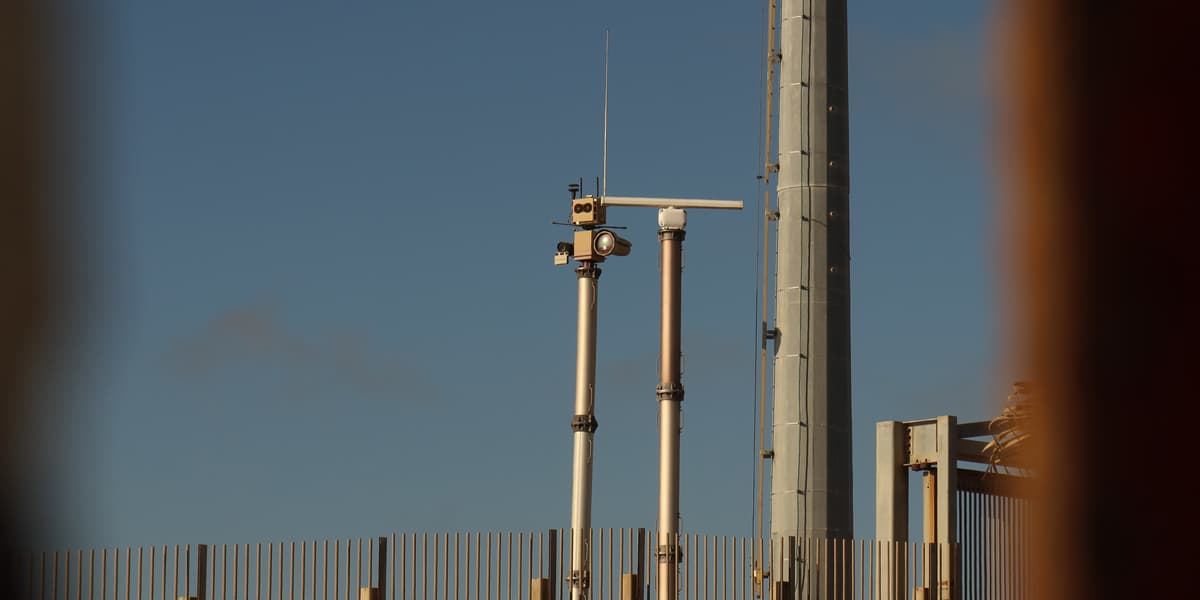
California Coastal Community Must Reject CBP's AI-Powered Surveillance Tower
Customs and Border Protection has applied to the city of San Clemente to place an Anduril Industries Autonomous Surveillance Tower, known as the Sentry, on a cliff 1.5 miles inland. The AI‑powered system combines video, radar and computer‑vision to monitor...

Copyright and DMCA Best Practices for Fediverse Operators
Decentralized social platforms like Mastodon, Bluesky, and RSS mirrors can limit copyright liability by complying with DMCA safe harbor requirements. Operators must designate a registered DMCA agent, promptly act on takedown notices, maintain a repeat‑infringer policy, and avoid encouraging infringement....
How Push Notifications Can Betray Your Privacy (and What to Do About It)
Push notifications travel through Apple or Google servers before reaching a device, exposing message content and metadata to the platform providers. Law‑enforcement can compel these companies to hand over notification data, and forensic tools can recover deleted notifications from a...