The Future of Cybersecurity: What CISOs Must Do Differently in 2026
The 2026 cybersecurity outlook warns CISOs that AI‑powered attackers, ransomware‑as‑a‑service, and deepfake fraud are outpacing traditional defenses. Signature‑based tools and manual patching are obsolete, while real‑time behavioral analytics, dynamic allowlisting, and automated containment become essential. Boards now demand concrete metrics—dwell time under six hours, MTTR under 24, and >95% exfiltration detection—backed by immutable backups and zero‑trust architectures. CISOs must evolve from control implementers to risk translators, linking technical safeguards to clear business impact narratives.
Identity for the Machine Age: A CISO’s Framework for Agentic AI Governance (2026 Edition)
Enterprises must shift from treating AI as a simple application to governing autonomous agents through identity. The 2026 CISO framework outlines seven pillars—provenance, least‑privilege scopes, time‑bound credentials, secure transport, behavioral guardrails, auditability, and machine‑speed revocation—to secure agentic AI. By embedding...

Countering Terrorist Operations in the Age of Hybrid Warfare
Dr. Erdal Ozkaya announced his appointment as lecturer and advisor at NATO’s Centre of Excellence Defence Against Terrorism (COE‑DAT) for the upcoming “Terrorist Use of Cyberspace” course in Ankara. The curriculum will dissect surface‑web propaganda, hidden‑web supply chains, and the...

The Ozkaya Board Briefing Framework: How CISOs Win the 15 Minutes
Dr. Erdal Ozkaya proposes a four‑step Board Briefing Framework—Risk, Decision, Metric, Ask—to replace the typical technical deep‑dives that leave boards disengaged. He shows how most CISO updates fail by speaking in jargon, presenting vanity metrics, or offering no decision, resulting...

Instagram Account Hacked? A Cybersecurity Expert’s Recovery & Prevention Guide (2026)
A seasoned CISO outlines how Instagram accounts are hijacked and provides a step‑by‑step recovery plan. The guide identifies four primary attack vectors—phishing, credential stuffing, SIM swapping, and third‑party app abuse—accounting for the majority of compromises. Immediate actions include checking security...
Nessus Essentials: Complete Guide for Security Professionals (2026)
Tenable’s free Nessus Essentials provides the same scanning engine and full plugin library as its paid versions, but restricts users to 16 IP addresses per activation and omits compliance, content‑audit, live‑update, virtual appliance, and agent capabilities. The rebranding removed the...

Introduction to Risk Management: A Complete Guide for Security Professionals
Dr. Erdal Ozkaya’s free guide delivers a complete, step‑by‑step introduction to cyber risk management, covering definitions, the seven core concepts, quantitative formulas, and the NIST Risk Management Framework. It shifts security teams from reactive alert firefighting to strategic decision‑making by...
Digital Forensics and Incident Response (DFIR): A CISO’s Guide
Digital Forensics and Incident Response (DFIR) combines evidence collection with threat containment, forming a critical capability for CISOs. The guide outlines core functions—evidence preservation, malware and network analysis, and emerging cloud forensics—while stressing the need for pre‑enabled logging. It recommends...

OT Network Segmentation: A Practical Guide for Security Teams
Network segmentation is the most effective control for safeguarding operational technology (OT) environments, limiting attackers to isolated zones rather than allowing lateral movement. Implementing segmentation in OT differs from IT because industrial protocols and legacy equipment resist typical firewall solutions...

Incident Response Planning for Business Continuity
Organizations lacking a tested incident response plan face escalating costs, reputational damage, and evidence loss during cyber attacks. The article outlines the NIST incident response lifecycle—preparation, detection, containment, and post‑incident review—and stresses integrating business continuity to meet recovery time objectives....

OT vs IT Security: Why Industrial Environments Need Different Protection
The 2021 Oldsmar water‑treatment hack exposed how connected operational technology (OT) can be weaponised, highlighting the stark contrast between OT and traditional IT security. In OT, availability outweighs confidentiality, because a brief outage can trigger safety incidents or regional blackouts....

The CISO as a Business Leader: Moving From the Server Room to the Boardroom
The article argues that the modern CISO must become a business leader, not just a technical specialist. It stresses translating technical risk into revenue‑impact language for the board. Key skills include aligning security initiatives with business outcomes, building executive relationships,...
Quantum-Safe Security: What CISOs Need to Know Now (Before It’s Too Late)
Quantum computing threatens to break today’s asymmetric encryption, making current data protection obsolete. The most immediate risk is a “harvest now, decrypt later” attack, where adversaries steal data today and decrypt it once quantum capabilities mature. Experts estimate viable quantum...
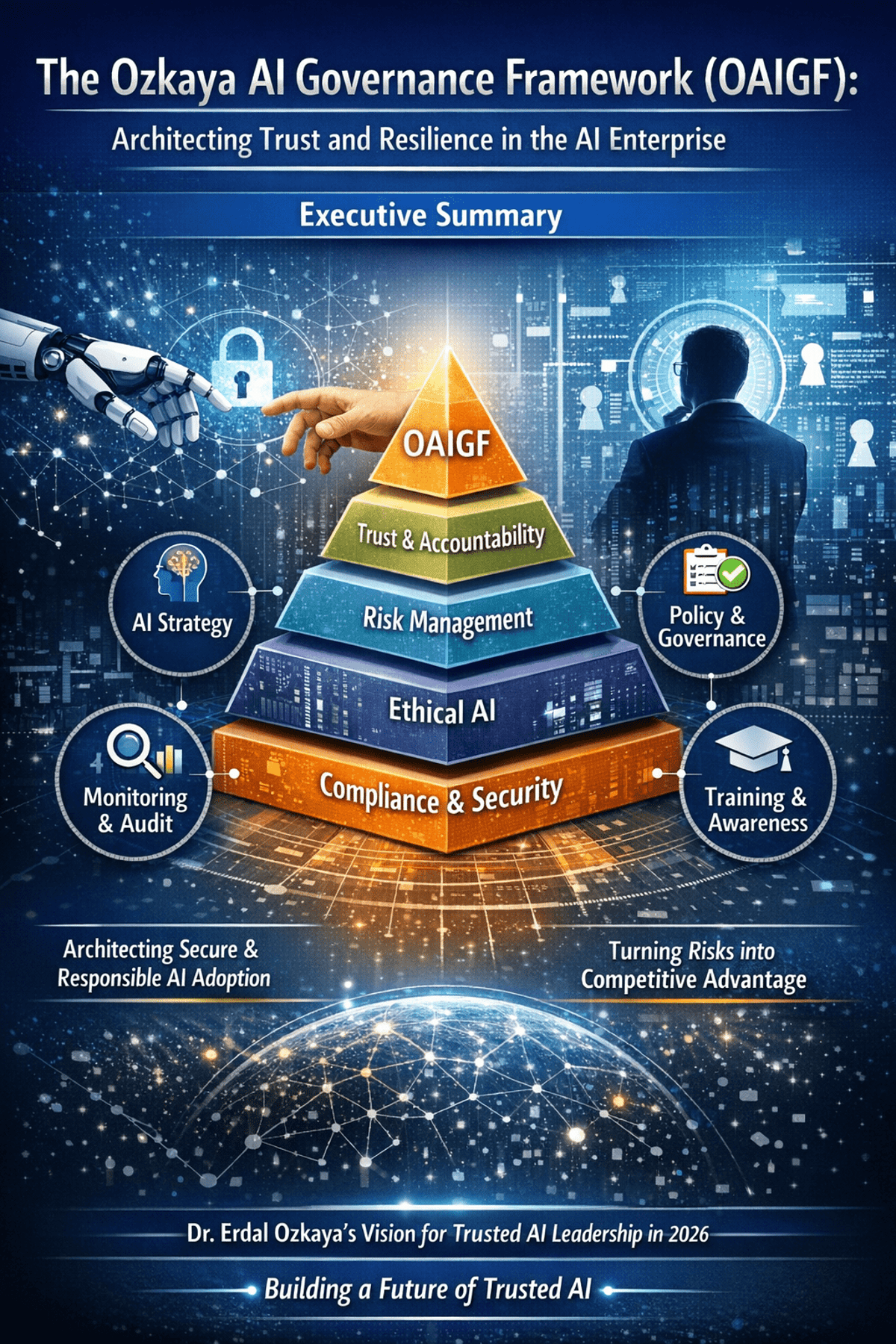
The Ozkaya AI Governance Framework (OAIGF): Architecting Trust and Resilience in the AI Enterprise
The Ozkaya AI Governance Framework (OAIGF) is a practitioner‑driven methodology that equips CISOs with a comprehensive blueprint for secure, ethical, and compliant AI deployment at enterprise scale. Building on standards such as NIST AI RMF and ISO/IEC 42001, the framework defines...

Beyond the CLI: 5 Governance Questions Every CISO Must Ask Before Deploying Claude Code
Anthropic’s Claude Code introduces a CLI‑based AI agent that can navigate repositories, draft patches, and run tests, turning code remediation into a near‑instant process. While the speed gains are compelling, the tool also grants autonomous execution rights that blur traditional...