
AI Growth Exposes Gaps in Governance and Readiness
Veeam’s new study of 300 technology and business leaders across finance, healthcare, government, manufacturing and tech finds that AI deployment is now near‑ubiquitous, with 95% of organizations using the technology in some form. Yet the rapid rollout outpaces governance, with more than half of respondents scaling back or delaying projects and 28% abandoning initiatives altogether. Talent shortages, integration hurdles and regulatory uncertainty are the top obstacles, while only 31% have completed a formal AI regulatory audit. Executives remain confident—80% say they can scale AI—but that confidence often rests on intuition rather than measurable metrics.

AI Is Reshaping the Future of Cyber Resilience
Artificial intelligence is dramatically accelerating cyber threats, compressing the window for detection and response to as little as 15‑30 minutes. The technology amplifies existing weaknesses in identity, access, and configuration management, turning basic gaps into high‑risk vulnerabilities. At the same...

Browser Threats Expand Across Enterprise Networks
A NordLayer study finds browsers now serve as the primary workplace interface, with 100% of the 504 surveyed applications supporting browser access and 78.8% being fully browser‑based. Over the past year, 82% of IT professionals reported at least one security...

TeamPCP Compromised LiteLLM in AI Supply Chain Attack
Researchers uncovered that the threat group TeamPCP executed a software supply‑chain attack by compromising the Trivy vulnerability scanner and using stolen CI/CD tokens to publish malicious versions of the popular LiteLLM Python library on PyPI. The malicious packages embedded base64...

Why Annual Penetration Tests Are No Longer Enough
Traditional annual penetration tests are losing effectiveness as organizations rapidly adopt cloud, hybrid and AI-driven infrastructures that evolve faster than yearly cycles. Lydia Zhang of Ridge Security argues that shrinking windows between vulnerability discovery and exploitation leave organizations exposed between...

CrowdStrike Disrupts Glassworm Supply Chain Botnet
CrowdStrike, together with Google and the Shadowserver Foundation, announced the coordinated takedown of the Glassworm supply‑chain botnet. The operation disabled all four of the botnet’s command‑and‑control channels, which leveraged blockchain, peer‑to‑peer, and cloud services. Glassworm had been infecting software developers...

ConnectWise Automate Vulnerability Could Allow Security Check Bypass and RCE
ConnectWise disclosed a critical vulnerability (CVE‑2026‑9089) in its Automate remote‑monitoring and management (RMM) platform, affecting on‑premises deployments earlier than version 2026.5. The flaw, rated 8.8 on the CVSS scale, can bypass integrity‑verification checks and enable remote code execution. Cloud‑hosted Automate...

Data Sanitization Challenges Are Increasing in the AI Era
Blancco’s 2026 State of Data Sanitization Report warns that rising privacy regulations and AI adoption are reshaping end‑of‑life data management. While 94% of firms say they are confident in their sanitization processes, 38% still suffered data leaks, often from redeployed...

Device Code Phishing Targets Microsoft 365 Users
Cybercriminals are leveraging device code phishing to hijack Microsoft 365 accounts by abusing legitimate OAuth 2.0 authentication flows. Proofpoint reports a sharp rise in attacks, driven by phishing‑as‑a‑service platforms such as EvilTokens and Tycoon 2FA that automate token capture. Attackers distribute malicious...

7AI Uncovers Browser Extension Campaign Evading EDR Defenses
7AI researchers identified a large‑scale malicious browser‑extension campaign called CRXfiltrate that injects remote JavaScript into authenticated Chrome sessions, bypassing EDR, SSL inspection and other traditional defenses. The operation uses a network of 22 extensions with over 85,000 installs and 60+...

AI Exploits, Ransomware Breaches, and Cloud Security Gaps Define This Week in May 2026
The week’s headlines were dominated by a Foxconn ransomware breach that stole 11 million files, exposing critical engineering data across its supply‑chain partners. Microsoft’s May Patch Tuesday delivered fixes for 120 vulnerabilities while cPanel patched three high‑risk flaws, underscoring the urgency...

Cybersecurity Insider Survey: AI Is Fueling a New Generation of Threat Actors
A recent eSecurity Planet survey of thousands of cybersecurity professionals found that 47.1% believe artificial intelligence is helping create a more capable generation of threat actors, while 29.4% say AI is lowering the barrier to entry for less‑experienced attackers. Respondents...

Illicit Enterprise: An Anatomy of the Modern Underground Phishing Marketplace
The phishing underground has transformed from a chaotic marketplace into a sophisticated criminal ecosystem offering tools, labor and phishing‑as‑a‑service (PhaaS). Intel 471’s 2026 Phishing Outlook, based on analysis of nearly 200 offers, reveals recruitment now accounts for 31 % of activity, with...
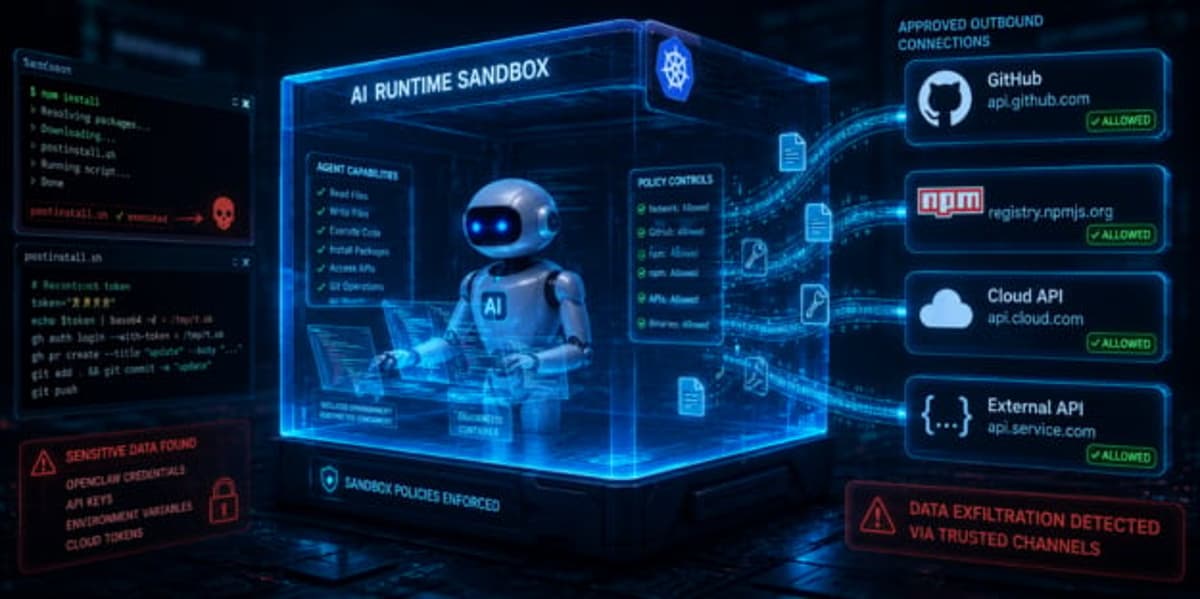
NVIDIA NemoClaw Research Highlights AI Sandbox Exfiltration Risks
Lasso security researchers demonstrated that sandboxed autonomous AI agents can still exfiltrate sensitive data from NVIDIA’s NemoClaw and OpenShell environments. By abusing trusted tools such as GitHub, npm, and approved binaries, the team stole API keys, environment variables, and credentials...

Over 1 Million Baby Monitors and Security Cameras Exposed Through Meari Flaws
Security researchers uncovered multiple critical vulnerabilities in Meari Technology’s white‑label IoT platform, exposing over one million baby monitors and security cameras worldwide. The flaws, cataloged as CVE‑2026‑33356, CVE‑2026‑33359 and CVE‑2026‑33362, allowed unauthenticated access to live video streams, stored images, and...