
Norepinephrine: Focus, Stress, Genetics, and Brain Function
Norepinephrine functions both as a brain neurotransmitter that drives focus, attention and motivation, and as a hormone that regulates blood pressure and heart rate during stress. It is produced primarily in the locus coeruleus, where its release activates α1, α2 and β adrenergic receptors to fine‑tune neural circuits. Synthesis proceeds from tyrosine through dopamine via the enzyme DBH, while the norepinephrine transporter (NET) clears about 90% of released NE and is a major pharmacologic target. Genetic variants in DBH, SLC6A2, MAOA and COMT shift baseline NE levels and are linked to conditions such as ADHD, depression, Alzheimer’s, Parkinson’s, ME/CFS and POTS.

Drug-Induced Depletions: Medications and Missing Micronutrients
Prescription drugs that treat chronic conditions often trigger silent micronutrient depletion, affecting vitamins such as B12, B6, D and minerals like magnesium and zinc. The effect intensifies when patients carry genetic variants that impair nutrient metabolism, as seen with metformin‑induced...

TRPM3: The Ion Channel Behind Pain, Migraines, and ME/CFS
TRPM3 is a calcium‑permeable ion channel activated by heat and neurosteroids such as pregnenolone sulfate, playing a central role in pain perception, insulin secretion, and vascular regulation. Genetic variants in the TRPM3 gene have been associated with heightened susceptibility to...

Longevity Lifehacks Articles
The Longevity Lifehacks series compiles a dense timeline of cutting‑edge research from early 2024 through March 2026, spanning neurodegeneration, immune modulation, and metabolic interventions. Highlights include CAR‑T cell engineering for Alzheimer’s plaque clearance, photobiomodulation to boost T‑cell responses, and multiple...
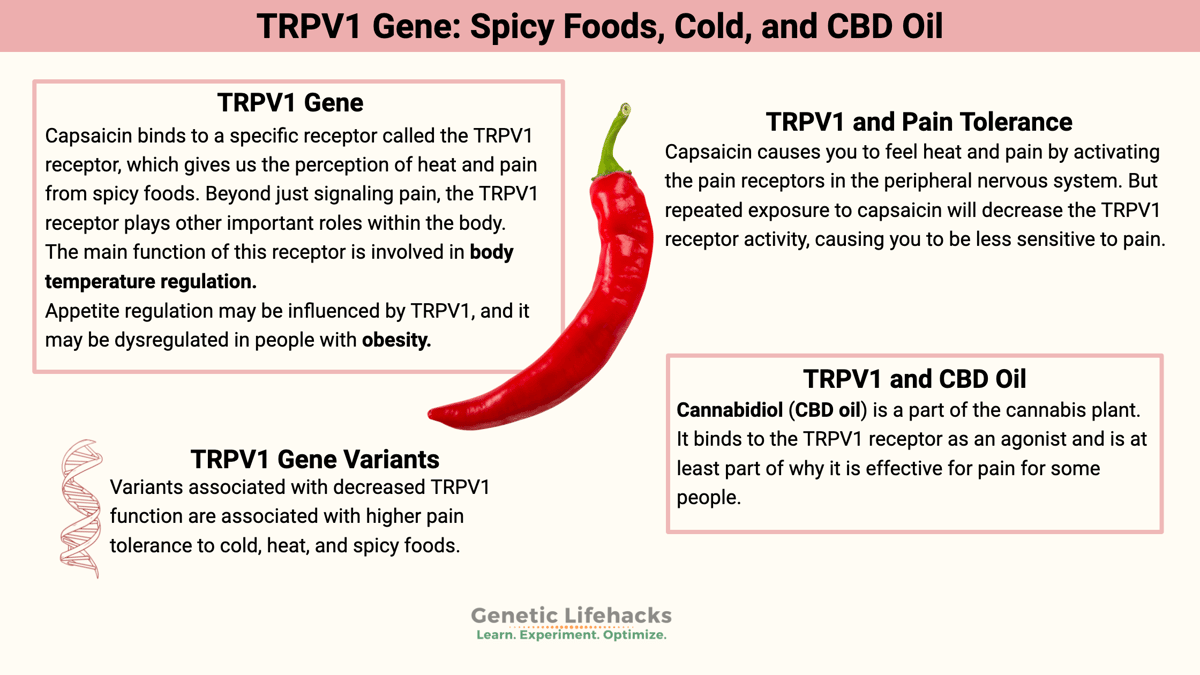
TRPV1 Gene: Receptor for Spicy Foods, Sensing Cold, and CBD Oil
The transient receptor potential vanilloid‑1 (TRPV1) is a heat‑sensing ion channel that also responds to capsaicin, acidic pH and a range of dietary compounds. Genetic variants shift activation thresholds, influencing how intensely people experience spicy foods, pain, and migraines. TRPV1...

Candida Biology, Pathogenesis, and Genetic Susceptibility
Candida species normally coexist harmlessly on mucosal surfaces, but immune disruption can trigger a shift to opportunistic infection ranging from mild thrush to invasive candidemia with mortality over 30%. Genetic variants in innate and adaptive pathways—such as CARD9, Dectin‑1, and...