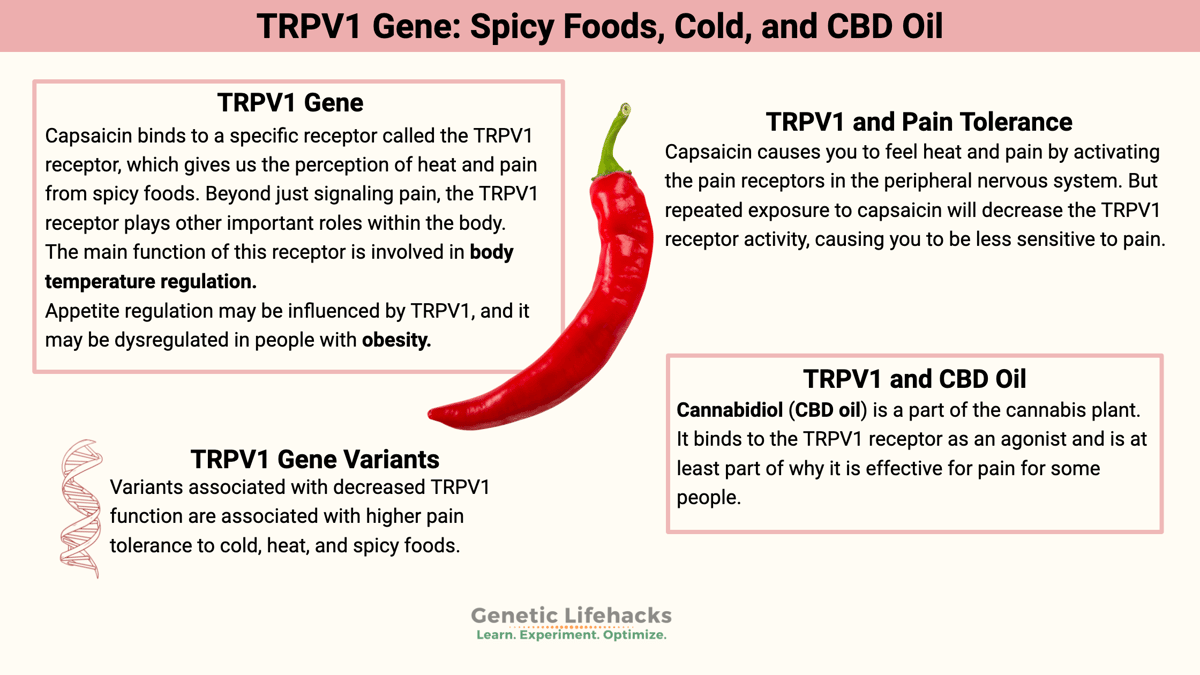
TRPV1 Gene: Receptor for Spicy Foods, Sensing Cold, and CBD Oil
Key Takeaways
- •TRPV1 senses heat, capsaicin, and acidic environments.
- •Genetic variants alter spice tolerance and pain perception.
- •CBD and endocannabinoids modulate TRPV1 activity.
- •Overactivation links to neuropathic pain and mitochondrial damage.
- •TRPV1 influences insulin sensitivity, appetite, and cardiovascular health.
Pulse Analysis
The transient receptor potential vanilloid‑1 (TRPV1) is a non‑selective cation channel embedded in peripheral nociceptors and central neurons. When tissue temperature exceeds roughly 43 °C, or when compounds such as capsaicin, piperine, or acidic pH bind the channel, it opens, allowing calcium influx and generating a rapid “burn” signal. Human genome studies have identified single‑nucleotide polymorphisms that shift activation thresholds, explaining why some individuals experience intense heat from mild chilies while others tolerate them. These variants also correlate with migraine susceptibility and broader pain phenotypes, making TRPV1 a genetic marker for sensory profiling.
Clinically, TRPV1 has become a focal point for analgesic development. Topical capsaicin creams exploit the receptor’s desensitization cycle, providing long‑lasting relief for osteoarthritis and neuropathic pain by depleting substance P. Recent trials show that cannabidiol (CBD) and related terpenes act as partial agonists, fine‑tuning the channel’s response and reducing hyper‑excitability in diabetic neuropathy models. Moreover, selective antagonists are being tested to curb chemotherapy‑induced peripheral neuropathy without impairing normal temperature perception. The dual ability to both activate and inhibit TRPV1 offers a nuanced pharmacological toolbox for personalized pain management.
Beyond nociception, TRPV1 signaling intersects with metabolic and cardiovascular pathways. Activation in pancreatic β‑cells enhances insulin secretion, while vascular smooth‑muscle expression modulates vasodilation and blood pressure regulation. Animal studies suggest that chronic TRPV1 stimulation improves energy expenditure and may protect against diet‑induced obesity, positioning the receptor as a potential target for metabolic syndrome. In women, heightened TRPV1 activity is implicated in menopausal hot flashes, and emerging data link the channel to periodontal inflammation under sleep deprivation. As research uncovers these systemic connections, TRPV1 is poised to influence drug pipelines across pain, diabetes, and cardiovascular therapeutics.
TRPV1 Gene: Receptor for Spicy Foods, Sensing Cold, and CBD Oil
Comments
Want to join the conversation?