
AI-Powered Simulations Offer Practice for Teachers in Training
Schools and districts are adopting simulation‑based training tools to close the gap between theory and classroom practice. BranchED’s AuthenTECH Practice (ATP) platform leverages large language models to create realistic student interactions without requiring VR hardware. Early pilots, including a 2019 study, show that brief simulation sessions dramatically increase teacher confidence and preparedness. Districts such as Bibb County report rapid skill gains and reduced risk of ingraining bad habits.

Parents Ask Gov. Shapiro to Address Deepfakes in Schools
Parents of two Radnor High School students who were victimized by AI‑generated deepfake videos met with Governor Josh Shapiro and Attorney General Dave Sunday to demand statewide standards for school responses. The parents criticized the district’s dismissive handling and called...

Kansas Passes Bell-to-Bell Cellphone Ban for Schools
Kansas Governor Laura Kelly signed a bipartisan bill banning all personal electronic devices, including cellphones, tablets, and smartwatches, from the opening bell until the end of the school day. The law, effective this fall, requires K‑12 public and accredited private...

NSF Awards $11M to Expand AI Training for K-12 Teachers
The National Science Foundation has awarded $11 million to the Computer Science Teachers Association to launch a multistate professional development program that equips K‑12 teachers with foundational computer science and artificial intelligence skills. The two‑year initiative will roll out in six...

City Police to Monitor Albuquerque Schools via Surveillance Center
Albuquerque Public Schools will now have a full‑time police officer monitoring every campus from the city’s Real Time Crime Center, using live camera feeds, drones and gunshot detection technology. The move adds an immediate visual layer of security, allowing officers...

Sonoma Valley Schools Approve Specific Rules for AI Use
The Sonoma Valley Unified School District Board unanimously approved a comprehensive artificial‑intelligence policy that outlines expectations, guardrails, and nine guiding principles for students, staff, vendors and volunteers. The policy emphasizes ethical, transparent use, equitable access, and the need for security,...

Allentown Schools Dive Into AI With Chatbot, Summer Institute
Allentown School District has rolled out CourseMojo, an AI‑powered chatbot, to sixth‑grade language arts classes, funded by a $45,000 Digital Promise grant. The tool analyzes student answers against the district’s StudySync curriculum and delivers instant, criteria‑based feedback. Teachers can monitor...

California Agencies Share Data to Connect Students to Scholarships
California’s Cradle‑to‑Career (C2C) data system will now integrate with the CalKIDS savings program and community‑college records to flag students eligible for scholarship funds. The partnership identified roughly 40,000 community‑college enrollees with about $20 million in unclaimed CalKIDS awards. Authorized college staff...
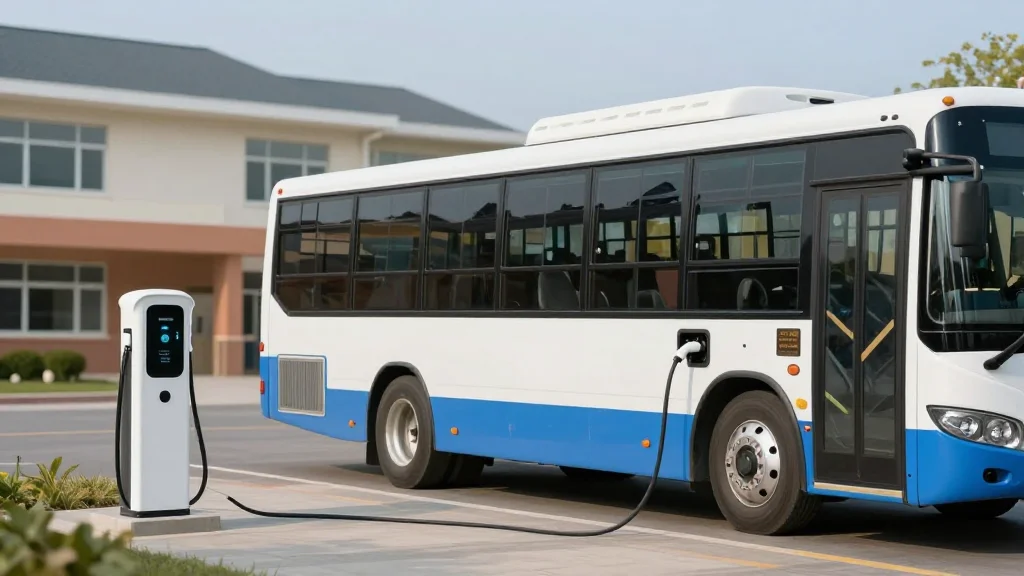
Conn. Lawmakers Propose Easing Electric School Bus Deadlines
Connecticut lawmakers have introduced a bill that eases the state’s zero‑emission school‑bus deadlines, moving the 100% target to 90% by July 1 2040 and keeping an all‑alternative‑fuel requirement for July 1 2035. Distressed municipalities would need only 50% zero‑emission buses by 2035, reaching full...

How 'Edutainment' Is Changing Learning Behaviors
A new K12 survey of over 1,000 parents and teachers finds that YouTube, TikTok and similar creator‑driven platforms have become a major supplemental learning ecosystem, with 73% of respondents saying their children use these videos to review school topics. Students...

Wake County Schools Consider Speed Cameras
Wake County school board members are evaluating a proposal to install speed‑camera systems in school zones and on school‑bus stop‑arms. The initiative aims to deter dangerous driving and channel any resulting fines to the public‑school system, pending state‑law compliance. Legal...

Study Finds Most Common Ed-Tech Tools Not Backed by Evidence
A joint Instructure‑InnovateEDU analysis of 150 frequently used classroom technology tools found that most lack federally recognized evidence of impact. Only 40% of ed‑tech tools have any alignment with the Every Student Succeeds Act (ESSA) standards, and a mere 2%...

CYBER.ORG Offers New AI Modules for Parents, Caregivers
CYBER.ORG has introduced nine new AI education modules aimed at parents and caregivers, addressing a growing digital divide as AI becomes commonplace in K‑12 classrooms. The curriculum is tiered for ages 5‑8, middle school and high school, using familiar services...

New Jersey to Use AI to Score Standardized Writing Tests
New Jersey will deploy an artificial‑intelligence system to score most writing portions of its new adaptive statewide assessments for grades 3‑10 and high‑school juniors. The AI engine, trained on human‑scored practice tests, will automatically grade essays and short answers, flagging...

WV Superintendent Tells Congress States Need Flexibility on AI
West Virginia Superintendent Michele Blatt testified before the U.S. House Education Subcommittee, highlighting the state’s flexible, checklist‑style guidance for AI use in K‑12 classrooms. The guidance, first issued in January 2024, has already been revised twice to keep pace with...
Houston ISD to Convert Elementary Schools Into 'Future 2 Schools'
Houston Independent School District will convert Gregg Elementary and Clemente Martinez Elementary into “Future 2” schools focused on artificial intelligence starting next school year. The decision follows a board vote to close 12 schools because of declining enrollment, and Betsy Ross...

Q&A: Tech and Policy Intersect in Education Savings Accounts
Education Savings Accounts (ESAs) are expanding as states seek flexible schooling options. Odyssey provides a digital‑wallet platform that processes applications, payments, and vendor vetting for ESA programs, now handling Texas’ $1 billion TEFA rollout—the largest in U.S. history. The system offers...

IT Vendor Payments Under Investigation at North Kansas City Schools
North Kansas City School District uncovered $630,000 in payments to an IT vendor that may have been for fictitious consulting services. The payments, $9,000 per month from fiscal 2020 through 2025, were approved by an employee who failed to disclose...

Boulder Valley Schools, Colo., Ban ChatGPT for Students
Boulder Valley School District blocked ChatGPT on all student devices and Wi‑Fi after safety concerns about group chats, multimedia generation, and inadequate age verification. The district is promoting MagicSchool AI, a teacher‑approved platform with built‑in guardrails. The ban received backing from...

FBI Raids LAUSD Superintendent's Home in AI-Related Probe
Los Angeles Unified School District launched the “Ed” AI chatbot in March 2024, a high‑profile effort led by Superintendent Alberto Carvalho to place the district at the forefront of educational technology. The project hinged on a $6 million contract with Boston...

Wake County Schools Weigh 'Whistleblower' Exception to Phone Policy
North Carolina law requires students to keep phones off during instructional time, but Wake County Schools are debating a "whistleblower" exemption that would let students record incidents such as bullying. The proposal aims to balance the need for safety documentation...

Solar Company to Install Microgrid at Roanoke High Schools
Roanoke City Public Schools will install a solar‑powered microgrid with battery storage at Patrick Henry and William Fleming high schools, funded by a $450,000 state grant and $2.1 million from Secure Solar Futures. The $2.55 million project, the first public‑school solar microgrid...

AI Empowers Cyber Criminals. Could It Also Help Schools Fight Them?
School districts are experimenting with generative and agentic AI to bolster cybersecurity, but results are mixed. While vendor‑built AI features provide more reliable insights than generic models, many districts still rely on traditional tools due to staffing and budget constraints....

FETC26: Modernizing Ed Tech in the Post-Pandemic Era
At the recent Future of Education Technology Conference, SETDA executive director Julia Fallon warned that the expiration of pandemic‑era emergency relief is forcing K‑12 districts to shift from crisis‑driven spending to sustainable ed‑tech modernization. She highlighted the need to rethink...

Florida Legislature Advances 'AI Bill of Rights' For K-12
Florida Senate advanced a sweeping AI Bill of Rights, adding education provisions that require schools to notify parents before granting AI tool access and to honor opt‑out requests. The bill defines "AI instructional tools" as a separate regulatory category and...

Remote Learning Still a Work in Progress at Buffalo Schools
Buffalo Schools are increasingly relying on remote‑learning days to meet New York’s 180‑day requirement amid severe winter weather and a compressed academic calendar. District officials cite safety, but teachers, parents, and students uniformly express frustration with the ad‑hoc approach. Device...

Campbell County Schools Pilot AI to Inform District Policy
Campbell County Public Schools is piloting the MagicSchool AI platform with four teachers and 15 students this spring to evaluate classroom integration. The system, currently limited to teachers, does not share data with external large language models and is used...

El Paso County, Colo., Expands Work-Based CTE Programs
El Paso County, Colorado is broadening work‑based career‑technical education (CTE) through new scholarship programs, expanded concurrent enrollment, and early‑college options. State‑backed Promise scholarships now cover tuition for low‑income students and specific tribal groups, while UCCS offers community‑college rates for concurrent...

EDSAFE AI Alliance Says AI Companions Necessitate New Policies
EDSAFE AI Alliance released the *S.A.F.E. By Design* report warning that AI companions—chatbots that simulate friendship and emotional support—are infiltrating K‑12 devices and blurring the line between educational tools and social entities. The report highlights how anthropomorphic design fuels addictive,...