
How Climate Change Is Affecting Farmers’ And Ranchers’ Mental Health
The Health Affairs podcast spotlights a new issue exploring climate, health, and equity, focusing on a recent article by Ma Powell that examines how climate change is reshaping farmers’ mental health. Powell shares her personal journey from a community‑supported vegetable farm to drought‑tolerant seed production, illustrating how rising temperatures and dwindling winter rains forced operational pivots. Key insights include the 2021 Pacific Northwest heat dome—reaching 119 °F— which pushed Powell’s family to the brink, prompting a move off their land. She defines “climate grief” as the cumulative loss and anxiety farmers feel as weather patterns become erratic, noting a dearth of U.S. research on this specific stressor. The discussion also highlights the practical adaptations farmers employ: drip‑tape irrigation, drought‑resistant varieties, and a shift to seed crops that require less water. Powell emphasizes the stigma surrounding mental‑health services in agriculture, recounting how many growers dismiss formal counseling but respond to concise, embedded psycho‑education. She cites moments when participants realized they shared “a pit in the stomach” each August, underscoring the power of naming the experience. Pilot programs now integrate 20‑30‑minute climate‑stress modules into existing extension workshops, reaching both producers and service providers. The implications are clear: without targeted mental‑health interventions, farmer burnout and reduced productivity threaten food security. Embedding climate‑stress education within agricultural extension can lower barriers, improve resilience, and inform policy aimed at supporting rural communities facing an increasingly volatile climate.

Health Care Workers In A Storm’s Path
An academic internal‑medicine physician and residency director recounts the chaos wrought by Hurricane Irma in September 2017 across South Florida’s low‑lying coastal region. The Category‑5 storm forced mass evacuations, with Miami‑Beach officials dubbing it a "nuclear hurricane," and left hospitals...

Prioritizing Community Health Solutions For Extreme Heat
Extreme heat poses a growing public‑health threat, especially for vulnerable Seattle‑King County residents. Researchers Sadia Hessen and Brad Kramer describe a participatory system‑science project that brings community members, agencies, and academics together to co‑design solutions. Using group model‑building workshops, participants created...

Provider Prices in the Commercial Sector: Reaching a Common Understanding
The virtual event, hosted by Health Affairs and funded by Arnold Ventures, examined how provider prices—especially hospital charges—drive commercial health‑spending growth. Data presented showed hospitals consume about 31% of total U.S. health expenditures, physician services 21%, and prescription drugs only 9%....

Why Traditional Payer-Provider Partnerships Fall Short In Specialty Care
The video argues that conventional payer‑provider partnerships are fundamentally misaligned for specialty care, where most healthcare cost growth occurs. Traditional tools—pay‑for‑performance, risk contracts, and shared‑savings—target revenue streams but leave the underlying delivery process untouched, resulting in stagnant costs and outcomes. Key...

What Drives Administrative Costs in U.S. Health Insurance?
The Health Affairs paper by Dr. Jason Bucksbomb and co‑authors provides the first systematic, state‑level comparison of health‑insurance administrative spending and profit for 2023, covering fully insured commercial plans, self‑funded commercial coverage, and Medicaid managed‑care. The authors estimate roughly $600 per enrollee...
The 340B Program: Why It Avoids Budget Scrutiny
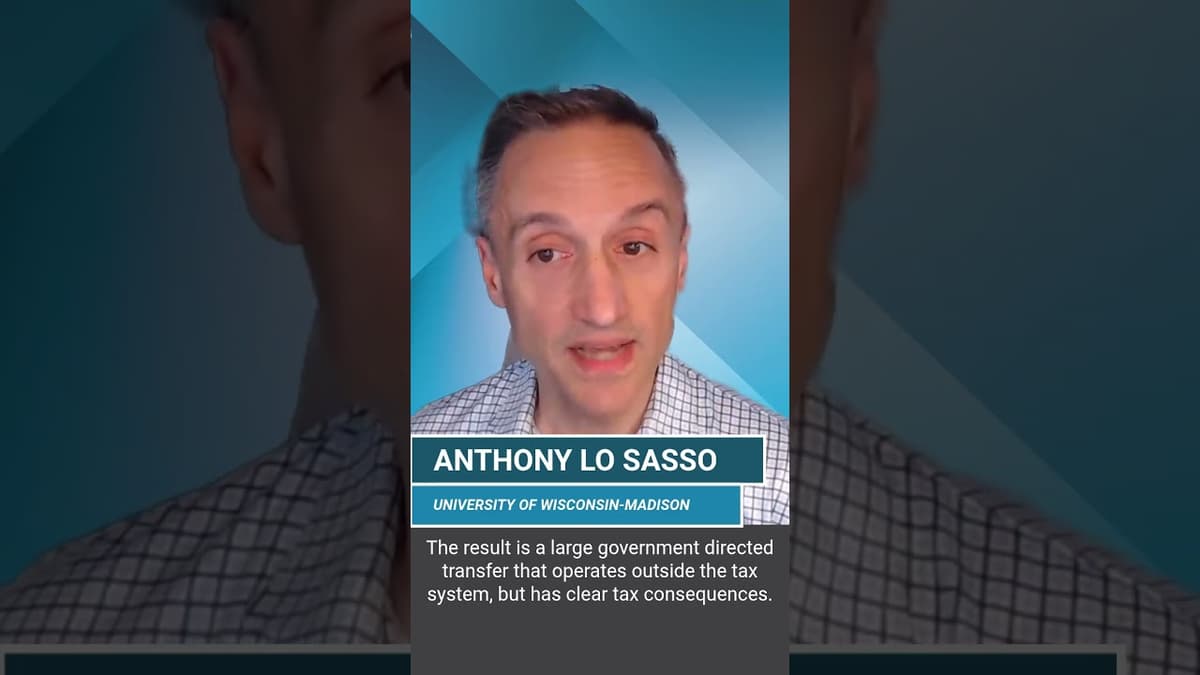
The video examines the 340B drug pricing program, a federal initiative that requires pharmaceutical manufacturers to sell medicines to eligible hospitals at deep discounts. Originally limited to roughly 90 providers, the program now includes more than 2,600 hospitals, many of...
New Prior Authorization Proposals: Implications for Prescription Drug Access
The podcast discusses CMS’s latest proposal to extend prior‑authorization deadlines to prescription drugs, building on a 2024 rule that applied only to surgeries and services. The rule would set a one‑week response window for standard requests and three days for expedited...

Which Star Ratings Are Driving Medicare Advantage Quality Gains
The podcast discusses a new Health Affairs study examining where Medicare Advantage (MA) star‑rating quality gains have come from between 2015 and 2025. While the star system is intended to steer private plans toward better outcomes, the researchers found...
The FY 2027 HHS Budget Proposal: Changes, Cuts, and Investments
The White House unveiled its FY 2027 budget request for the Department of Health and Human Services, proposing a $111 billion discretionary allocation—12.5% lower than the FY 2026 level, roughly a $16 billion cut. The proposal signals a sharp shift toward defense spending while...

What Most Favored Nation Drug Pricing Would Mean for the US
The video examines the most‑favored‑nation (MFN) drug‑pricing proposal that would tie U.S. prices to the lowest rates paid by other developed economies. Host Dr. James Robinson explains why the idea has gained political traction, especially after President Trump’s pledge to...
2027 Medicare Advantage Final Payment Rule: Key Changes Explained | David Meyers
The Centers for Medicare & Medicaid Services (CMS) released its final payment rule for Medicare Advantage (MA) plans for the 2027 benefit year, announcing a 2.48% increase in base rates – a figure far above the modest 0.009% bump proposed...

Abandon High‑Deductible Health Plans Linked to Health Spending Accounts | Jeanne Lambrew
The Health Affairs podcast episode focuses on Jeanne Lambrew’s argument to abandon, rather than expand, high‑deductible health plans (HDHPs) paired with health spending accounts. Lambrew traces the policy’s origins to 1990s conservative think‑tanks, noting three legislative boosts—the 2003 Medicare Modernization...

Why Medicare Advantage Enrollees Are Leaving Plans
The Health Affairs podcast episode examines a new study on rapid disenrollment from Medicare Advantage (MA) plans, finding that the share of beneficiaries leaving a newly chosen plan within three months jumped from 3.5% in 2017 to 12.2% in 2022. The...

Medicare Drug Price Negotiation: What Can We Learn From the 2027 Prices and Their Justifications?
The webinar examined the Inflation Reduction Act’s new Medicare drug‑price negotiation program, focusing on the Centers for Medicare & Medicaid Services’ (CMS) recently published explanations for the 2027 maximum fair prices (MFPs). These explanations, released before the March 1 deadline, detail...

Innovation, Consumers, and How We Get to Better Health Care | Halle Tecco
The podcast features Holly Tecco discussing her new book Massively Better Healthcare, a guide for innovators tackling the system’s biggest challenges. Tecco frames the conversation around why “innovation” – not merely entrepreneurship – matters for anyone seeking to improve health outcomes, from...

The 2-Year Medicare Wait That Can Cost Lives
The podcast examines the two‑year Medicare enrollment lag imposed on Social Security Disability Insurance (SSDI) recipients and its stark health consequences. Dr. David Powell explains that the waiting period, created in 1972 to curb costs, leaves newly disabled workers without...

Medicare Advantage Payment & Coding Fights Intensify
The Health Affairs podcast episode focused on the escalating dispute over Medicare Advantage (MA) payments and the role of diagnostic coding intensity. Host Jeff Buyers and AEI scholar Ben Epilo explained that the federal government spends roughly 14% more on...

The Future of Heart Disease Diagnosis with AI
The podcast examines a new Health Affairs paper by Dr. Anna Zinc on the real‑world impact of an AI‑driven diagnostic tool, computed‑tomography fractional flow reserve (FFRCT), used alongside cardiac CT imaging. The discussion frames the study within the broader regulatory...

FDA & Rare Disease Drugs: Why Policy and Politics Are Heating Up
The episode focuses on the FDA’s new draft guidance designed to streamline approval pathways for ultra‑rare, often single‑patient, therapies. Host Jeff Buyers and guest Leslie Erlac discuss the policy shift against the backdrop of recent leadership turmoil, notably the departure...
Rethinking Longevity, Wellness & Aging | Zeke Emanuel
Zeke Emanuel, a physician and health-policy veteran, has published Eat Your Ice Cream: Six Simple Rules for a Long and Healthy Life, shifting his focus from system-level reform to practical, evidence-based advice for patients. Drawing on frustration with hype from...

State of the Union Healthcare Policy Breakdown
The latest State of the Union address featured a surprisingly detailed health‑policy segment, with President Trump urging Congress to codify a Most‑Favored‑Nation (MFN) or reference‑pricing framework for prescription drugs. The proposal would tie U.S. drug prices to those paid in...

Is Optum Reshaping Healthcare? What It Means for Prices & Referrals
The Health Affairs paper discussed on the podcast examines UnitedHealth’s Optum unit and its aggressive vertical integration strategy—specifically, the acquisition of physician practices and ambulatory surgical centers (ASCs). By linking insurer, provider, and pharmacy functions, Optum aims to capture...
Is Value-Based Payment Failing U.S. Healthcare? | Andrew Ryan
In a Health Affairs interview, Brown University researcher Andrew Ryan critiques the promise of value‑based payment (VBP) as a solution to Medicare’s affordability crisis. Drawing on a recent article he co‑authored, Ryan argues that empirical evidence—particularly a Congressional Budget Office...

The Surprising Impact of Drug Price Negotiation on Clinical Trials
The podcast examines a new Health Affairs paper that tracks how the Inflation Reduction Act’s Medicare drug‑price negotiation provision has affected biopharmaceutical clinical‑trial activity. Dr. So Young Kang and co‑authors compare industry‑sponsored trial initiations from 2015‑2024, focusing on firms directly hit...

The Medicaid ‘Ghost Doctor’ Problem Explained (Jane Zhu)
The podcast examines a new Health Affairs study led by Dr. Jane Zhu that uncovers a hidden "ghost doctor" problem in Medicaid. While 70‑90% of physicians across specialties are formally enrolled as Medicaid providers, a substantial share never treat Medicaid...
Sweeping Affordable Care Act Changes Proposed for 2027 (Katie Keith)
The Health Affairs podcast aired on February 13, 2026, unpacked a sweeping 577‑page proposed rule that would reshape the Affordable Care Act for the 2027 coverage year. Released unusually late in the rule‑making cycle, the proposal gives stakeholders just weeks...
2025 Dietary Guidelines: Protein, Policy, and the Ultra-Processed Foods Problem
The Health Affairs interview dissects the 2025 U.S. Dietary Guidelines, which notably prioritize protein, tighten language around ultra‑processed foods, and soften alcohol recommendations. Host Jeff Buyers and registered dietitian Jenny Low examine how these shifts diverge from previous guidance and...

Surviving the Hospital, Then the Bills
The Health Affairs study led by Dr. John W. Scott examines how acute traumatic injuries translate into heightened medical debt and bankruptcy risk. Using a unique linkage of credit‑bureau data with a state‑wide trauma registry, the researchers tracked patients before...