
South Carolina Fund to Support Rural Health Tech Startups
The South Carolina Research Authority (SCRA) will administer the Tech Catalyst Fund, part of the state’s Rural Health Transformation Program, providing non‑dilutive capital to early‑stage health‑tech firms focused on chronic disease prevention and care access in rural areas. The initiative is backed by more than $200 million from the Centers for Medicare & Medicaid Services and the U.S. Department of Health and Human Services, fully funded by the federal government. The fund aims to accelerate deployment of medical innovations that lower costs and improve quality for underserved communities. Applications are now open through SCRA.

NHS Data Sharing Could Cut 20,000 A&E Visits and Save £20m a Year, Gov Claims
Britain’s health ministry says the upcoming NHS modernisation bill will mandate secure data sharing between GPs and hospitals, creating a single patient record for all health and social care users. The government projects that the system could prevent 20,000 A&E...

UNITE Initiative Reveals First Digital Health Winners
The EU‑backed UNITE initiative, co‑funded under Horizon Europe, has announced its first three digital‑health projects—CARDIO‑HUB, NEODATA+ and RAD‑TRACK EU—to be deployed across borders starting spring 2026. The projects, selected from 19 proposals submitted by over 1,000 organisations, focus on cross‑border health‑data...

Digital Care Startup Garner Secures US$100m Funding
Garner Health announced a $100 million Series E round that lifts its valuation to roughly $2.74 billion. The capital, led by Index Ventures and backed by Kleiner Perkins, Sequoia, Founders Fund and Kaiser Permanente Ventures, will be used to broaden its AI‑powered provider‑quality...

NHS Scanning Trucks Spot Thousands of Cancers
Since its 2019 launch, the NHS Lung Cancer Screening Programme’s mobile scanning units have identified 10,678 lung cancers across England, with more than three‑quarters diagnosed at stage I or II. The initiative, targeting current and former smokers aged 55‑74, has screened...

Acquisition Aims to Strengthen UK Care Sector Compliance
Quality Compliance Systems (QCS) announced the acquisition of CareBrain, a technology‑driven platform that streamlines care‑plan audits, supervision and real‑time guidance for the UK care sector. QCS already supports more than 335,000 providers and staff across 7,200 locations, and the deal...
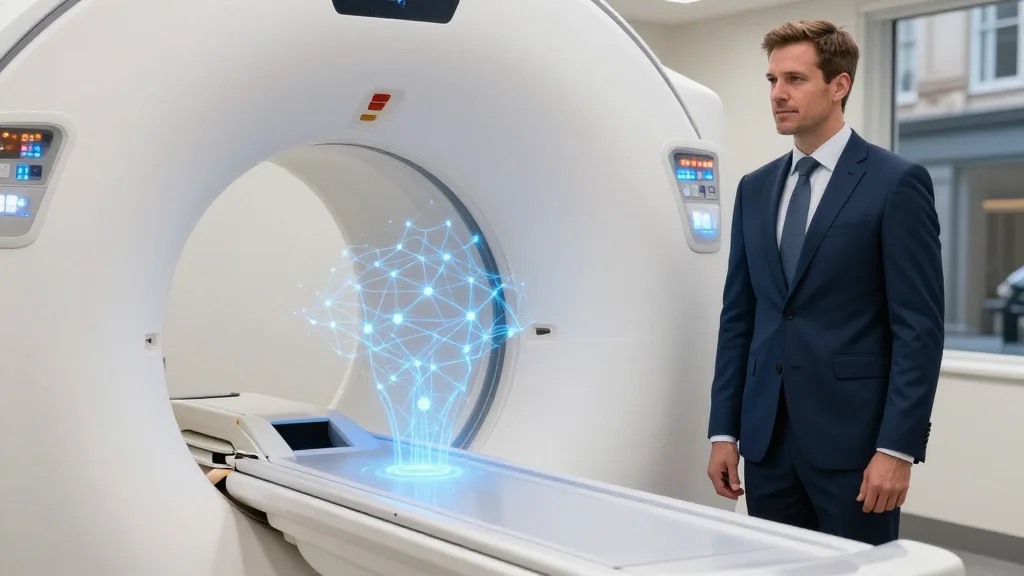
Phoenix Hospital Group Launches AI-Powered MRI Health Screening for Executives
Phoenix Hospital Group has introduced a new suite of Executive Health Assessments that leverage Siemens Healthineers' AI‑driven Deep Resolve MRI technology. The service, launched on Harley Street, offers ultra‑fast, high‑resolution scans aimed at busy executives seeking preventive care. Assessments combine...

Cera Signs up One New Local Government Every Week for Fastest Ever Care Robot Rollout
Cera, Europe’s largest HealthTech, is signing up a new UK local government each week, creating the fastest-ever rollout of its AI‑powered care robots in home care. The robots achieve a 96% medication‑adherence rate and drive 64‑90% success in encouraging eating...

What 30 Years of Clinical Speech Data Teaches Us About AI Accuracy
Atlas Aura, a clinical speech‑recognition platform, leverages three decades of curated medical audio data, giving it a distinct edge over newer, generic AI transcription tools. The deep, domain‑specific dataset enables the system to accurately interpret disordered speech, maintain consistency across...

Frontline Productivity: A Strategic Imperative for NHS Leaders
Frontline productivity has become a strategic priority for the NHS as it seeks 2% annual efficiency gains outlined in the 2025 Spending Review. The focus is shifting from merely installing technology to embedding electronic patient record (EPR) systems that streamline...

System C Sets Out 12-Month AI Roadmap Spanning Emergency, Maternity and Social Care
System C unveiled a 12‑month AI roadmap that will extend its ambient AI capabilities to emergency care this autumn and to maternity services shortly thereafter, building on tools that have already halved documentation time in social‑care settings across 15 English...

MHRA Proposes New Regulatory Pathway for Rare Disease Therapies
The UK Medicines and Healthcare products Regulatory Agency (MHRA) has launched a consultation on a new, technology‑agnostic regulatory pathway for rare disease therapies. Central to the proposal is an Investigational Marketing Authorisation (IMA) that merges clinical trial approval with a...

Derbyshire NHS Selects Psyomics’ Beseen Platform to Support Community Mental Health Transformation
Derbyshire Healthcare NHS Foundation Trust has partnered with digital‑mental‑health specialist Psyomics to deploy its beseen Adult platform across Community Mental Health Teams. The solution automates patient‑reported outcome collection, integrates directly with the Trust’s electronic health records, and aims to ease...

Taiwan’s AI-Driven Clinical Breakthroughs Take Centre Stage at 2026 Taiwan Smart Medical & HealthTech Expo in Geneva
The 2026 Taiwan Smart Medical & HealthTech Expo in Geneva highlighted Taiwan’s transition from AI theory to bedside practice, showcasing a national team of 21 firms and nine leading hospitals. Clinical evidence included a Nature Medicine‑published AI‑ECG trial that cut...

NHS Bill Paves Way for Single Patient Record
The UK Health Bill introduces a nationwide single patient record, obligating hospitals, GPs and other NHS providers to share full medical histories in real time. The legislation also abolishes NHS England, moving its functions to the Department of Health and...