

I Let Codex Run for 6 Hours. Here’s What Happened.
Claravo demos OpenAI Codex’s /goal feature, showing how goal-based loops let the model run autonomously for hours by iterating, testing and self-verifying until a measurable outcome is reached. She explains when to use goals versus single-turn prompts, how to manage goal lifecycle (start, pause, resume, remove), and shares that her first run lasted nearly six hours. The video outlines how to write effective goals—defining outcome, verification, constraints, boundaries, iteration policy and stop conditions—and gives a technical example (reducing P95 checkout latency) and nontechnical use cases. Practical tips emphasize measurable success criteria and guardrails so the agent can self-manage without constant human prompting.
How the Engineer Behind Claude Cowork Actually Uses Claude | Felix Rieseberg (Anthropic)
The video showcases Anthropic engineer Felix Rieseberg demonstrating how Claude’s Co‑work suite and the low‑cost “Claude Buddy” hardware button can turn everyday chores into automated AI workflows. Rieseberg emphasizes that AI’s value lies beyond moving a mouse cursor—it should handle...
Why This Claude Code Engineer Uses HTML Files as AI Specs | Thariq Shihipar (Anthropic)
The video spotlights Anthropic’s Claude Code engineer Thariq Shihipar, who argues that HTML is supplanting markdown as the preferred format for AI‑generated specifications. By embedding rich visual elements, HTML files become a more engaging medium for both humans and large...

Let Your Marketing Team Cook
The video highlights a new swag store, "Big Ass Energy as Agent as a Service," built entirely by the marketing team without any engineering assistance. By leveraging AI tools, the team designed, developed, and launched the site in just one...

Quests, Token Leaderboards, and a Skills Marketplace: The Elite AI Adoption Playbook | John Kim
John Kim, CEO of Sunbird, outlines an "AI adoption playbook" that turns internal ideas into production‑ready tools through AI‑driven quests, a token consumption leaderboard, and a skills marketplace. The approach treats AI as a product, empowering marketers, salespeople, and...
The Internal AI Tool That's Transforming How Stripe Designs Products | Owen Williams
Stripe’s design organization has rolled out an internal AI‑powered prototyping platform called ProtoDash. Built by design manager Owen Williams, the tool stitches together Stripe’s design system (Sale), an MCP server, and a bundle of Cursor rules to auto‑generate React dashboard...

No UX Is the Best UX
The video centers on the provocative mantra “no UX is the best UX,” championed by Ramp’s CTO, and recounts the team’s extensive effort to craft a flawless onboarding experience despite believing that any UI is ultimately superfluous. The speaker highlights the...

ChatGPT Images 2.0 First Impressions
The video showcases a first‑hand trial of ChatGPT Images 2.0, OpenAI’s latest text‑to‑image model, as the creator tests it on branding material for his company, Chat PRD. He supplies basic brand guidelines and watches the model produce a nine‑grid layout...

How Intercom 2X'd Engineering Velocity with Claude Code | Brian Scanlan
Intercom’s R&D team has leveraged Anthropic’s Claude Code to dramatically accelerate its software delivery pipeline, reporting a two‑fold increase in pull‑request throughput over the past nine months. The company attributes this surge to AI‑driven code generation that removes the manual...
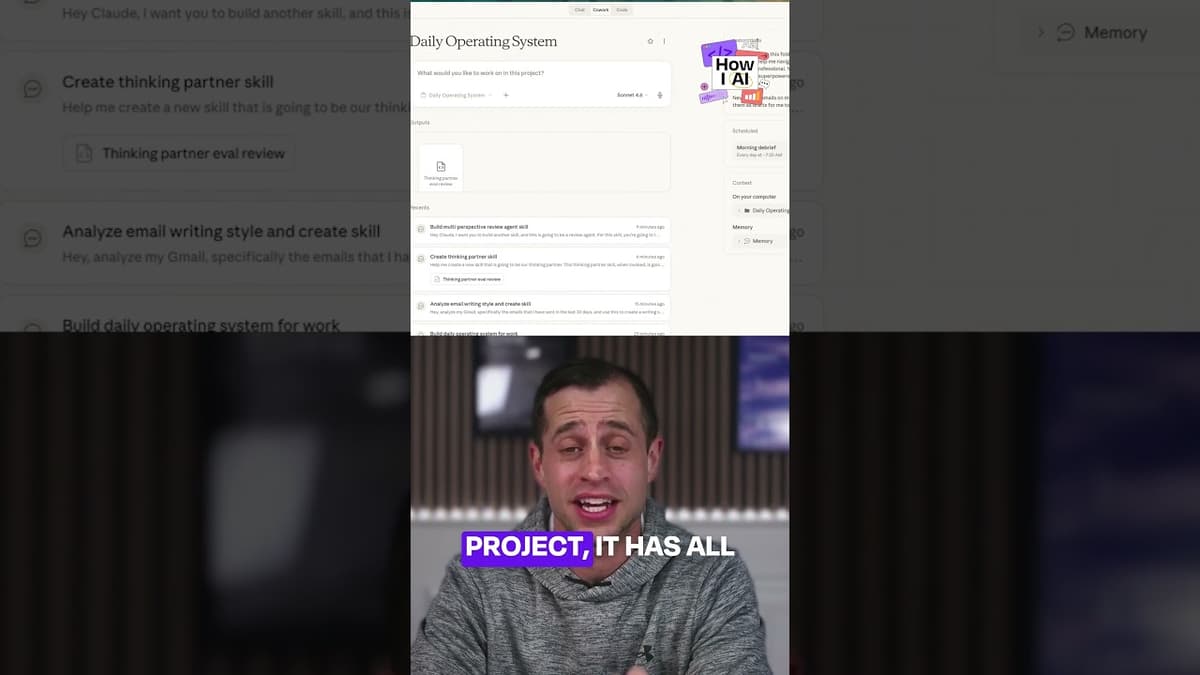
Scheduled Tasks Let You Run AI Agents on Autopilot at Specific Times
The video introduces scheduled tasks as a way to run AI agents on autopilot at predefined intervals—hourly, daily, weekly, or on custom schedules. By embedding these tasks within a project, the AI inherits the project's skills, connectors, and context, enabling...

Turn Slack Support Threads Into Knowledge Base Articles Automatically
The video showcases Pylon, an internal tool that transforms customer‑support Slack threads into publishable knowledge‑base articles, streamlining the documentation workflow for support teams. Using a single‑click "Add article" command, Pylon parses lengthy Slack conversations, applies predefined article templates, and produces a...

How to Use Perplexity Computer to Build a Custom Slack Inbox (Full Tutorial)
The video walks through how Yash Tucker uses Perplexity Computer to replace a chaotic Slack inbox with a purpose‑built, Kanban‑style dashboard. By pulling Slack’s API data, he groups messages into direct mentions, group mentions, DMs, and threads, then sub‑categorizes each...

Claude Code + 15 Repos: How a Non-Engineer Answers Every Customer Question | Al Chen
Al Chen, a field engineer at Galileo, demonstrates how he leverages Claude Code and a unified VS Code workspace containing fifteen micro‑service repositories to answer highly technical customer queries that standard documentation cannot resolve. By loading every repo into a single IDE and...

How to Create a Custom Claude Skill to Show Demos without Personal Information
The video introduces a custom Claude skill that lets users anonymize sensitive information on‑the‑fly when demonstrating workflows. By activating a simple "recording on" toggle, Claude automatically replaces names, customer details, and other personal data with generic placeholders while preserving the...

Machine-to-Machine Payments Unlock Ephemeral, API-First Businesses
The video showcases a live demonstration of machine‑to‑machine payments powering an API‑first, on‑demand workflow. By asking an AI assistant to plan a birthday for a product manager, the presenter strings together several third‑party services—BrowserBase for a disposable browser session, Parallel...