Worth Reading: Ephemeral BGP Leaks
Doug Madory’s APNIC blog post argues that transient BGP leaks observed during the path‑hunting phase after a route withdrawal are harmless and can be ignored. The response counters this view, calling the leaks a “dead canary” that signals weak route‑policy enforcement in the autonomous systems that propagate them. Although the leaks disappear once the withdrawn route is replaced, they reveal that an AS may still advertise bogus routes under normal conditions. Dismissing them could mask vulnerabilities that attackers might exploit.
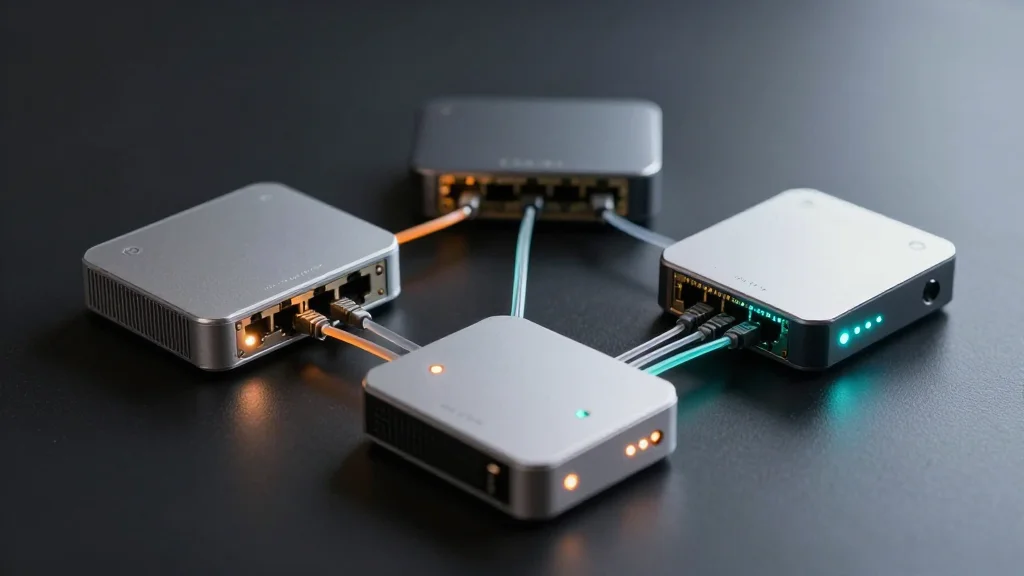
Dual-Stack SR-MPLS
The blog demonstrates a dual‑stack Segment Routing MPLS (SR‑MPLS) lab where node segment identifiers (SIDs) are assigned to both IPv4 and IPv6 loopback prefixes. Using the netlab tool, the three‑router topology configures IPv4 /32 and IPv6 /128 loopbacks, enabling IS‑IS...

Public Videos: Segment Routing 101
Jeff Tantsura’s 2017 "Introduction to Segment Routing" webinar and the 2026 ITNOG 10 "Segment Routing: From Theory to Practice" workshop are now available as free public videos. The webinar, originally a short IETF‑focused session, and the workshop, which drew roughly 100...
On ARP and MAC Aging Timers
Arista’s default network timers—four‑hour ARP timeout and five‑minute MAC aging—trace back to the early days of Ethernet when memory and CPU were scarce. ARP’s long timeout minimized broadcast traffic, while MAC aging kept bridge tables clean to avoid misdirected frames....
ARP Issues in EVPN Centralized Routing Design
The article dissects ARP failures in a centralized EVPN routing design that uses IRB (integrated routing and bridging) with MAC‑VRFs. It shows that the spine must advertise its VLAN MAC/IP as an EVPN MAC‑IP route, otherwise traffic floods across the...
SwiNOG 41: It Was Nice to Be Back
SwiNOG 41 returned to the Gurtenpark pavilion in Switzerland, offering an extended “talk less, chat more” format that emphasized networking among engineers. Highlights included a deep dive into transceiver power consumption, shared‑spectrum strategies for dark‑fiber, and a candid look at...
Generate Partial Device Configurations with Netlab
At ITNOG 10 the author used netlab to automate a complex, multi‑vendor lab consisting of a leaf‑and‑spine fabric, BGP route reflectors, and edge devices. By defining the topology in a YAML file, netlab produced a wiring diagram, an IP‑addressing plan, and...
On Generating EVPN MAC/IP Routes
Arista EOS now advertises both MAC‑only and MAC+IP routes in EVPN, effectively doubling the size of the EVPN BGP table. The behavior was clarified by network engineer Naveen Kumar Devaraj, who linked it to the distinct triggers of MAC table...
Worth Reading: Lab as Code (Containerlab and Netlab)
The open‑source lab‑as‑code tools containerlab and netlab received a major update in netlab release 26.04. The release introduces a new bgp.advertise attribute, enables dual‑stack bgp.originate via static discard routes, and resolves several long‑standing bugs such as the bgp.policy plugin conflict. Documentation...

State of Network Automation with Urs Baumann
Urs Baumann, guest on Software Gone Wild Episode 206, bluntly noted that the core slides he uses to discuss network automation are unchanged from a decade ago, underscoring the sector’s slow evolution. While the conversation highlighted the persistent reliance on...

Worth Reading: AI and Knowledge Stagnation
Economist Noah Smith warns that widespread reliance on generative AI may cause knowledge stagnation. By prompting AI to solve problems that already have known answers, users bypass the learning process, leading to a generation of correct but unoriginal outputs. The...

Hmmm: Rail-Optimized Networking for AI Workloads
Phil Gervasi’s recent piece promotes a “rail‑optimized” networking approach for AI training workloads, describing a mapping of endpoints to a dedicated plane within a standard leaf‑spine fabric. The article argues that keeping traffic within leaf switches and using server‑bus paths...
SR-MPLS Workshop Materials
The Segment Routing MPLS (SR‑MPLS) workshop kicked off on April 20, 2026 at ITNOG 10 in Bologna. Organizers provided a comprehensive slide deck, lab topologies, and detailed usage guidelines for attendees. All materials are hosted online via IPspace and a public GitHub repository,...
Lab: Integrated Routing and Bridging (IRB) with EVPN MAC-VRF Instances
The article introduces a hands‑on lab that walks network engineers through Integrated Routing and Bridging (IRB) using EVPN MAC‑VRF instances with anycast gateways. It shows how to attach IP addresses to VLAN interfaces in a controlled, step‑by‑step environment. The lab...
Testing FRRouting Pull Requests with Netlab
The article outlines a straightforward workflow for testing FRRouting pull requests using the netlab automation framework. By cloning the FRR repository, checking out a PR branch, and building the FRR Docker image, users can configure netlab to launch a lab...