
AI Is Going Nuclear: How Major Tech Companies Are Pursuing Nuclear Energy—And How Energy Startups Can Avoid Common Collaboration Pitfalls
Major technology firms such as Meta and Google are turning to small modular reactors (SMRs) to meet the soaring electricity needs of AI‑driven data centers. The continuous, carbon‑free power from SMRs promises to alleviate grid strain caused by AI workloads. As these giants seek nuclear partnerships, early‑stage nuclear startups face heightened IP risks in asymmetric negotiations. Building a solid background‑IP portfolio and engaging seasoned legal counsel early can help startups protect core technologies and secure balanced collaboration terms.

Building Lasting IP Protection
The article argues that companies typically treat patents, trademarks and trade secrets as separate assets, yet a unified IP strategy yields stronger, longer‑lasting protection. It explains how patents safeguard a product’s functional aspects, trade secrets conceal the manufacturing process, and...

What's Trending in Trademarks: April 2026
April 2026 saw a wave of trademark battles centered on AI‑driven brands. A federal judge questioned OpenAI’s promise not to use the “io” mark, extending a restraining order that could stall its hardware launch, while a court rejected Temu’s safe‑harbor...

Federal Circuit Clarifies Written Description and Enablement Standards for Method-of-Treatment Patent Claims Using a Well-Known Antibody Genus
On April 16, 2026, the Federal Circuit reversed a district‑court ruling and held that Teva’s method‑of‑treatment patents for treating headache with anti‑CGRP antagonist antibodies met the written‑description and enablement requirements of 35 U.S.C. § 112. The court distinguished the Supreme Court’s Amgen decision,...

Pokémon Go? More Like Pokémon No! Judge “HM01s” (Cuts) Out Patent Under 101 Despite Prosecution History
District Judge Wolson in Delaware invalidated ImagineAR’s U.S. Patent No. 10,946,284, which claims location‑based gaming methods used in titles such as Pokémon Go. The court applied the two‑step Alice/Mayo test, finding the claims abstract and lacking an inventive concept beyond conventional sensors...

Federal Circuit Reverses JMOL and Reinstates Jury Verdict in Teva V. Lilly
The U.S. Federal Circuit reversed a district‑court judgment and reinstated a $176.5 million jury verdict for Teva in its patent fight with Eli Lilly. The case centered on Teva’s patents covering methods of using antibodies to treat migraines, a market where Teva...

Who Owns the Future? AI, IP and Litigation Strategy.
At Loeb & Loeb’s AI Summit in Los Angeles, a cross‑industry roundtable examined how artificial intelligence reshapes intellectual‑property risk and litigation. Participants highlighted the need for robust internal governance and contract clauses covering data ownership, output rights, and liability. They...
UMG Records V. Uncharted Labs, Inc.
The U.S. District Court denied Uncharted Labs’ motion to dismiss the plaintiffs’ DMCA claim that the company circumvented YouTube’s rolling‑cipher encryption to scrape copyrighted music for its AI generation tool. The court found the plaintiffs’ allegations plausibly state that YouTube’s...
PTAB Again Rules in Favor of Broad in CRISPR-Cas9 Patent Dispute
On March 26, 2026 the Patent Trial and Appeal Board reaffirmed the Broad Institute’s priority rights to CRISPR‑Cas9 gene‑editing in eukaryotic cells, rejecting the claims of the University of California‑Vienna consortium and Emmanuelle Charpentier. The ruling follows a Federal Circuit remand that corrected...

Patent Case Summaries | Week Ending April 17, 2026
The Federal Circuit issued three notable opinions this week. It reversed a district court’s summary‑judgment of non‑infringement for Intel, finding the extraterritoriality stipulation and the doctrine‑of‑equivalents analysis were misapplied. It affirmed the on‑sale invalidity of Definitive Holdings’ patent against Powerteq,...
Well-Known Genus, Novel Method: A Post-Amgen Framework for Written Description & Enablement
A recent Federal Circuit panel clarified that patents claiming a well‑known chemical genus as a mere input for a novel therapeutic method face a lighter written‑description and enablement hurdle than patents that claim the genus itself as the invention. The...
Thaler V. Perlmutter: Human Authorship Remains a Cornerstone Requirement for Copyright Registration
The D.C. Circuit affirmed that copyright protection hinges on meaningful human authorship, ruling that works generated entirely by autonomous AI are ineligible. The Supreme Court’s denial of certiorari on March 2, 2026 leaves that holding in effect nationwide. The decision underscores that...
U.S. Issues Guidance for American Space Nuclear Power Initiative
On April 14, 2026 the White House Office of Science and Technology Policy issued National Security and Technology Memorandum‑3, launching the National Initiative for American Space Nuclear Power. The program tasks NASA, the Department of War, the Department of Energy...
Protecting Innovation for Psychedelic Therapies Fast-Tracked Under New Executive Order
President Donald J. Trump signed an executive order that fast‑tracks FDA approval for breakthrough psychedelic therapies targeting serious mental illness. The order creates a Commissioner’s National Priority Voucher program, establishes pre‑approval patient access pathways, and earmarks $50 million in federal funding...

EU Biotech Act: The European Commission’s Landmark Proposal to Strengthen Biotechnology in Europe
On December 2025 the European Commission unveiled the European Biotech Act, a sweeping proposal aimed at cementing the EU’s position as a global biotech leader against the United States and China. The Act introduces fast‑track regulatory pathways, a strategic‑project framework...

Estate Planning for Intellectual Property
Intellectual property (IP) increasingly comprises a sizable portion of creators' net worth, demanding estate plans that go beyond traditional assets. Effective planning starts with a detailed inventory of trademarks, copyrights, patents, trade secrets and any licensing agreements. Because IP can...
AI Litigation Trends: Rapid Growth and Emerging Patterns
Artificial intelligence litigation has entered a rapid expansion phase, with 168 district‑court cases identified through a manual review. filings jumped from 22 in 2024 to a peak of 94 in 2025, accounting for more than half of all cases, and...

US v Heppner: The End of "Just a Prompt" And Emerging IP Risk - Part 1 of the AI...
The U.S. Court of Appeals in United States v. Heppner ruled that documents generated with a commercial generative‑AI tool and shared with counsel are not shielded by attorney‑client privilege or the work‑product doctrine. The decision hinges on the fact that...
AI and Trademark Prosecution: Why Identifying Risk Is No Longer the Advantage
AI tools now handle the first layer of trademark searches, scanning federal, state, and common‑law databases in minutes and flagging potential conflicts. This standardization means practitioners no longer ask if a risk exists, but whether it matters. However, likelihood‑of‑confusion analysis...
The USPTO Just Rewrote the Rules on Patent Challenges
The USPTO introduced a new ex parte reexamination (EPR) rule in April 2026 that gives patent owners a 30‑day, 30‑page pre‑order response before the Director decides to institute the proceeding. The change follows a 2025 tightening of inter partes review (IPR)...

Can You Patent Your AI? New Guidance in Canada and the US for Software and AI Inventors
Corporate AI investment is spurring a surge in patent filings, prompting both Canada and the United States to clarify eligibility rules. The Canadian Intellectual Property Office issued a March 2026 Practice Notice that re‑emphasizes a physical‑effect test and provides a worked...
Northern Advantage: Canada's Federal Court as a Venue for Pharmaceutical Patent Litigation
Canada’s Federal Court is emerging as the premier venue for pharmaceutical patent disputes, offering nationwide jurisdiction and dedicated intellectual‑property chambers. Its case‑management system streamlines proceedings, especially for cases under the Patented Medicines Regulations that trigger a 24‑month stay on competing...
The Skinny on Skinny Labels: The Active Inducement Problem That Patent Practitioners Should Know
The U.S. Supreme Court will hear Hikma Pharmaceuticals v. Amarin Pharma, a case that tests whether a generic maker can be liable for induced patent infringement despite using the FDA’s skinny‑label pathway. The dispute centers on Hikma’s generic icosapent ethyl, which omitted...
Key Takeaways: How Regulatory Exclusivity, PTA, PTE, and Double Patenting Shape Pharmaceutical Lifecycle Value
The recent Sterne Kessler webinar dissected how FDA regulatory exclusivities, patent‑term adjustment (PTA), patent‑term extension (PTE) and obviousness‑type double patenting (ODP) intersect to shape a drug’s lifecycle value. Regulators can grant exclusivity periods that outlast patent terms, while PTA can add...

US Private M&A Report - Trends And Insights Shaping The First Quarter Of 2026
The first‑quarter 2026 US private M&A report shows a modest rebound in deal activity compared with the latter half of 2025, but the recovery is uneven. While some transactions launch with strong momentum, many falter due to persistent valuation gaps...
Unauthorized Streaming of Foreign TV Programming Dishes up Copyright Infringement Liability
The Eleventh Circuit affirmed a judgment for DISH Network, confirming its exclusive U.S. rights to stream five Arabic‑language TV channels owned by MBC FZ LLC. The court held that MBC’s U.S. copyright registrations create a statutory presumption of ownership, classifying...
Pay up, per Party Litigation Stipulation
The Federal Circuit revived key portions of VLSI Technology’s patent case against Intel, overturning the district court’s extraterritoriality rulings for both method and apparatus claims. The court accepted a 70% U.S. nexus stipulation as binding for infringement analysis and reinstated...

FMReps Consulting Enterprises, LLC V. Ford Motor Company
Ford Motor Company successfully defended a patent‑infringement suit alleging its certified‑pre‑owned vehicle software violated two patents. A Michigan district court dismissed the case with prejudice, finding the patents invalid as abstract ideas under U.S. patent law. The decision hinged on...
Court Transfers Patent Litigation After Finding Venue Improper in New Jersey
A federal court transferred Skull Shaver LLC’s patent infringement suit from New Jersey to the Middle District of North Carolina, finding the venue in New Jersey improper under 28 U.S.C. § 1400(b). The judge applied the Federal Circuit’s three‑part test, concluding the defendant...
Client Alert: The White House Makes a Cyber and AI Policy Push
In March 2026 the White House issued a National Policy Framework for Artificial Intelligence and a Cyber Strategy, signaling a coordinated federal push to shape AI and cybersecurity policy. Both documents favor industry‑led standards and “common‑sense” regulation over new prescriptive...

Leave the Article, Take the Design: USPTO Updates Guidance for Digital Designs to Drop the Depiction Requirement for Computer Screens
On March 13, 2026 the USPTO issued supplemental guidance that eliminates the long‑standing requirement to depict a computer or display panel in design‑patent drawings when the title and claim identify the device. The change lets applicants protect icons, graphical user...
Strategic IP Considerations for the Medtech Market Rebound After Record Investment and M&A in 2025
Record venture investment of $10.4 billion and a median M&A deal value of $570 million signal a strong medtech rebound in 2025. The surge has pushed median upfront payments to $529 million, prompting acquirers to intensify IP due diligence. Recent rulings—Amgen’s enablement standard,...
![All Activity Rings [Patents] Closed—Judge Rochon Grants Motion for Summary Judgment of Non-Infringement on Seven Design Patents](https://hixhlmpcokxhartfkpyi.supabase.co/storage/v1/object/public/images/thumbnails/1cfb665b318aa610ca17be5c3771640f.webp)
All Activity Rings [Patents] Closed—Judge Rochon Grants Motion for Summary Judgment of Non-Infringement on Seven Design Patents
Judge Jennifer L. Rochon in the Southern District of New York granted Apple Inc. summary judgment of non‑infringement on seven design patents covering the Activity Rings displayed on Apple Watch and iPhone. The plaintiff, Michael Shunock, alleged that Apple’s UI...
Federal Circuit Clarifies When Non-Infringing Products Can Form Part of a Royalty Base
On March 6, 2026 the Federal Circuit reversed a district court ruling that excluded Exafer Ltd.’s damages expert opinion in its patent suit against Microsoft. The appellate court held that revenue from virtual‑machine (VM) hours—though the VMs themselves did not infringe—could serve...

The Character Without an Author: Character Copyright Protection in the Age of Generative AI
Courts are still defining when a fictional figure qualifies for standalone copyright protection, applying a three‑part test that looks for physical and conceptual traits, consistent delineation, and distinctiveness. The Ninth Circuit’s 2025 ruling in *Carroll Shelby Licensing v. Halicki* found...
Relaxing the Rules: How Claim Type Supported Patent Validity for Teva Pharmaceuticals’ “Headache Patents”
The Federal Circuit reversed a lower‑court ruling that invalidated Teva Pharmaceuticals’ “headache patents,” holding that the method‑of‑treatment claims satisfied written description and enablement requirements. The court emphasized that the claims were directed to using humanized mouse antibodies, not the antibodies...

The Growing IP and Commercial Complexity of the Sports Industry
World Intellectual Property Day highlights the sports sector’s shift from simple trademark and copyright issues to a dense web of rights covering athlete branding, NIL deals, media distribution, wearable tech, and AI‑driven data. Intellectual property now sits at the heart...
![[Podcast] AI Meets USPTO: The United States Patent and Trademark Office’s Evolution in the Digital Era](/cdn-cgi/image/width=1200,quality=75,format=auto,fit=cover/https://jdsupra-static.s3.amazonaws.com/profile-images/og.14750_4752.jpg)
[Podcast] AI Meets USPTO: The United States Patent and Trademark Office’s Evolution in the Digital Era
The United States Patent and Trademark Office launched a new podcast series highlighting its AI‑focused transformation. In the latest episode, the USPTO announced formal guidance on how artificial intelligence should be used by examiners and disclosed by patent applicants. The...
New Ex Parte Reexamination Procedure at USPTO: What Patent Owners and Challengers Need to Know
The USPTO introduced a new pre‑order paper stage for ex parte reexamination, allowing patent owners to submit arguments before the agency decides on a substantial new question of patentability. The rule, effective April 5, 2026, responds to a sharp rise in filings—an...
Federal Circuit Review | March 2026
The Federal Circuit reversed a $185 million verdict against Gen Digital, finding its antivirus‑related software claims abstract under Alice step one because the alleged efficiency gains were not recited in the claims. The court also held that a conflict of interest...
Veteran Ventures Capital Announces Investment in Hybron Technologies as Hybron Technologies Closes $25M Seed Round
Hybron Technologies announced the closing of an oversubscribed $25 million seed round on April 9, 2026, with Veteran Ventures Capital as a key investor. The U.S.-based firm develops lightweight composite materials for aerospace and defense, targeting components such as turbine blades, airframes, and...
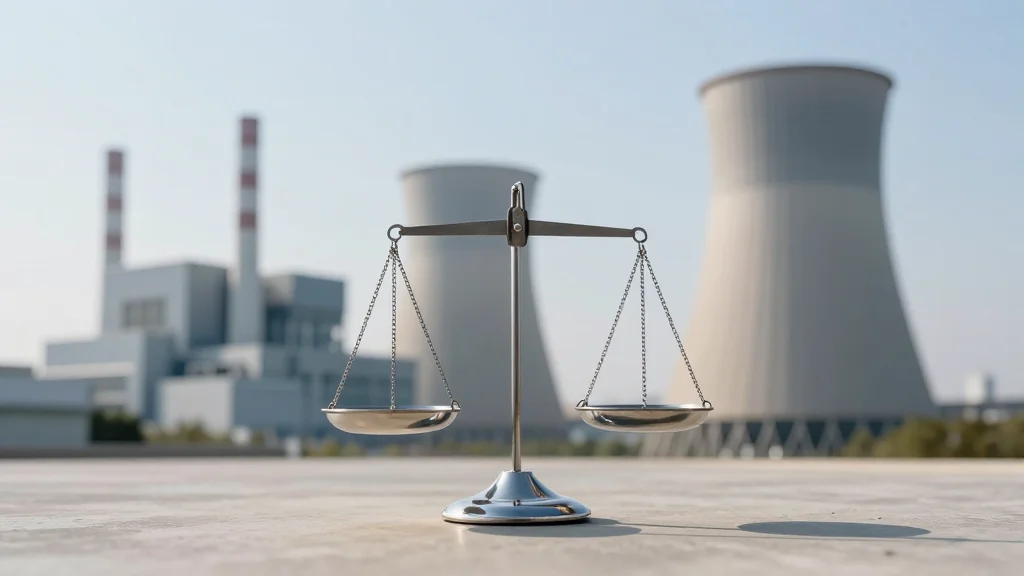
IP Implications of NRC’s Proposed New Fast Lane for Licensing Reactor Designs Previously Approved by DOE or DOD
On April 2, 2026 the Nuclear Regulatory Commission proposed a streamlined licensing pathway for reactor designs already approved by the Department of Energy or the Department of Defense. The rule would let applicants reference prior authorizations to satisfy NRC safety...
Getting a Business Divorce Case Into Federal Court: Federal Question Strategies That Actually Work
Business‑divorce disputes usually sit in state courts, leading to crowded dockets and fragmented judges. Plaintiffs often cannot meet diversity jurisdiction because LLCs are citizens of every member’s state. The article outlines how federal‑question claims—particularly under the Defend Trade Secrets Act,...
Texas Business Court’s Expanded Jurisdiction Under HB 40 – What It Means for Small and Mid-Sized Texas Business
Texas House Bill 40, effective September 1 2025, expands the Texas Business Court by lowering the amount‑in‑controversy threshold to $5 million, adding intellectual‑property and technology claims, and granting jurisdiction over arbitration‑related disputes. The bill also permits parties to transfer pre‑September 2024 cases into the...
![[Video] The Briefing: Taylor Swift, Trademark Law, and the Fight Over ‘Life of a Showgirl’](/cdn-cgi/image/width=1200,quality=75,format=auto,fit=cover/https://jdsupra-static.s3.amazonaws.com/profile-images/og.15496_4323.png)
[Video] The Briefing: Taylor Swift, Trademark Law, and the Fight Over ‘Life of a Showgirl’
The Briefing episode examines the trademark battle between Las Vegas performer Maren Flaggs and pop star Taylor Swift over the five‑word phrase “The Life of a Showgirl.” The discussion focuses on whether the phrase qualifies as a protectable trademark or...

AI Reporter - April 2026
Two high‑profile federal lawsuits were filed in April 2026 targeting major AI developers. In the Northern District of California, xAI is accused of allowing its Grok chatbot to create child sexual abuse images from real photos without any safeguards. A...
The Digital Heartbeat: Rolex, AI, and Counterfeit Protection
Rolex has unveiled a new AI‑driven acoustic diagnostic system detailed in patent WO/2025/262258, which replaces traditional Fourier analysis with discrete wavelet transforms and neural‑network processing. The technology can isolate each of the five escapement shocks, provide component‑level health metrics, and...
Unnamed Inventor, Invalid Patent
The Federal Circuit affirmed that Fortress Iron’s patent was invalid because it omitted a co‑inventor, Huang, and the court refused to correct the inventorship under 35 U.S.C. § 256(b). The decision clarified that any omitted inventor is a “party concerned” who must receive...

Patentee Secures Reversal of JMOL on Written Description and Enablement for Method of Treatment by Administering Genus of Antibodies at...
The Federal Circuit reversed a district‑court judgment of non‑infringement, affirming Teva's method‑of‑treatment claims covering anti‑CGRP antibodies for headache relief. The appellate court found that a single disclosed antibody, together with routine humanization methods, satisfied the written‑description requirement for a genus...
Spotlight On: Neulasta® (Pegfilgrastim) / Fulphila® (Pegfilgrastim-Jmdb) / Udenyca® (Pegfilgrastim-Cbqv) / Ziextenzo® (Pegfilgrastim-Bmez) / Nyvepria®(pegfilgrastim-Apgf) / Fylnetra™ (Pegfilgrastim-Apgf) / Stimufend®...
The April 2026 spotlight examines how patent claims for pegfilgrastim products—Neulasta, Fulphila, Udenyca, Ziextenzo, Nyvepria, Fylnetra, Stimufend and Armlupeg—are tallied across inter partes reviews (IPRs) and litigation. Claims are counted separately in each proceeding, so the same patent can generate multiple...