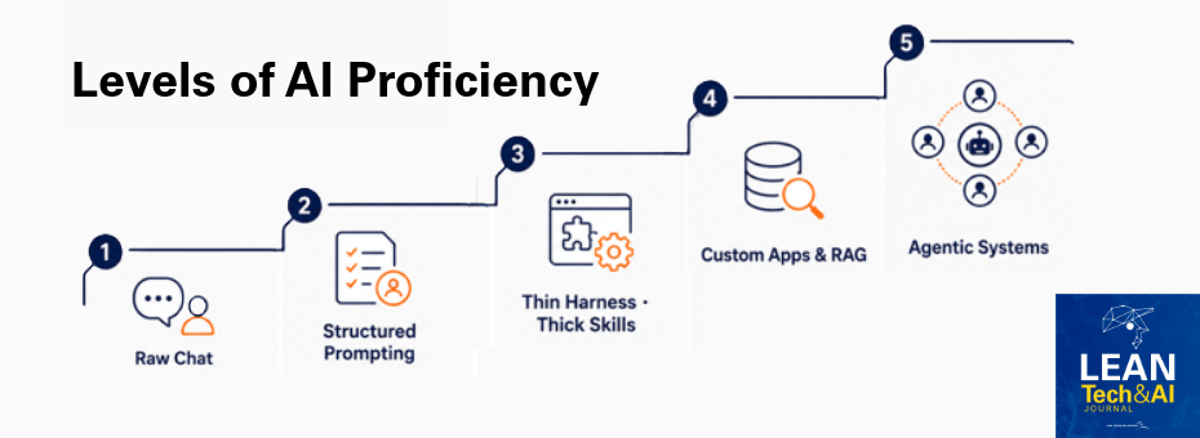
Prompt, Do, Check, Act: The New PDCA
The article re‑imagines the classic PDCA cycle for AI‑augmented knowledge work, swapping “Plan” for a carefully crafted Prompt and letting the large language model execute the “Do” step. Human users retain responsibility for the “Check” and “Act” phases, validating outputs and iterating prompts. It outlines a six‑element structured prompting framework—context, persona, task, goal, example, anti‑pattern—and shows how specificity transforms generic AI replies into actionable insights. A free, self‑paced Prompt‑Do‑Check‑Act lab on the Lean Tech Portal lets practitioners experience the loop firsthand, emphasizing that hands‑on practice, not theory, drives Level 1‑2 AI competence.

Coaching and Co-Learning — Our Attempt to Improve Starbucks
Between 2002 and 2011, Starbucks enlisted Scott Miller as VP of Strategy and later VP of Lean Thinking, partnering with Toyota lean veteran John Shook and barista‑turned‑manager Josh Anderson to pilot lean practices across its stores. The trio launched a...

The Strange New World of AI: My Second Brain Setup
The author describes how a personal AI assistant, accessed via Telegram on his phone, enabled him to draft, format, and publish an article while walking, turning a concept into a live webpage in a single afternoon. Over the past two...

What I’m Talking About When I Talk About Co-Learning
Mark Reich, LEI Chief Engineer Strategy, explains that lean learning thrives on co‑learning—mutual teaching between mentors, peers, and organizations. He illustrates the concept with a Murakami coaching anecdote, Toyota’s assembly‑line training, chief‑engineer market immersion, and the TSSC cross‑industry TPS program....

Coaching and Co-Learning — Coach as Mirror
The Management Brief’s second installment spotlights a coaching partnership at Fisher & Paykel Healthcare, where senior leader Desh Edirisuriya works with LEI coach Jim Luckman. Their co‑learning relationship functions as a “mirror,” helping Desh identify gaps, experiment with social‑connection initiatives,...

Insource What Matters: A Lesson From Toyota for Lean Practitioners in the Age of AI
Lean practitioners often hit a technology ceiling after stabilizing processes, as illustrated by O.C. Tanner’s struggle with complex production systems. Toyota Connected responded a decade ago by strategically insourcing critical vehicle‑software capabilities, culminating in a fully owned multimedia platform on...

Coaching and Co-Learning — Understanding that Lean Is a Journey
The Management Brief launches a series on lean coaching and co‑learning, highlighting how mutual education between leaders and coaches drives sustainable transformation. The first episode features Marco Lopez of Dreamplace Hotels and coach Oriol Cuatrecasas, who recount a 15‑year lean...

20 Years Later: How Toyota’s Product Development Principles Are Still Core to a Lean Enterprise
The Lean Enterprise Institute podcast revisits the seminal book *The Toyota Product Development System*, highlighting how its core principles still guide modern product development. Co‑author Jim Morgan discusses the research behind Toyota’s integration of people, process, and technology and how...

From Fiction to Navigation: Using Cynefin to Choose the Right Improvement Method
The article argues that future‑state thinking can become fiction when applied to complex adaptive systems and proposes the Cynefin framework as a sense‑making tool to match improvement methods to system dynamics. It outlines how the five Cynefin domains—Clear, Complicated, Complex,...

Bridging Strategy and Execution: How Daily Management and Hoshin Kanri Work Together
The article explains how daily management and Hoshin Kanri, two core lean practices, complement each other to turn strategy into operational results. Daily management provides stability, real‑time metrics, and rapid problem‑solving, while Hoshin Kanri focuses on a few breakthrough objectives that shape...

Wait, That’s My Job | How AI Exposed the Organizational Immune System Nobody Wanted to Talk About
The article argues that generative AI is reshaping organizational dynamics by enabling a single employee to complete work that once required multi‑person committees, triggering a new "That's my job" resistance. It identifies five archetypal personas—Kingdom Keeper, Deep Expert, AI Evangelist...

Better Thinking Faster
Art Smalley argues that the lean debate over "fast vs. slow" misses the core lesson from Toyota: better thinking, enabled by the right mechanisms, yields faster, higher‑quality results. He illustrates this with two case studies—a national laboratory plagued by inconsistent...

The Management System Your Organization Doesn’t Know It Needs
Many organizations only address a fraction of their operational gaps because their management systems are under‑built. The article argues that a robust lean management system should continuously detect, surface, and respond to problems generated by a well‑tuned production system, much...
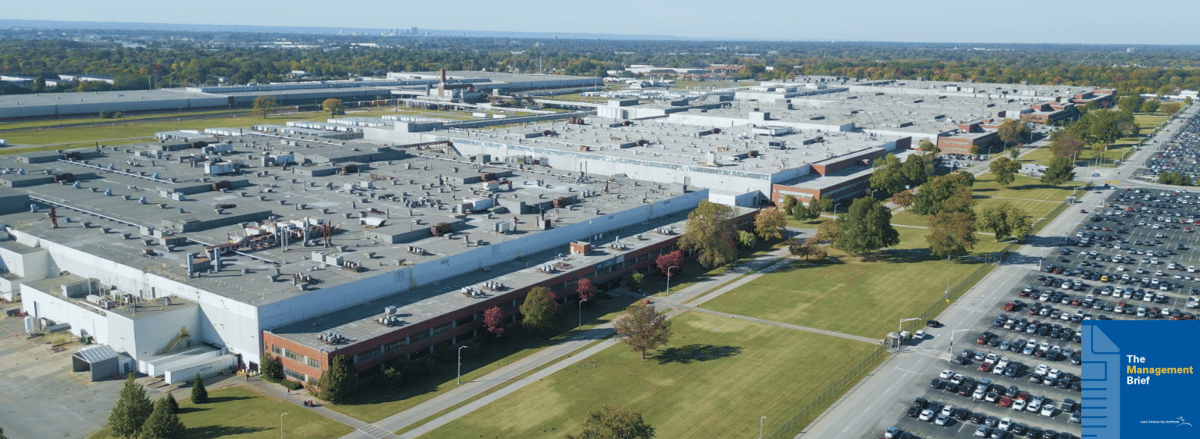
Leanshoring: Winning with Customers by Bringing the Business Closer
Global supply‑chain shocks and tariff volatility are prompting U.S. firms to reconsider offshoring. Jim Womack’s "leanshoring" model combines lean manufacturing with reshoring, demanding a full‑cost analysis that accounts for risk, intellectual property and skill loss. GE Appliances illustrates the approach,...
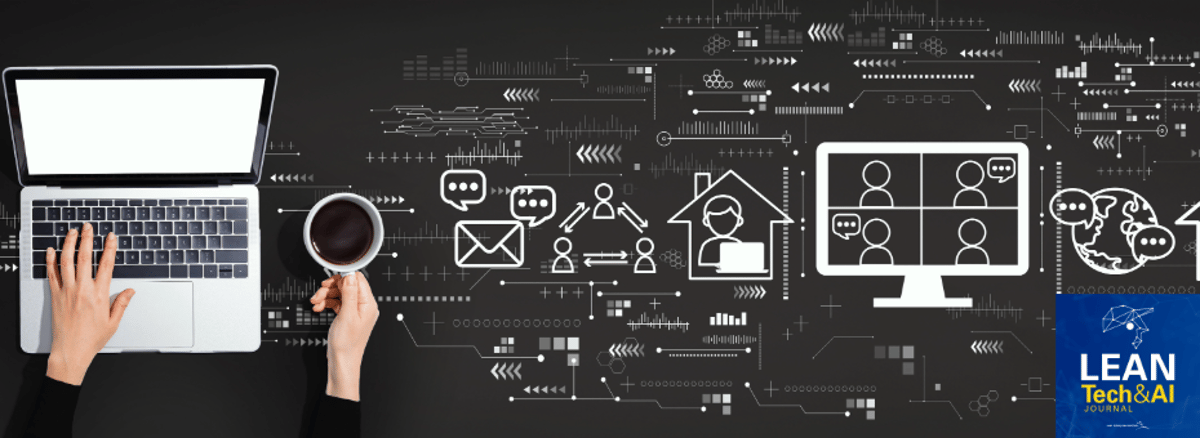
From Agile to Lean Tech: Theodo’s Journey to Scalable Learning
Theodo transformed a failed client project into a catalyst for a 14‑year lean‑tech evolution, merging agile practices with lean thinking to build a learning‑focused delivery system. By embedding visibility, problem‑solving tools and shared responsibility, the firm grew from two founders...