
MTU Aero Engines Posts Q1 Gains, Sees Continued Strength Despite Geopolitical Pressures
MTU Aero Engines reported a 7% rise in Q1 adjusted revenue to €2.2 bn ($2.4 bn) and a 6% increase in operating profit to €320 mn ($349 mn). The company’s order backlog expanded to €31.6 bn ($34.5 bn), effectively selling out production for three years, while free cash flow grew 18% to €177 mn ($193 mn). Military engine sales jumped 25% to €142 mn ($155 mn), offset by a 5% dip in commercial engine revenue, and MTU confirmed its full‑year guidance despite geopolitical tensions. The recent acquisition of AeroDesignWorks positions MTU in the fast‑growing European UAV propulsion market.

The Regulatory Reality Behind the Autonomous ATC Gold Rush
Venture capital is pouring into autonomous air traffic control startups, attracted by aging controller workforces, incomplete FAA modernization, and booming eVTOL demand. However, the FAA’s AI Safety Assurance roadmap limits the use of learning‑AI and mandates certification within existing frameworks,...

As Aerospace Companies Pursue AI, FAA Lags
The Federal Aviation Administration’s aging processes and staffing cuts are slowing aircraft certification as aerospace firms race to embed artificial intelligence in design and development. Boeing, Airbus, GE and emerging eVTOL players rely on AI to accelerate product cycles, yet...

Reader Comments Open Forum, Week of April 27
Leeham News Agency (LNA) introduced a weekly Reader Comments Open Forum, debuting the week of April 27, 2026. The forum lets readers comment on any article, including pay‑wall previews, provided the content is visible to all. All submissions are subject to review...

Bjorn’s Corner: Blended Wing Body Airliners. Part 7
Leeham News continues its deep‑dive into blended wing body (BWB) airliners with Part 7, focusing on the latest flight‑test data from Airbus’s MAVERIC demonstrator. The tests showed a roughly 15% drag reduction compared with a conventional tube‑and‑wing layout, reinforcing claims of...

AI: “The Precipice of an Absolute Technology Revolution”
Boeing has been publicly pursuing artificial intelligence since at least 2017, highlighted by its HorizonX venture arm’s acquisition of machine‑learning firm SparkCognition. At a recent AIAA event, VP of Product Development Brian Yutko outlined how AI could shape future Boeing...

RTX Q1 2026 Earnings: Conflict Drives Defense Focus as RTX Delivers Strong Start, Pratt Responds to Airbus in A320 Glider...
Raytheon Technologies (RTX) posted a strong Q1 2026, reporting $20.5 billion in revenue, an 8% year‑over‑year increase, and GAAP earnings per share of $2.45, both topping analyst expectations. The earnings call highlighted a surge in defense demand tied to the ongoing...

GE Aerospace Q1 2026 Earnings: Conflict in the Middle East Overshadows Strong Start to 2026
GE Aerospace reported a robust start to 2026, posting $9.5 billion in revenue and GAAP earnings per share of $1.12, both above analyst expectations. Engine deliveries climbed 12% to 450 units, and the order backlog expanded to $70 billion, bolstered by defense...

How Boeing’s WISK Technology May Apply to Its Next New Airplane
Boeing’s four‑passenger autonomous eVTOL, WISK, completed its inaugural test flight without any system alerts, signaling readiness for further development. At an AIAA event, VP Brian Yutko explained that the technologies proven in WISK—advanced composites, electric propulsion and autonomous flight controls—are...

Preview 1Q2026: How Quickly Things Can Change: This Time, It’s Not Boeing
Boeing’s long‑awaited rebound is being derailed by a sudden spike in jet‑fuel prices. The surge stems from a Trump‑initiated special military operation in Iran and a subsequent blockade, which have disrupted global oil supplies. The unexpected cost increase threatens airline...

Pontifications: Don’t Give Spirit a Bailout
The author argues that if the federal government considers a bailout for Spirit Airlines, fairness demands that every U.S. carrier be eligible for the same aid. He links the bailout debate to the Trump administration’s costly foreign‑policy actions, noting that...
Diamonds Are an MRO’s Best Friend
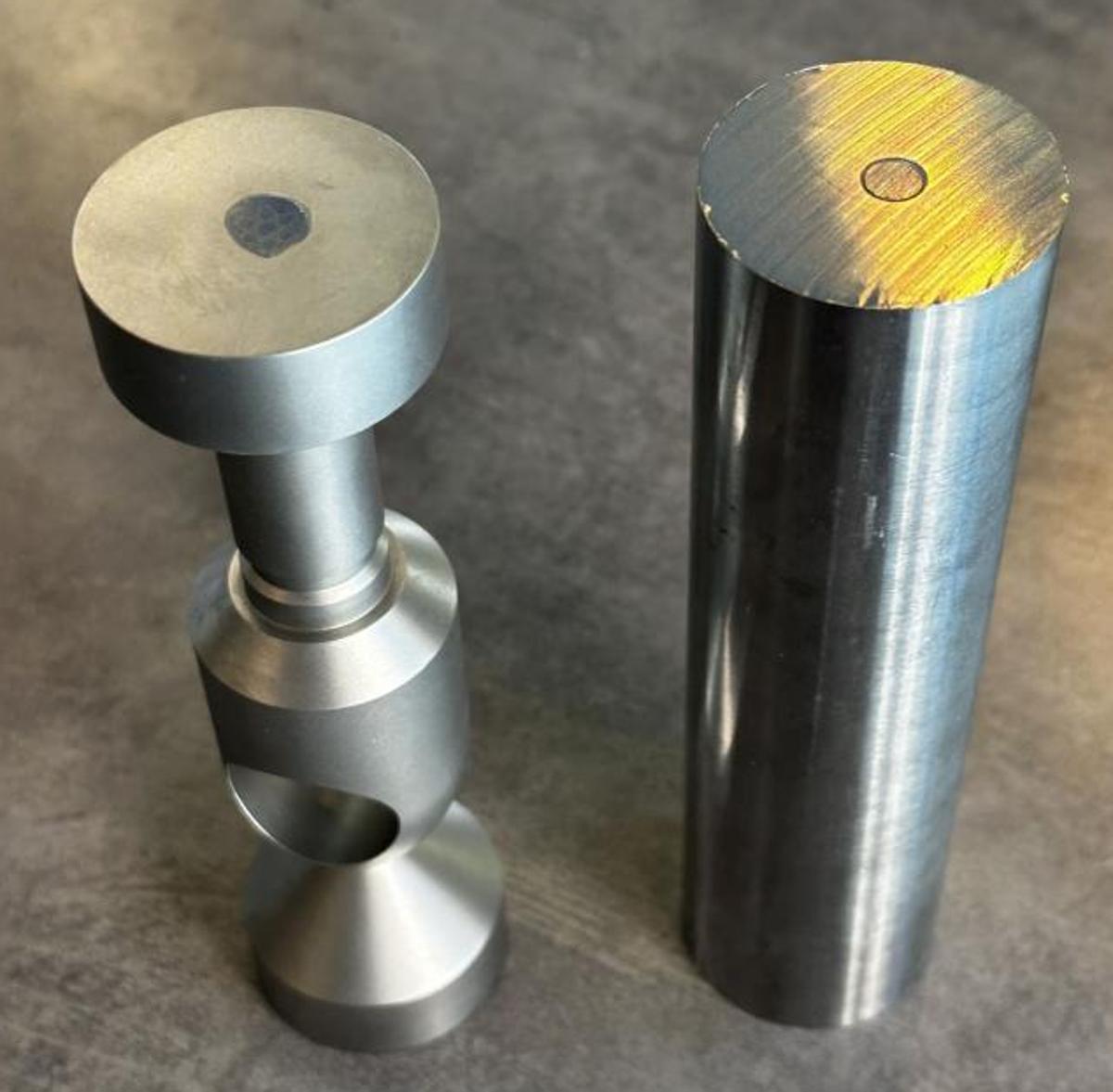
Massachusetts‑based DUST Identity has unveiled a new platform that embeds its Diamond Unclonable Security Tag (DUST) technology into Maintenance, Repair and Overhaul (MRO) workflows. The solution uses microscopic diamond particles to create tamper‑evident, cryptographically secure identifiers for aircraft components, enabling...
Bjorn’s Corner: Blended Wing Body Airliners. Part 6
The article examines propulsion options for the Z4 blended‑wing‑body (BWB) airliner concept. It notes that the Z4 requires roughly 86 klbf of thrust, while currently available high‑specific‑thrust engines such as the Pearl 10X and GE Passport only provide a combined 76 klbf. The...

No FAA Decision by May 1 on Extending 777F Classic Production
Boeing’s request for a Federal Aviation Administration exemption to keep building the 777F Classic freighter past Dec. 31, 2027 will not be decided by the May 1 deadline it sought. The airline wants to produce 35 more 777Fs powered by legacy GE90 engines...

Systems, Trades, Materials and Engines for Boeing’s Next Airplane
Boeing is deep into trade studies for its next commercial jet, scrutinizing system architecture, material choices, and engine options. The company is weighing advanced carbon‑fiber composites against traditional aluminum to cut weight and boost fuel efficiency. Engine candidates under review...
New Technology for Boeing’s Next New Airplane
Boeing is weighing the launch of a next‑generation commercial jet, but a host of technical, regulatory and cost challenges loom. VP of Product Development Brian Yutko avoided direct questions about a new program, yet hinted at key hurdles during a...
Reader Comments Open Forum, Week of April 13
The Iran‑U.S. conflict is driving a severe economic shock across the Gulf Cooperation Council, with Kuwait and Qatar facing up to 14% GDP contractions and tourism losses of $600 million per day. Regional stock markets have slumped, notably a 15% drop...
Bjorn’s Corner: Blended Wing Body Airliners. Part 5
The aerospace community remains fixated on blended wing body (BWB) airliners, with new concepts announced annually despite limited commercial viability. Bjorn argues that the only realistic market for BWB designs is long‑range military transport, not passenger jets. Boeing, after completing...

Boeing’s Next Airplane Will Eventually Come; What Will It Be?
Boeing CEO Kelly Ortberg halted the X‑66A Transonic Truss Brace Wing demonstrator, citing insufficient airline demand and technology readiness, while preserving a joint research effort with NASA on advanced wing designs. The move reverses former CEO David Calhoun’s earlier cancellation...

Boeing’s 30-Year March to Its Next New Airplane
Boeing has gone roughly 30 years without launching a brand‑new clean‑sheet aircraft, with the last major program being the 787 Dreamliner announced in 2003. The 787 suffered $50 bn in cost overruns and still carries $14 bn of deferred expenses, while Boeing’s...
Reader Comments Open Forum, Week of April 6
Leeham News Agency (LNA) has launched a Reader Comments Open Forum that runs weekly, starting the week of April 6, 2026. The forum lets readers comment on any article, including pay‑wall pieces, provided the preview is publicly accessible. All submissions are subject...
Bjorn’s Corner: Blended Wing Body Airliners. Part 4
The article explains that a blended‑wing‑body (BWB) airliner’s wingspan is dictated primarily by take‑off performance, not cruise efficiency. During take‑off, induced drag accounts for 85‑90% of total drag, and regulatory V2 speed requirements force designers to keep V2 low, which...

Who Controls the Movement of the Aircraft?
The FAA is moving forward with a $31.5 billion Brand New ATC System (BNATCS) that keeps air‑traffic control at the center of aircraft flow management. Industry commentator R. Michael Baiada argues this ATC‑centric model will raise airline costs, increase delays, and limit...

Boeing’s Starliner History Shows Safety, Quality Concerns Exist Systemically Across the Company
NASA’s February 19 investigative report blames both Boeing and NASA for the 2024 Starliner failure that left its crew stranded on the International Space Station for nine months before a SpaceX capsule returned them. The 311‑page document details software glitches,...
Bjorn’s Corner: Blended Wing Body Airliners. Part 3.
The discussion centers on blended wing body (BWB) airliners and their aerodynamic challenges compared with conventional tube‑and‑wing (TWB) Part 25 aircraft. Commenters note that BWB designs generate a nose‑down force that must be countered by a horizontal tailplane on a long...

The State of Alternative Propulsion Aircraft? Part 9.
Part 9 of the series examines hydrogen‑fuel‑cell propulsion for aircraft, highlighting its ability to generate electricity without the weight penalties of batteries. The article contrasts this with hydrogen combustion in gas turbines, which retains the high power‑to‑mass ratio of conventional engines...

Commercial Engine OEM: Not for the Faint of Heart. Or the Cash-Poor.
Airlines and lessors are scrambling for fuel‑efficient narrow‑body jets as jet fuel spikes to $175 per barrel, putting pressure on aircraft manufacturers. Both Airbus and Boeing are missing their master production schedules, but the bottleneck lies with engine makers who...
Open Forum, Week of March 23
Airbus has increased the maximum take‑off weight (MTOW) of its Trent 7000‑powered A330‑900 to 253 tons, matching the thrust of the older Trent 700‑powered A330‑200 which was limited to 230 tons. The weight boost relies on aerodynamic tweaks, bleed‑air management and upcoming equipment such...

Change Incorporation, Configuration Control, and the High Cost of Getting It Wrong
Boeing has assembled more than 30 Boeing 777‑9 airframes while the type certificate remains pending, exposing the program to extensive change incorporation work. Earlier, the 737 MAX grounding and 787 production flaws forced costly rework through shadow factories, taking months per...

Iran War Threatens Boeing in More Ways than Just Airliner Orders
Recent hostilities in the Middle East, highlighted by the closure of the Strait of Hormuz, have exposed a hidden vulnerability in Boeing’s supply chain. The disruption threatens the petro‑chemical feedstock needed for carbon‑fiber composites that underpin the 787 Dreamliner and...

Air Lease Merger This Year Creates New Lessor Powerhouse
Air Lease Corporation will be acquired for $7.4 billion by a consortium including Sumitomo, SMBC Aviation Capital, Apollo and Brookfield, and will be rebranded as Sumisho Air Lease Corp (SALC) in early 2026. Class A shareholders receive $65 cash per share. SMBC...
Bjorn’s Corner: The Blended Wing Body, BWB, Airliner. Part 1.
The blended wing body (BWB) airliner promises up to 15‑20% fuel savings by merging wing and fuselage, but realistic designs often deliver only around 5% efficiency gains. Structural concepts rely on carbon‑fibre webs to create a tube‑like cabin, reducing skin...

The State of Alternative Propulsion Aircraft? Part 7.
The article revisits alternative‑propulsion aircraft, contrasting serial and parallel hybrid concepts. It argues that serial hybrids increase both production and operating costs without delivering meaningful efficiency gains. By highlighting that aircraft lack the regenerative‑braking cycles that make automotive hybrids valuable,...
Middle East Conflict Impact on Airbus, Boeing
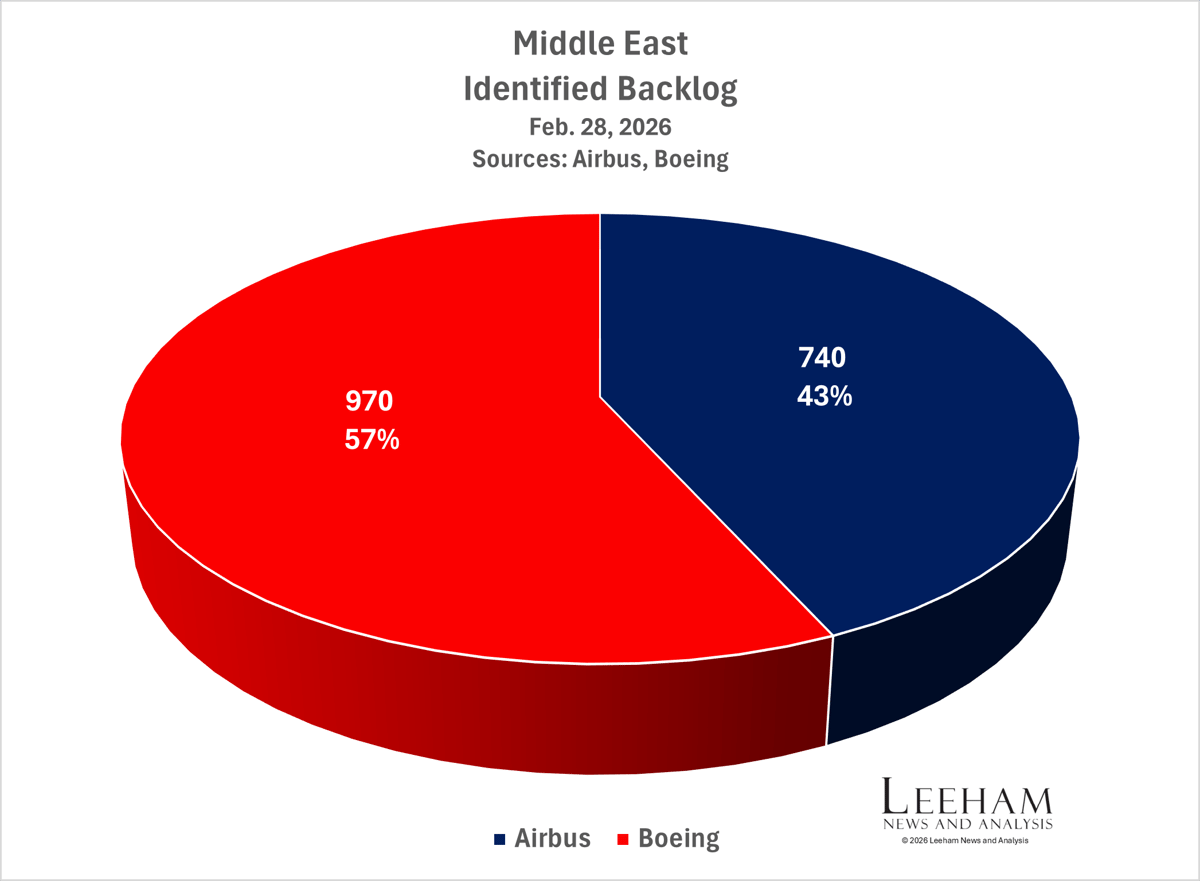
The escalating Iran‑Israel conflict is prompting Gulf states to reconsider US‑linked defense and commercial aviation contracts, putting major aircraft orders under review. Boeing’s flagship 777X program now faces heightened risk as regional airlines delay fleet expansion, while Airbus could capture...

Supply Chain Is Improving, but the Light at the End of the Tunnel Could Be a Train
Aerospace executives report that supply‑chain performance has improved relative to the pandemic‑era lows, with fewer missed deadlines from OEMs like Airbus and Boeing. However, Kevin Michaels of Aerodynamic Advisory warns that new headwinds—regulatory bottlenecks, rare‑earth concentration, and persistent engine and...
Open Forum, Week of March 9
Rare earth shortages, especially yttrium and scandium, are tightening for U.S. aerospace and semiconductor manufacturers as Chinese export controls drive prices up to 69 times higher. China still dominates the global rare‑earth value chain, controlling roughly 70% of mining, over...

Embraer Forecasts Delivery Growth as Backlog Jumps 20%
Embraer announced it will boost aircraft deliveries this year after posting record fiscal‑2025 revenue and seeing its order backlog swell by 20%. The Brazilian manufacturer expects higher output from both its commercial jet and executive‑aircraft divisions, leveraging strong demand for...

Bjorn’s Corner: Faster Aircraft Development. Part 30. Wrap-Up.
The discussion highlights that successful aircraft manufacturers typically begin with modest, proven platforms before expanding into larger families. Rising crew‑costs, amplified by a global pilot shortage, erode the economics of hybrid regional jets that carry few passengers. Without an established...

The State of Alternative Propulsion Aircraft? Part 6.
The article reviews the limitations of series‑hybrid aircraft, highlighting the significant energy losses when a turbogenerator feeds an electric motor through multiple conversion stages. These inefficiencies make series hybrids uneconomical compared to conventional models like the Cessna Caravan or Saab 340....

Aviation Traffic Paralyzed by Iran Conflict
The Iran‑Israel conflict has effectively shut down the airspace over the Persian Gulf, halting normal operations for the Gulf’s three largest carriers—Emirates, Qatar Airways and Etihad. Only a minimal trickle of repatriation flights to Dubai, Abu Dhabi and Doha is...

Airbus: Repeatedly Missing the Mark on Delivery Guidance
Airbus has failed to meet its commercial aircraft delivery guidance for three consecutive years, with shortfalls driven by engine shortages, buyer‑furnished equipment delays, and quality‑control problems. The company repeatedly revised its outlooks as supply‑chain bottlenecks persisted, undermining the reliability of...
Open Forum, Week of March 2
Airlines across the Middle East and India have plunged into the worst travel chaos since the COVID‑19 pandemic, with more than 7,000 flights cancelled over a three‑day span. Emirates, Etihad and Qatar Airways alone scrapped hundreds of services, while Air...

Rolls-Royce Boosts Mid-Term Targets, CEO Dismisses UltraFan Loan Speculation
Rolls‑Royce reported a robust 2025 full‑year performance, with net profit rising year‑on‑year and the company lifting its mid‑term earnings and cash‑flow targets. The engine maker reiterated its plan to re‑enter the narrow‑body market, highlighting new partnership opportunities and a refreshed...

Boeing Defects and Rework Fell Due to Better Supplier Relations: Exec
Boeing reported a 40% drop in quality rework hours over the past year, attributing the improvement to stronger collaboration with its 1,200‑plus suppliers. Senior Vice President Ihssane Mounir highlighted expanded engineering support and a heightened focus on defect prevention as...

When Does Boom Go Boom; Military Goes Green and Loses the Battle
Boom Aviation’s 88‑passenger Overture supersonic transport, ten years after its 2014 launch, has demonstrated a prototype but still lacks a certified engine partner. The company has secured more than $600 million in funding and conditional orders from major airlines, yet major...
Bjorn’s Corner: Faster Aircraft Development. Part 28. Development Times.
The Leeham study tracks a seven‑year development cycle for a new 200‑seat airliner, mapping each certification milestone from concept to entry‑into‑service. Modern tools such as 3D CAD, PLM and Digital Twin have trimmed design and documentation effort, but the overall...

Airbus Leans Toward Launching “A220-500”, But Faces Challenges
Airbus is poised to launch a stretched A220‑500 variant, potentially at the Farnborough Air Show in July 2026. New commercial‑airplanes CEO Lars Wagner backs the program, echoing his predecessor’s push for a larger‑capacity model. The aircraft would seat roughly 165...
Privatizing Air Traffic Control: Why Canada’s Success Story Won’t Work Here
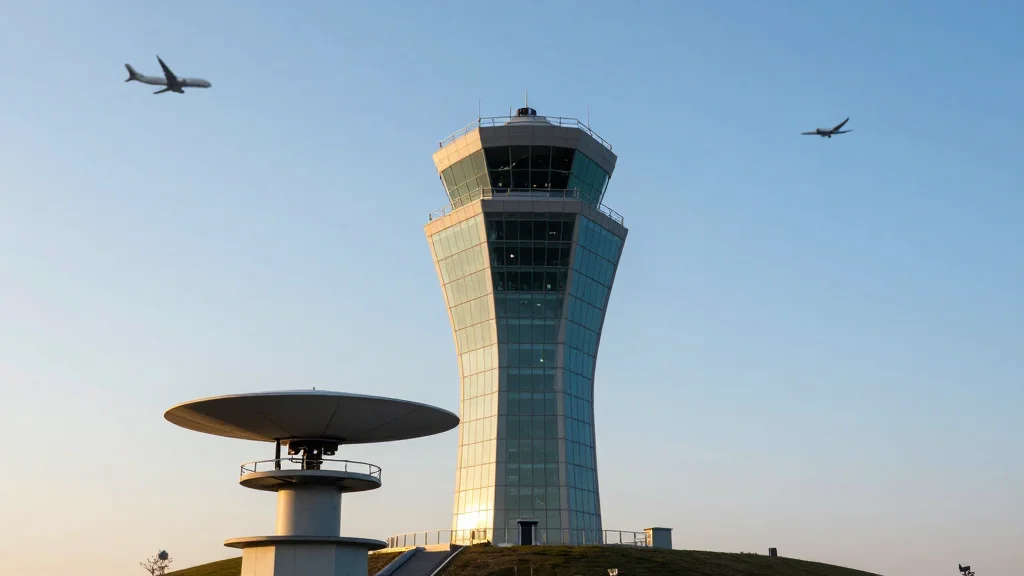
Recent commentary reignites calls to privatize the U.S. Federal Aviation Administration’s air traffic control system, citing Canada’s NAV CANADA as a benchmark of efficiency and cost savings. The article argues that while Canada’s model reduced delays and operating expenses, the United...

Spain Becomes Fourth Country to Join Aero Excellence Initiative to Improve Supply Chain
Spain has become the fourth nation to join the European Aero Excellence International initiative, a collaborative program aimed at boosting aerospace supply‑chain resilience. The scheme, originally launched by France’s GIFAS in 2023 and expanded with Germany’s BDLI and the UK’s...

Recovery of the 737 Program Is Unglamorous and Arduous: Boeing Exec
Boeing’s 737 program, still emerging from a six‑year safety and production crisis, is now outputting 42 aircraft per month. The company plans incremental rate increases, targeting 52 and eventually 63 jets monthly by activating a new North Line at the...