
Recent Posts

News•Mar 1, 2026
Curiosity Mars Rover: Unnatural Pattern Investigation
NASA’s Curiosity rover’s ChemCam system autonomously flagged a patch of tiny, evenly spaced parallel lines on a Martian boxwork outcrop. The pattern, described as “unnatural,” prompted the rover to target the feature for high‑resolution imaging and laser spectroscopy. Researchers are now dissecting the lines for clues, comparing them to tool marks, geological fractures, and potential wheel‑track artifacts. A video released by Mars Guy highlights the discovery and the ongoing analysis.
By Leonard David’s Inside Outer Space

News•Feb 25, 2026
Ingenuity Mars Helicopter: “Unexpected Application”
NASA’s Ingenuity helicopter dramatically outperformed its original proof‑of‑concept flight test, proving autonomous aerial flight on Mars. Beyond its record‑setting flights, engineers have repurposed one of Ingenuity’s navigation processors to feed real‑time location data to the Perseverance rover at Jezero Crater....
By Leonard David’s Inside Outer Space
News•Feb 23, 2026
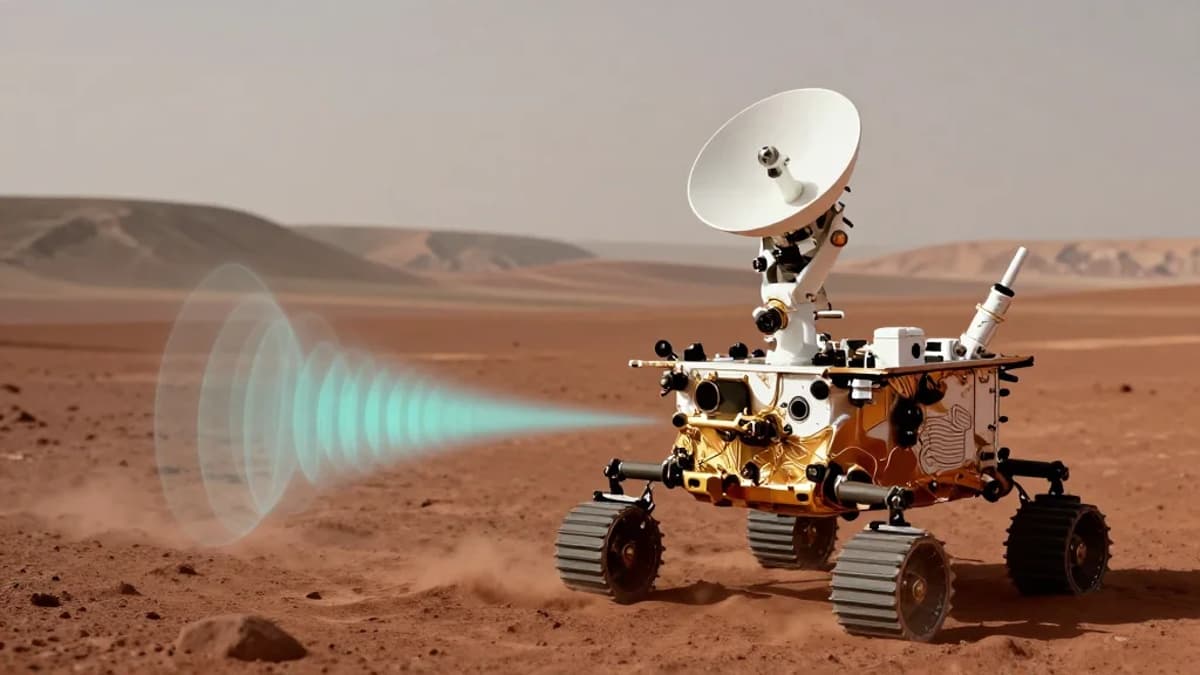
China’s Mars Rover: Radar Data Supports Shallow Subsurface Ice Find
China’s Tianwen‑1 mission deployed the Zhurong rover in Utopia Planitia, where its Mars Rover Penetrating Radar (RoPeR) identified a shallow subsurface ice layer about 7 m thick. The radar data fit a model of dirty ice mixed with stones sandwiched between two...
By Leonard David’s Inside Outer Space

News•Feb 22, 2026
China’s Space Emergency: Crew Members Recount Debris-Damaged Return Capsule
China’s Shenzhou‑20 crew discovered a triangular crack on their return capsule’s viewport caused by orbital debris, forcing a delay of the planned 5 November landing. An emergency, uncrewed Shenzhou‑22 cargo mission was launched on 25 November to deliver repair tools and supplies...
By Leonard David’s Inside Outer Space
News•Feb 16, 2026
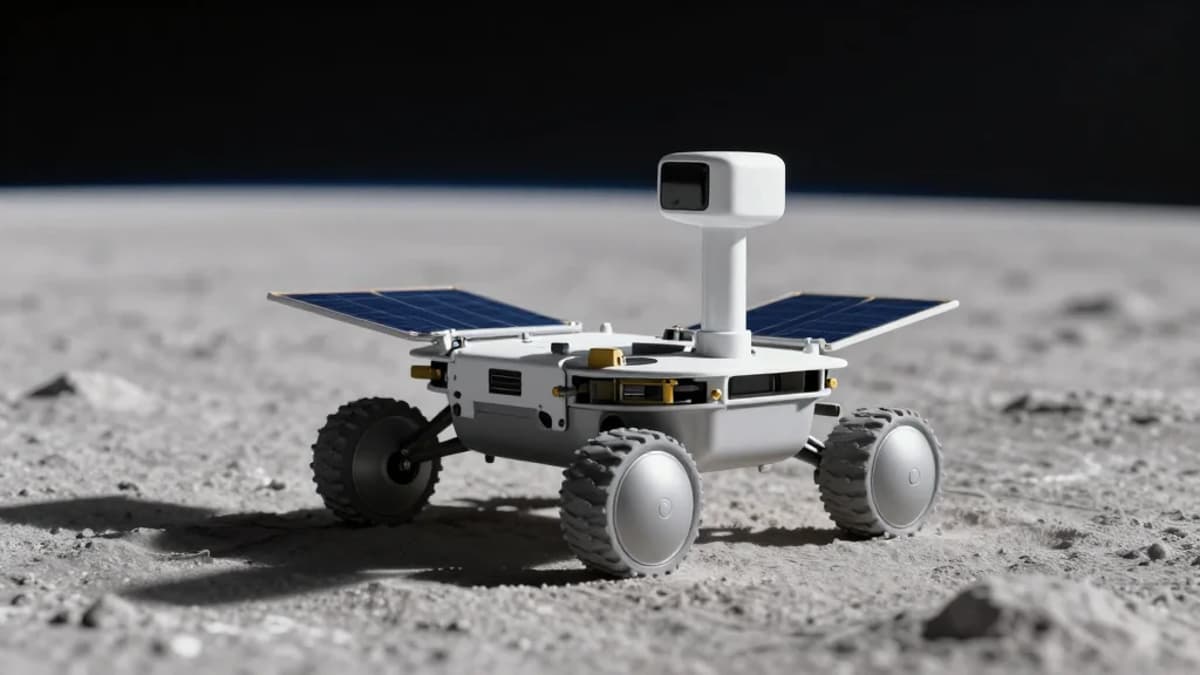
Video: “Drive Me To The Moon” – The Inside Story From Lunar Outpost
The documentary “Drive Me To The Moon” showcases Colorado‑based Lunar Outpost’s inaugural lunar mission, Lunar Voyage 1, and its Mobile Autonomous Prospecting Platform (MAPP) rover. The mission was compromised when Intuitive Machines’ Athena lander tipped onto its side on March 6 2025, preventing...
By Leonard David’s Inside Outer Space

News•Feb 15, 2026
Report: Crowded Orbits – A Call to Action on Space Debris
The World Economic Forum and the Center for Space Futures released a report warning that orbital congestion has surged as commercial launches multiply, raising collision risk to 29% in certain altitude bands by 2032. The study, produced with the Saudi...
By Leonard David’s Inside Outer Space

News•Feb 13, 2026
Heads Up! The Threat From Re-Entering Satellite Megaconstellations
A Canadian research team analyzed the atmospheric re‑entry of eleven satellite megaconstellations and found a collective 40% risk of ground casualties if any debris survives the burn‑up process. The study highlights that current models often assume complete disintegration, which may...
By Leonard David’s Inside Outer Space
News•Feb 12, 2026
B612 Foundation: Communicating Asteroid Risks and Opportunities
The B612 Foundation, a Silicon Valley nonprofit founded in 2002, is dedicated to protecting Earth from asteroid impacts while advancing solar‑system science and space‑economy opportunities. It builds detection telescopes, data networks, and collaborates with agencies such as NASA and ESA...
By Leonard David’s Inside Outer Space
News•Feb 11, 2026
China’s Rocket, Capsule, Escape Tower Test Advances Humans on the Moon Program (Updated with Video)
China’s Long March 10 booster performed its first prototype ignition flight on Feb. 11, 2026, carrying the uncrewed Mengzhou spacecraft. The test included a zero‑altitude abort‑escape maneuver and successful splash‑down of both the rocket’s first stage and the capsule. Conducted from a new...
By Leonard David’s Inside Outer Space
News•Feb 8, 2026
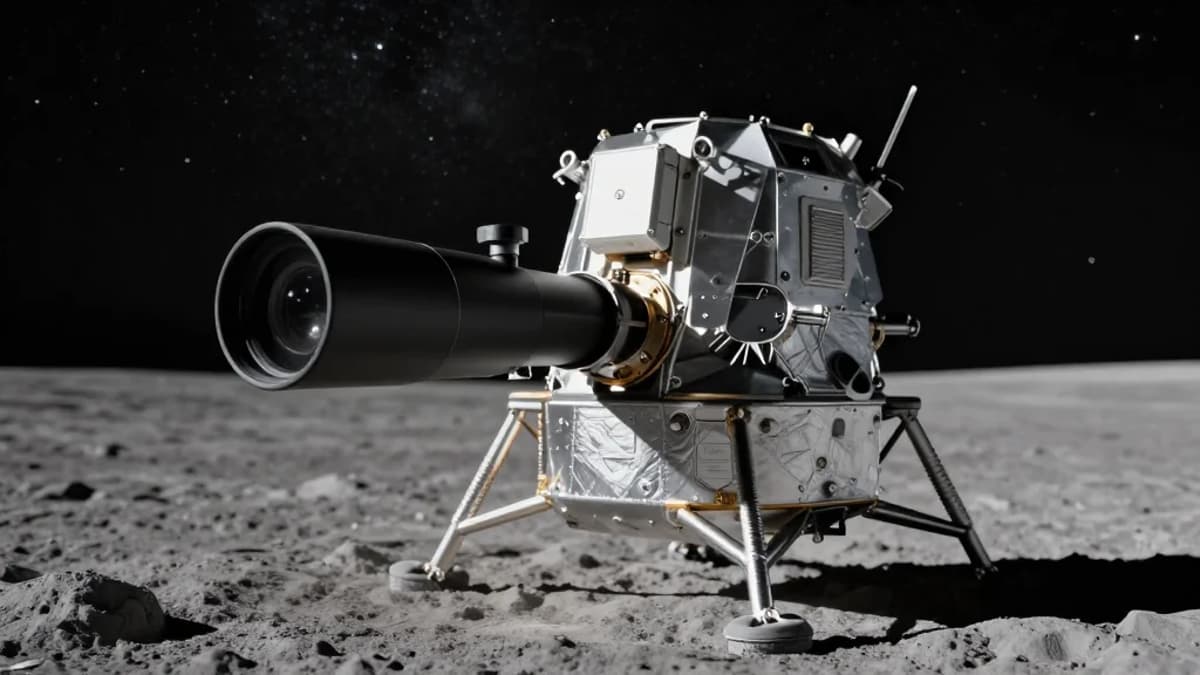
Passing of Steve Durst: “Galactically Aloha”
Steve Durst, founding director of the International Lunar Observatory Association (ILOA) and longtime publisher of Space Age Publishing, died in early February 2026. Durst was instrumental in fostering U.S.–China space collaboration, notably securing a wide‑field telescope (ILO‑C) as a payload...
By Leonard David’s Inside Outer Space

News•Feb 8, 2026
China’s Space Station Crew: Onboard Experiments
China’s Shenzhou‑21 crew, now three months into their Tiangong stay, has been busy conducting a suite of scientific and maintenance tasks. The trio of astronauts—Zhang Lu, Wu Fei and Zhang Hongzhang—collected biomedical samples, ran microgravity physics experiments, and performed extensive cabin upkeep. Their...
By Leonard David’s Inside Outer Space
News•Feb 7, 2026
NASA’s Isaacman: Call for Restoring the Space Agency’s Core Smarts
After just 50 days as NASA's chief, Jared Isaacman has toured every NASA center, conducted a dozen town‑hall meetings, and sifted through thousands of workforce submissions. He concluded that the agency must better empower its people and concentrate resources on...
By Leonard David’s Inside Outer Space
News•Feb 5, 2026
Expandable Structures in Space: New Strategic Partnership
Voyager Technologies and Max Space have formed a strategic partnership to develop expandable space habitats that can launch compactly and inflate up to twenty times their stowed size. The habitats are designed to fit on a single Falcon 9 launch, dramatically...
By Leonard David’s Inside Outer Space