
Triggered at Work: How to Keep Your Influence When Emotions Run High
The article explains how workplace triggers can instantly undermine a leader’s influence, especially when a senior figure uses provocative language in front of peers. It outlines five practical tools—naming the trigger, slowing the body, using dignity‑preserving phrases, redirecting to purpose, and exiting the conversation—to regain composure and maintain authority. The piece also stresses rapid repair after a lapse to preserve credibility. Ultimately, it frames emotional self‑management as a power skill rather than a soft skill.

Keep Things Organized: The Habit That Makes Collaboration Feel Effortless
Effective collaboration hinges not only on ideas but on how easily teammates can locate and use each other's work. The article outlines the “Keep Things Organized” habit, urging clear file naming, a single source of truth, and proactive sharing of...

Stop Rescuing Your Team: How to Ask for Help and Make Everything Better
The article warns that high‑performing leaders often rescue their teams by taking on work that should be shared, which unintentionally suppresses team growth. It outlines a four‑step framework: make workload visible, clarify ownership, replace rescue with explicit agreements, and tolerate...

She Should Have Known: The Leadership Cost of Unsaid Appreciation
The article reflects on a colleague’s death revealing how leaders often withhold genuine appreciation until after a person is gone. It argues that ambiguous feedback creates fear, reduces innovation, and leads to silent, over‑working employees. The author proposes concrete practices—specific...

The Seemingly Harmless Phrase that Erodes Team Trust and Kills Collaboration
The article warns that the casual “agree to disagree” habit silently damages team trust and stalls collaboration. By ending conversations prematurely, leaders leave root issues unresolved, allowing tension to fester. It introduces a four‑dimensional framework—connection, clarity, curiosity, and commitment—to turn...

Missed Deadlines? 5 Leadership Moves to Restore Credibility
The article presents five leadership moves to stop missed deadlines and rebuild team credibility. It urges leaders to diagnose the real causes of delays, turn simple agreement into firm commitment, and protect focus from constant interruptions. It also stresses surfacing...

Invite Input: The Habit that Turns Silence Into Solutions
The article introduces the "Invite Input" habit, a core element of the Synergystack™ Team Development System, to combat Fear of Speaking Up (FOSU) in organizations. It outlines five practical steps—signaling safety, making specific asks, asking early, building input infrastructure, and...

How the Right Communication Skills Help Leaders Restore Productivity and Resolve Team Conflict
The latest Let\'s Grow Leaders podcast episode shows how leaders can convert petty team conflicts into measurable productivity by mastering the right communication techniques. It introduces simple, empathy‑driven phrases and three diagnostic questions that help identify whether a teammate needs...

How to Get Buy-In For Your Idea: Tips to Seal the Deal
The article outlines practical steps to move an idea from discussion to decision by focusing on stakeholder buy‑in. It stresses leading with clear value, translating expertise into simple language, and creating a “squeeze play” that engages multiple influencers. Anticipating objections...

Quiet Resistance? Missed Signals? Fix It Before the Meeting Starts
The article urges leaders to conduct brief pre‑meetings with key stakeholders to surface hidden objections before the main discussion. By asking targeted questions, leaders can map influence, spot recurring concerns, and identify silent participants. This proactive step reduces surprise push‑backs,...

How to Lead a High-Performing Team of Competitive Achievers (With Video)
The article outlines how leaders can turn a group of high‑achieving, competitive individuals into a cohesive, high‑performing team by emphasizing the "AND" mindset—leveraging personal strengths while fostering collaboration. It shares a real‑world example from Bell Atlantic where a leader used...
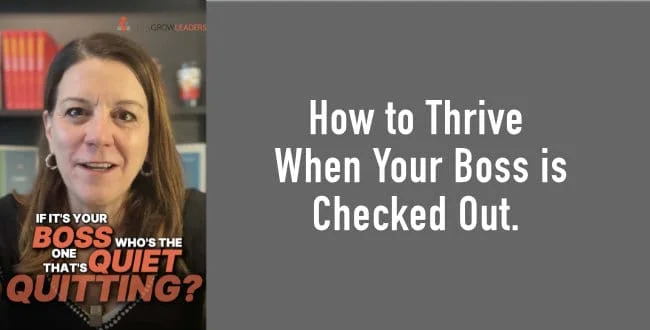
Boss Quiet Quitting? Here’s Your 4-Step Survival Plan (with Video)
The article addresses employees whose managers appear to be "quiet quitting" and offers a four‑step plan to stay productive. It advises workers to step into a leadership role, communicate directly instead of venting, keep managers informed with concise updates, and...

How to Say No: Leadership Communication Skills to Enhance Productivity
Episode 339 of Let’s Grow Leaders teaches leaders how to say no at work, even to their boss, without losing credibility. It provides concrete, respectful language, a four‑dimensional framework, and a mindset shift that treats every “yes” as an implicit...