
NYC Congestion Zone Cuts Air Pollution 22% Study Finds | Phys.org
New York City’s congestion pricing, launched in January 2025, has delivered measurable environmental gains. A Cornell study shows that particulate matter 2.5 concentrations fell 22% within the Congestion Relief Zone during the first six months. The program also cut traffic, reduced crashes and noise complaints, and is on track to generate roughly $500 million in toll revenue by year‑end. Benefits extended beyond Manhattan, with air‑quality improvements recorded throughout the five boroughs and neighboring suburbs.
Friday Reads for 10 April
London Reconnections' Friday Reads roundup spotlights critical transport issues across the UK and US. Highlights include Shrewsbury Station's ad‑hoc extra level to address missing platforms, a deep dive into why US high‑speed rail has stalled, and the accessibility challenges wheelchair...
Subway/Metro Maps - How the Whole Thing Works: Podcast & Pix | Journey With Purpose
The Journey With Purpose podcast features cartographer Andrew Lynch exploring how subway maps function as both navigation tools and narrative devices. He explains the distinction between diagrammatic schematics, like Harry Beck’s Tube map, and geographic representations that expose network complexity....
Webuild Bags £572M Contract on New Naples Metro Line
A Webuild‑led consortium secured a £572 million (≈$732 million) contract to design and build civil works for the first phase of Naples’ new Metro Line 10. The contract covers 6.5 km of the 14‑km underground line, connecting the Naples‑Afrafola high‑speed rail station to Principe Umberto....
How Would London's "Range Rover Tax" Work?
Transport for London (TfL) is weighing a surcharge on large SUVs as part of the mayor’s Vision Zero plan to eliminate road deaths by 2041. The proposal targets vehicles that are wider, heavier and increasingly common – they now account for...

Friday Reads for 3 April
London Reconnections’ Friday Reads for 3 April curates a dozen transport‑focused stories, ranging from Great Western Railway’s summer trial of overnight Gatwick services to the opening of Bedlington on the Northumberland Line. The roundup also flags EU and German plans to...
Smart Track Strategies for London Underground: Video | PWI
The Railway Engineering Institution (formerly PWI) showcased innovative track‑renewal methods for the London Underground that aim to extend mileage while cutting costs. Strategies highlighted include longer welded rail panels, mechanised track‑laying equipment, predictive‑maintenance analytics, and recycled ballast. Case studies from...
How to Integrate Modern Metros Into Unplanned Neighbourhoods & Local Transport | Challenger Cities
Indian cities are rapidly deploying metro lines through densely built, historic neighborhoods, showcasing a construction tempo that dwarfs the consultation‑heavy processes of North America and Europe. The speed is fueled by strong political will, ambitious financing, and a willingness to...
Grand Paris Express: Europe's Biggest Infrastructure Tunnelling: Video | Interesting Engineering
The Grand Paris Express is Europe’s largest underground infrastructure undertaking, adding four new metro lines and extending existing ones in the Île‑de‑France region. The scheme will deliver roughly 200 km (120 mi) of new tracks and 68 stations, aiming to serve about...

Monday's Friday Reads for 23 March
London Reconnections’ Friday Reads roundup highlights five transport‑focused stories. It questions whether London could approve its own projects without Whitehall delays, while London Northwestern Railway pledges free travel packs for neurodiverse passengers. The collection also examines gender imbalances on rail...
Why Parking Debates Never Go Away | Journey with Purpose
Parking debates persist because cities treat parking as a required accessory rather than a managed public asset. Minimum parking requirements tie housing approvals to car ownership assumptions, inflating costs and limiting supply. Meanwhile, curb space is underpriced and enforcement uneven,...
Aboard HS2’s Final TBM Tunnelling to Euston: Video | GreenSignals
HS2 has begun excavating the final tunnel bore on its 140‑mile London‑to‑West Midlands route, targeting the down tunnel from Old Oak Common to the Euston terminus. The tunnel boring machine, dubbed “Karen” after pioneering female driver Karen Harrison, is the...
Monday's Friday Reads for 16 March
The latest Monday’s Friday Reads curates six transport stories ranging from technology to infrastructure. TfL is testing virtual‑reality tools to encourage active bystander behavior, while the London Transport Museum unveils new exhibition spaces. A Glasgow rail station is being sold...
HS2 Euston Approach Tunnels' Big Dig: Video | RailFocus
HS2’s new approach tunnels to London Euston involve a 7.2 km stretch bored by two 7.5 m diameter tunnel boring machines (TBMs). The TBMs will halt about a kilometre from the station, leaving the final 300 m to be excavated with mined‑tunnel techniques....
TfL Selects Direct Solar Power to Help Run the Tube | RailUK
Transport for London (TfL) has appointed SSE Energy Solutions to design and build purpose‑built solar farms that will feed electricity directly into the Tube network via a private‑wire arrangement. The scheme will generate up to 65,000 MWh of zero‑carbon power each...
Micro-Hubs & Spokes, Hand Carts, & U Boats: Human Logistics | At the Junction
The article examines Manhattan’s emerging micro‑hub and spoke delivery system, where trucks park at neighborhood focal points and workers complete last‑mile drops on foot using hand carts. This model sidesteps the need for costly local warehousing or autonomous robots by...
Why Building Metros Is Needed to Green Transition Away From Cars | PedObservations
Germany’s debate over new U‑ and S‑Bahn lines pits environmental groups against planners who argue metros are essential for decarbonising transport. Critics cite the Ariadne project and a retracted study that claimed tunnelling emits more CO₂ than any savings, but...
Friday Reads for 6 March
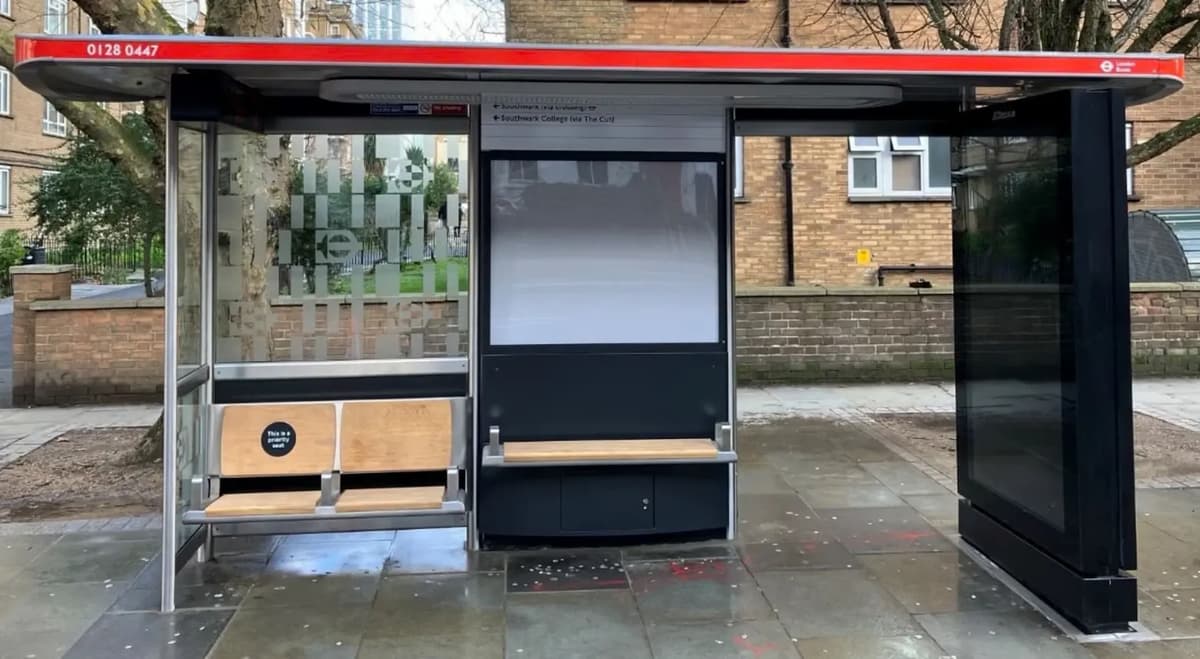
London’s Friday Reads for 6 March curates eight transport‑focused stories, from the official approval of Oxford Street pedestrianisation to Liverpool Street’s ambitious rebuild, TfL’s experimental bus shelters, and a rural ‘Mini Switzerland’ transport demo. The roundup also links to a maglev...
Railways & War Readiness - EU Military Mobility Plan: Video | Railways Explained
In response to Russia's invasion of Ukraine, the EU has elevated military mobility to a strategic priority, building on the 2017 Military Mobility policy and a 2018 Action Plan. A €1.7 billion Connecting Europe Facility budget for 2021‑27 supports dual‑use transport...
Micro-Hubs, Spokes, Hand Trucks, & U Boats: The Last Steps Are Human Logistics | At the Junction
The article outlines a growing micro‑hub and spoke delivery system in Manhattan, where trucks park at neighborhood hubs and workers complete the last‑mile on foot with hand trucks. It highlights the chaotic, obstacle‑filled urban environment that makes fully automated delivery...

Friday Reads for 27 February
The Friday Reads roundup for 27 February highlights several transport‑focused developments, from Greater Anglia’s expansion of its contactless payment zone to include Stansted Airport, to Milan’s inauguration of a Metrotram Line 7 extension ahead of the Winter Olympics. It also flags a...
Singapore LTA Awards Contracts for DTL2e Stations | Tunnelling Journal
Singapore’s Land Transport Authority has awarded two civil‑engineering contracts worth roughly S$735 million for the Downtown Line 2 extension (DTL2e). Woh Hup Engineering will design and build the underground DE1 station and associated bridge works for about S$285 million. A joint venture...

UK Pilot: Training Boosts Disabled Access to Shared Micromobility | Cities Today
A Salford pilot led by Collaborative Mobility UK and delivered by Cycling UK trained 41 disabled participants on shared e‑bikes and e‑scooters. The hands‑on programme boosted confidence and practical skills, with more than half of the cohort riding independently within...

Monday's Friday Reads for 23 February
The Monday Friday Reads roundup highlights several transport developments on 23 February 2026. London’s Northern line upgrade may repurpose a former horse hospital into a new train depot, coinciding with the inaugural train arrival at Northumberland Park. High‑speed services across Europe...

Friday Reads for 20 February
London Reconnections’ Friday Reads roundup highlights a mix of transport heritage, major infrastructure projects and sustainability initiatives. It spotlights LA’s $25 billion subway expansion aimed at easing freeway congestion, Boston’s pilot of green‑roofed bus shelters, and Toronto’s 30 km downtown pedestrian tunnel...