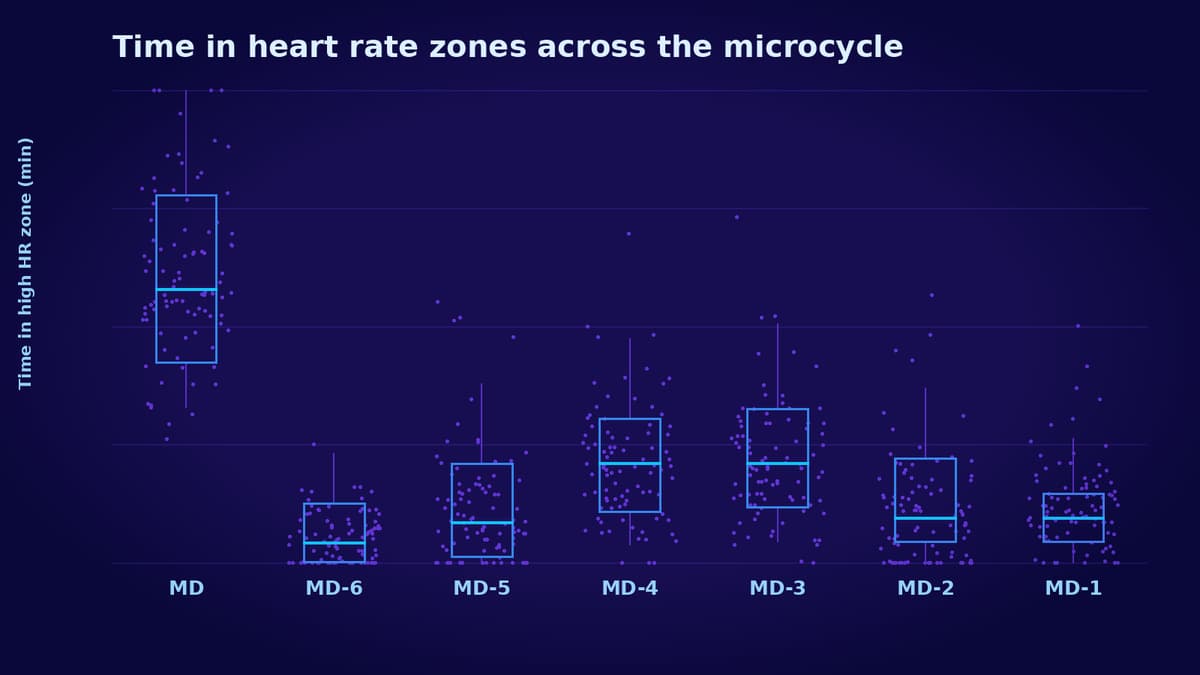
Time in Heart Rate Zones During Training and Matches in Professional Football: A Descriptive Analysis of Nearly 1000 Microcycles From...
Researchers analyzed 948 microcycles from 20 professional football clubs across nine leagues to assess how often players train in high heart‑rate zones. They found that training generally satisfies the >80% HRmax maintenance dose but falls short for >90% HRmax, especially for non‑starters. Starters achieve most of their high‑intensity exposure during matches, while non‑starters rely on compensation work that rarely reaches the highest HR zones. The study highlights a gap between external GPS metrics and the metabolic stimulus needed for fitness gains.
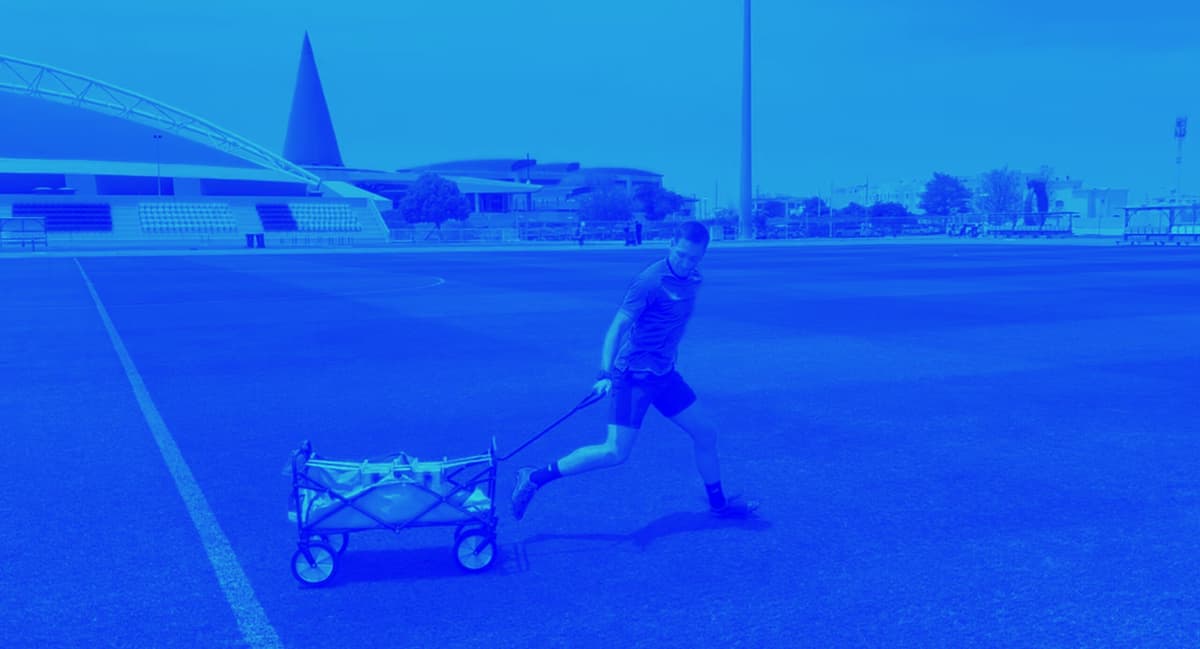
Between-Unit Agreement of GPS-Derived Mechanical Work and Power: Time to Trust the Numbers?
The new SPSR paper evaluates GPS 3.0’s mechanical work and power metrics across ten Hudl WIMU PRO EVO units. Using a rigid trolley, the study measured ten football‑specific drills and a 16‑minute session, processing data via native GPS 2.0 and ADI’s GPS 3.0 algorithms....

Association Between Supervised Strength Session Attendance and Isokinetic Recovery Trajectory in Male Footballers Following ACL Reconstruction: A 6-Year Retrospective Cohort...
A six‑year retrospective cohort of 55 male footballers undergoing hamstring autograft ACL reconstruction found that athletes who attended two or more supervised strength sessions per week between weeks 12 and 18 achieved a quadriceps limb‑symmetry index (LSI) of 96% by...

Rest at MD+2 Promotes Player Freshness Across the Microcycle in Professional Soccer
A recent study of a Turkish professional soccer club examined two micro‑cycle rest strategies: resting on MD+1 versus MD+2. Over 12 weeks, the same squad showed that a rest day on MD+2 produced a freshness signature—identical mechanical work was achieved...

Modality-Specific Muscle Low-Frequency Fatigue and Recovery Signatures: A Case Report Mapping the HIIT Science Taxonomy
Researchers Buchheit and Laursen used the Myocene Powerdex device to track low‑frequency fatigue before, after, and up to 48 hours following nine HIIT sessions spanning the HIIT Science taxonomy. The data confirmed the presumed hierarchy: Type 1 (Zone 2 sauna bike) caused negligible...

Jump Height Lies: Force–Time CMJ Metrics Reveal Hidden Neuromuscular Responses in Elite Football
A new study of elite footballers measured countermovement jumps 48 hours after matches and found jump height unchanged across all levels of match exposure. However, force‑time metrics—early concentric impulse, modified RSI, peak concentric force, and contraction time—showed significant declines or increases,...
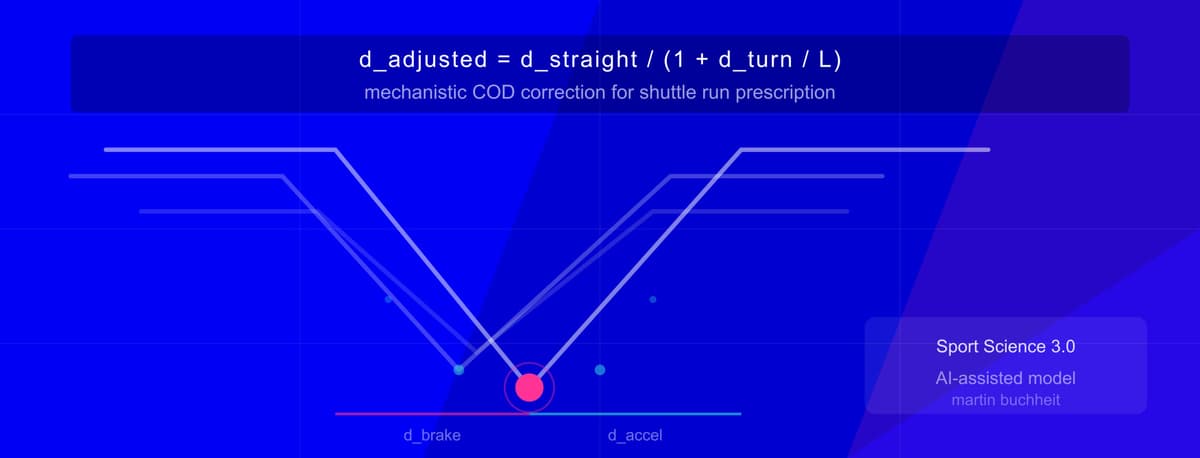
From Rule of Thumb to Mechanistic Formula: An AI-Assisted Model for Individualizing Shuttle Run Distance in HIIT
A new AI‑assisted mechanistic formula replaces the long‑standing 0.7‑second rule for adjusting shuttle‑run distance in high‑intensity intermittent training (HIIT). The model computes time lost per change of direction (COD) as t_cod = v / A0, where A0 reflects each athlete’s acceleration and deceleration capacity,...