NIH Researchers Identify Avenue for Enhanced GLP-1-Induced Weight Loss
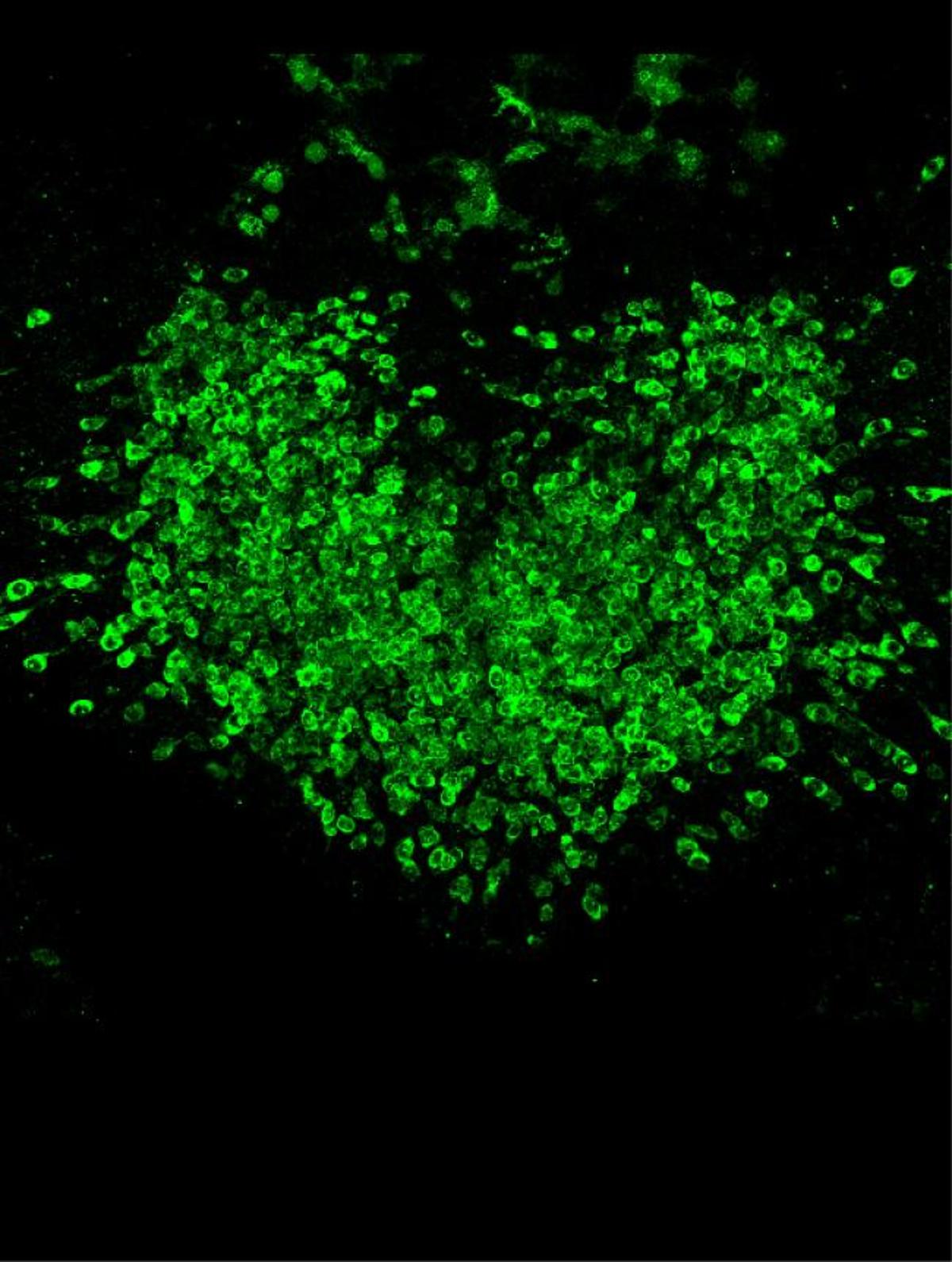
NIH scientists have mapped how the GLP‑1 agonist semaglutide triggers intracellular signaling in mouse hindbrain neurons, pinpointing cyclic AMP (cAMP) elevation in the area postrema as a key driver of weight loss. The study revealed that cAMP responses differ across individual neurons, with some sustaining the signal while others show only brief spikes. By blocking the cAMP‑degrading enzyme PDE4 with roflumilast, researchers prolonged the cAMP surge, suggesting a route to amplify and extend semaglutide’s effects. The findings open avenues for adjunct therapies that could overcome the dosing plateau seen in many patients.

Researchers Identify First Suite of Human Antibodies Against Measles Virus
NIH‑funded researchers have isolated and structurally mapped the first comprehensive set of human monoclonal antibodies against measles virus, revealing nine distinct epitopes on the H and F surface proteins. One antibody, 4F09, locked the fusion protein and cleared virus from...

NIH-Supported Project Expands Access to Care for Children with Amblyopia
A NIH‑funded research network has released the Amblyopia Navigator Decision‑Support Instrument (ANDI), an open‑access, web‑based tool that guides clinicians through diagnosis and treatment of pediatric amblyopia. The platform synthesizes findings from 147 peer‑reviewed studies to recommend glasses prescriptions, patching schedules,...

Researchers Develop Innovative Model for Risk Assessment for Hypertrophic Cardiomyopathy
A NIH‑funded international study of 2,700 hypertrophic cardiomyopathy (HCM) patients introduced a new risk‑assessment model that combines clinical history, contrast‑enhanced cardiac MRI, and NT‑proBNP blood biomarker data. Over a seven‑year follow‑up, the model more accurately predicted sudden cardiac death, heart‑failure...

NIH-Funded Study Suggests that Testosterone Suppresses Brain Tumor Growth in Males
A NIH‑funded study by Cleveland Clinic researchers found that loss of male hormones, especially testosterone, accelerates glioblastoma growth in mouse models by triggering inflammation and the hypothalamus‑pituitary‑adrenal (HPA) stress axis. Supplemental testosterone was associated with a 38% lower risk of...

Symptom-Based Approach Treats Opioid Withdrawal in Newborns with Minimal Drug Exposure
An NIH‑funded OPTimize NOW trial compared symptom‑based, as‑needed opioid dosing with traditional scheduled tapering for newborns with moderate to severe neonatal opioid withdrawal syndrome (NOWS). Among 383 infants cared for under the family‑centered Eat‑Sleep‑Console model, the symptom‑based group was ready for...

Clinical Trial Finds No Difference in Fluid Treatment Options for Pediatric Sepsis
A NIH‑backed trial involving more than 9,000 children across five countries compared balanced crystalloid fluid with standard 0.9% saline for pediatric septic shock. The study found no significant differences in mortality, persistent kidney dysfunction, or need for renal‑replacement therapy between...
NIH-Funded AI Model Predicts Cancer Survival From Single-Cell Tumor Data
Researchers at Oregon Health & Science University, funded by the NIH, unveiled scSurvival, an AI model that predicts cancer patient survival from single‑cell tumor data. The tool was evaluated on clinical datasets from more than 150 melanoma and liver cancer...

Dr. Jonathan M. Green Selected as CEO of the NIH Clinical Center
Dr. Jonathan M. Green, M.D., MBA, has been appointed CEO of the NIH Clinical Center, the world’s largest hospital dedicated to clinical research, effective May 17, 2026. He will oversee a 200‑bed, 870,000‑square‑foot facility with an annual operating budget of roughly $700 million....

Low-Cost Care Model Reduces Blood Pressure in High-Risk Populations
A NIH‑funded trial tested a scalable, team‑based care model in 36 federally qualified health centers in Louisiana and Mississippi. The intervention, which combined intensive blood‑pressure management, home monitoring, health coaching and provider feedback, lowered systolic blood pressure by more than...

NIH Awards Top Scientific Teams for Innovations Linking Nutrition and Autoimmune Disease
The National Institutes of Health announced 15 winning teams in its Nutrition for Our Immune System Health (NOURISH) Autoimmunity Challenge, each receiving a $10,000 prize. The challenge solicited scalable, patient‑centered ideas that integrate diet, microbiome, and multi‑omics approaches to study...

Dr. Elisabeth Armstrong Named NIH Chief of Staff
The National Institutes of Health announced Dr. Elisabeth Armstrong as its new chief of staff, bringing a blend of public‑sector leadership and private‑sector insight. Previously the director of the FDA’s Office of the Executive Secretariat, she oversaw agency‑wide information flows...

NIH Invests $150 Million in Human-Based Research to Reduce Use of Animal Models
The National Institutes of Health announced a $150 million investment in the new Complement‑ARIE program to develop and standardize human‑focused research tools, known as new approach methodologies (NAMs). The initiative will fund technology development centers, a data hub, and a validation...

Clinical Trial Results Support Use of Weekly Extended-Release Buprenorphine for Treatment of Opioid Use Disorder During Pregnancy
A NIH‑backed multicenter trial of 140 pregnant adults found that weekly injectable extended‑release buprenorphine achieved significantly higher rates of illicit opioid abstinence than daily sublingual buprenorphine, while also reducing serious maternal adverse events. The study, published in JAMA Internal Medicine,...

Researchers Develop AI Tool to Predict Patients at Risk of Intimate Partner Violence
Researchers funded by the NIH have created an AI‑driven clinical decision support tool that predicts intimate partner violence (IPV) risk using both structured health records and unstructured medical notes. In a study of 850 IPV cases and 5,200 matched controls,...