
Not All Procrastination Is Created Equal
The piece introduces a three‑tier model of procrastination—negative, neutral, and positive—and cites a University of Virginia study showing that neutral and positive forms do not harm academic performance. It argues that naming and reframing these habits can reduce self‑criticism and boost productivity. The author also explores how inventing personal emotional vocabularies clarifies relationships and supports counterfactual thinking about life choices. Finally, recent research on night‑sky connectedness and a study on insomnia heritability illustrate how misunderstood concepts can shape wellbeing and treatment decisions.

Ragnar Kjartansson: Realms of the Real
Ragnar Kjartansson, Icelandic visual artist, narrates his journey in a new Art21 documentary that maps the rise of Iceland’s contemporary art scene from a rural, sheep‑farming nation to a vibrant urban creative hub. The film highlights his eclectic, music‑infused practice...
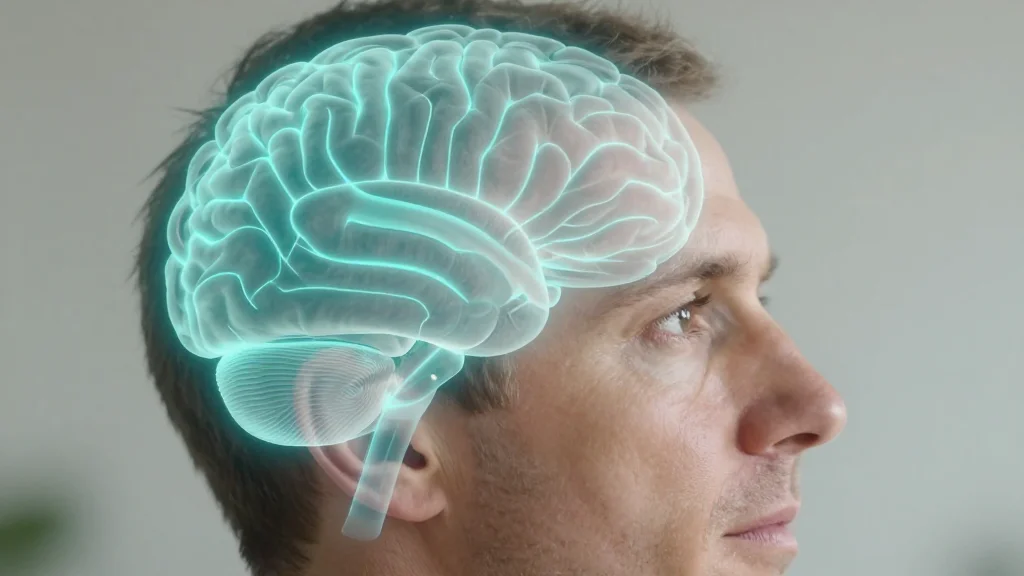
Tip-of-the-Tongue Syndrome
The tip‑of‑the‑tongue (TOT) phenomenon, also known as lethologica, is a temporary retrieval failure where the brain senses a word’s presence but cannot access it. Neuroscientists link the experience to activation in the left inferior frontal gyrus and temporal‑parietal regions, indicating...

I Tested Whether Cannabis Really Can Boost the Runner’s High
A personal experiment tested whether cannabis can amplify the runner’s high, but the author found the experience foggy and physically taxing. While surveys suggest many users report heightened enjoyment, scientific studies show cannabis can increase heart rate, impair coordination, and...

How to Handle a Panic Attack
Clinical psychologist Dr. Julie Smith outlines research‑backed strategies to manage panic attacks in a concise video. She emphasizes recognizing symptoms, using grounding and breathing techniques, and reshaping catastrophic thoughts. The guidance aims to lessen immediate distress and reduce the frequency...

Stargazing Really Is Good for the Soul
The piece weaves together five distinct observations: stargazing in Chile’s Atacama desert illustrates how dark‑sky environments can improve mental health, prompting researchers to propose a Night Sky Connectedness Index. A study on insomnia reveals that most people misinterpret heritability, leading...

Houston’s Whitebeam
Libby Houston, an 80‑year‑old poet‑botanist, has spent decades cataloguing whitebeam trees in England’s Avon Gorge, even discovering a rare silver‑leafed species that now bears her name. A new 13‑minute documentary by Alex Darby and Jake Morris captures her dual passion...

How to Write Yourself Every Day
Write Yourself Every Day (WYED) is a low‑tech journaling method that uses a phone’s voice‑to‑text feature to capture unfiltered inner monologue for ten minutes each day. After recording, the transcript is reread as if it belonged to a fictional character,...

You Can Use Music to Escape Your Negative Thought Loops
Recent neuroscience research shows that listening to music can interrupt the brain's default mode network, curbing negative thought loops and associated pain. Experiments reveal that heroic‑sounding music prompts empowering mental imagery, while sad music fosters calmer, albeit demotivating, reflections. Active...

Alan Davie’s Art Class
Alan Davie, the Scottish painter who equated visual art with free‑jazz improvisation, inspired a Tate‑produced video that stages a live feedback loop between his paintings, a jazz trio, and art students. The experiment captures musicians improvising to Davie’s canvases, students...

How to Reconnect with Your Inner Child
The article explains the inner‑child metaphor as a psychodynamic tool for uncovering early emotional imprints that drive adult reactions such as anger, fear of abandonment, and self‑criticism. It outlines three phases—recognition, in‑the‑moment management, and long‑term healing—using concrete techniques like naming...
How to Study Effectively
Popular study habits like cramming, rereading, and highlighting often produce fleeting gains, according to cognitive research. Psychologists Elizabeth and Robert Bjork emphasize retrieval practice, spaced repetition, and interleaving as superior techniques for durable learning. A 2006 study of surgical residents...

IQ Scores Are Falling but, No, We’re Not Growing More Stupid
Recent studies show a reversal of the historic Flynn Effect, with average IQ scores slipping in the United States, United Kingdom and several Nordic countries. Researchers attribute the decline to factors such as digital media consumption, AI‑driven cognitive offloading, and...
How to Maintain Healthy Stress Levels
University of Tilburg associate professor Mirela Habibovic introduces the “stress spectrum” in a concise video, explaining how stress ranges from low to high levels. She argues that short‑term spikes in stress can sharpen focus, boost motivation, and enhance performance, while...