
How Rare Earth Elements Enable Hypersonic Vehicles and High-Speed Flight Systems
Rare earth elements are essential to the performance of hypersonic vehicles, providing high‑strength magnets, laser optics, phosphors, and high‑temperature alloys that enable rapid maneuvering and reliable sensing at Mach 5+. The most critical REEs—neodymium, dysprosium, samarium, and others—are used in NdFeB and SmCo magnets that power actuators, generators, and guidance systems. Supply chains are heavily concentrated in China, which processes over 85% of global rare‑earth oxides, creating strategic vulnerabilities for defense programs. Emerging techniques such as grain‑boundary diffusion, alternative magnetic materials, and advanced recycling aim to reduce dependence on heavy rare earths.

How Rare Earth Elements Transform Aerospace Alloys and Enable Modern Aviation Systems
Rare earth elements have become essential enablers for modern aerospace, powering high‑energy NdFeB and SmCo magnets, temperature‑stable sensors, and specialized coatings. While structural alloys remain aluminum, titanium, nickel superalloys, and high‑strength steel, REEs drive the miniaturization and reliability of electric...

Electric Vehicle Motors Convert Rare Earths Into Torque
Electric vehicle (EV) traction motors rely heavily on rare‑earth permanent magnets, especially neodymium‑iron‑boron (NdFeB), to deliver high torque and efficiencies above 94 %. These magnets contain roughly 30 % rare earths, with small additions of dysprosium or terbium preserving performance at temperatures...

How Rare Earths Sustain Space Habitats For Brave Astronauts
Space habitats rely on rare‑earth elements (REEs) to turn life‑support functions into lightweight, high‑efficiency systems. NdFeB and SmCo magnets power pumps, fans, and reaction wheels, while europium‑based phosphors provide LED lighting that mimics natural sunlight. The article traces REEs from...
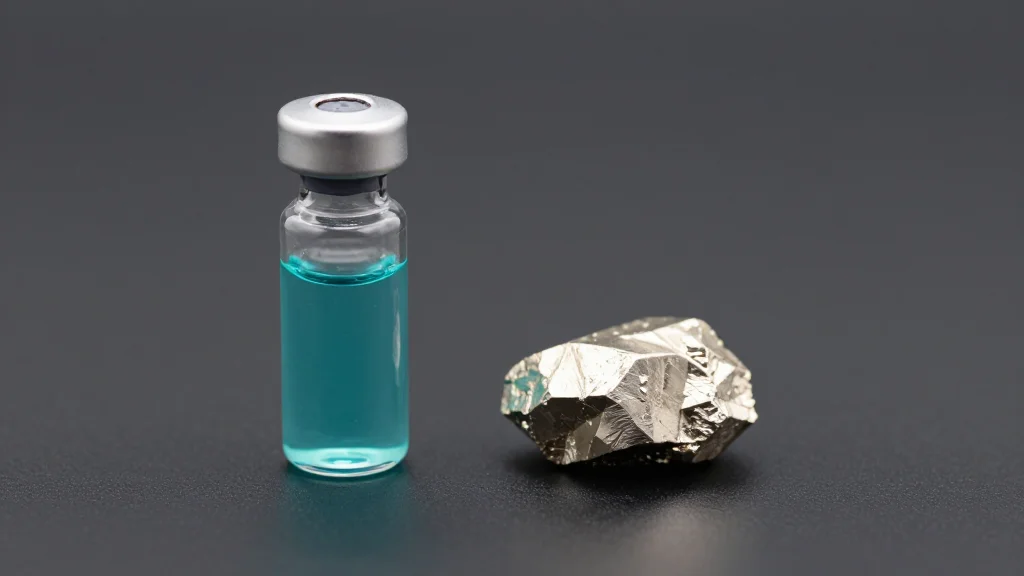
How Rare Earths Enabled MRI Contrast Agents to Advance Medical Imaging
MRI contrast agents, primarily based on the rare‑earth element gadolinium, have revolutionized diagnostic imaging by highlighting blood flow, blood‑brain barrier disruption, and active disease. By chelating gadolinium into macrocyclic or linear compounds, manufacturers make the metal safe for intravenous use...

How Rare Earth Materials Support Military Radar Systems
Modern military radars have shifted air‑defense from visual spotting to all‑weather, long‑range detection, tracking and targeting. Their performance hinges on rare‑earth elements that power high‑energy permanent magnets, specialty optics, phosphors and heat‑resistant alloys used in motors, generators, and calibration equipment....

How Nuclear Reactor Control Rods Work and Why Rare Earth Elements Matter
Modern nuclear control rods provide rapid, precise reactivity control, allowing operators to insert or withdraw absorbers within seconds to manage power and execute emergency scrams. Rare‑earth elements such as gadolinium and samarium serve as high‑cross‑section burnable absorbers in fuel pellets,...

How Rare Earth Elements Power Modern Electric Lawn Equipment: From Motors to Manufacturing
Electric lawn tools have shifted from noisy gas engines to quiet, battery‑powered devices thanks to rare‑earth permanent magnets and phosphor‑based displays. Neodymium‑praseodymium (NdFeB) magnets provide high torque in compact motors, while dysprosium and terbium preserve magnetic strength at high temperatures....

Smart Fabrics Become Functional Fashion with Rare Earth Technology
Smart fabrics are evolving from passive textiles to active systems that can sense motion, temperature, sweat chemistry and provide feedback through heat, light or haptics. This functionality relies on miniature electronic modules that incorporate rare‑earth‑based components such as NdFeB magnets...

Medical Lasers Need Rare Earths for Precision Healing
Medical lasers rely on rare earth elements for their core components, enabling precise wavelength-specific energy delivery that reduces bleeding and speeds recovery. Elements such as neodymium, erbium, holmium, ytterbium and yttrium are doped into laser crystals, while dysprosium, terbium and...

Without Rare Earth Elements, Electronic Warfare Systems Lose Their Edge
Electronic warfare (EW) has become the backbone of modern military operations, turning the electromagnetic spectrum into a decisive battlespace. The performance of EW hardware hinges on rare‑earth‑based components—neodymium‑iron‑boron and samarium‑cobalt magnets for antenna steering, power generation, and high‑temperature stability, plus...

What Is the Difference Between Rare Metals vs Rare Earth Elements?
The article clarifies that “rare metals” and “rare earth elements” are distinct concepts. Rare metals are an industrial label for low‑volume, supply‑concentrated metals often produced as by‑products, while rare earths are a scientifically defined group of 17 elements. Key examples...

Advanced Hearing Aids: Tiny Magnets for Better Sound
Advanced hearing aids now function as AI‑driven, Bluetooth‑enabled mini‑computers, thanks to rare‑earth elements that enable ultra‑compact magnets and efficient LEDs. Neodymium‑iron‑boron magnets and dysprosium‑stabilized alloys shrink speakers while preserving sound quality, and europium‑based phosphors power low‑draw status lights. The global...

How Rare Earth Elements Power Hybrid Car Batteries and Transform Transportation
Hybrid car batteries, paired with compact rare‑earth‑based electric motors, have reshaped vehicle efficiency by enabling high‑power assist, regenerative braking, and smoother launches. Neodymium‑iron‑boron magnets deliver the torque density needed for these systems, while dysprosium and terbium protect performance at elevated...

Particle Accelerators: From Magnets to Medical Breakthroughs Brought to You by Rare Earths
Particle accelerators have become essential tools in science, industry, and medicine, and rare earth elements are the hidden enablers that make modern machines smaller, more efficient, and precise. High‑field permanent magnets built from neodymium, praseodymium and heavy REEs such as...