
Why Iranian Oil Could Be the Biggest Energy Story of the Decade, with Aditya Saraswat
The podcast examines how the Iran‑U.S. conflict reshapes upstream dynamics across the Gulf, featuring Ryad Energy’s Aditya Saraswat. He frames the war’s trajectory around Iran’s nuclear enrichment capacity, arguing that all other diplomatic moves are secondary to a durable resolution on that issue. Saraswat quantifies the disruption: roughly 12 million barrels per day of crude and 14 million barrels of liquids are offline, alongside 85 million tonnes of LNG capacity. Qatar, Kuwait and Iraq bear the brunt, while the UAE and Saudi Arabia rely on bypass pipelines—COP and the east‑west route—to limit production cuts to about a third of pre‑conflict levels. Iran initially profited from premium pricing but now faces storage constraints as its output falls. Key remarks highlight that “logistics, not geology, will make or break recovery,” and that offshore development is the “new onshore” as onshore fields age. The UAE’s exit from OPEC and its aggressive brownfield and greenfield expansions underscore a strategic pivot toward resilient export routes and higher output. The fallout implies a staggered return to normal: oil could rebound by year‑end, but gas recovery may stretch three to five years, demanding $60 billion of additional investment beyond the region’s $120 billion annual baseline. Diversified infrastructure, domestic EPC capacity, and offshore/unconventional projects will be crucial for investors and global energy security.
Running on Empty: How the Middle East War Is Squeezing Jet Fuel Markets, with Susan Bell
The podcast examines how the Middle East conflict has upended global jet‑fuel markets, pushing prices above $4.50 per gallon and prompting airlines to slash routes and raise fares. The discussion centers on a sudden loss of roughly one million...

Asia's Oil Scramble Is Reshaping Crude Markets, with Lin Ye and Priya Walia
The April 30 episode of “Let’s Talk Energy” examined how Asia’s oil‑scramble is reshaping both physical and futures markets as Brent crude surged to a four‑year high of about $125 per barrel. The backdrop is the stalled US‑Iran talks on reopening...

What’s Next for Asia Energy? Insights From OTC Asia 2026
OTC Asia 2026 highlighted the evolving energy landscape across the region, emphasizing the need to cut hydrocarbon operating costs while integrating renewables. The conference underscored how advanced algorithms are being deployed to model oil and gas markets, allowing firms to...
OTC Asia 2026: Supply Chains, Deepwater and Energy Security, with Afiqah Mohd Ali
The OTC Asia 2026 panel, featuring Rystad Energy analyst Afiqah Mohd Ali, examined how recent Middle‑East tensions and broader geopolitical shifts are reshaping energy‑related supply chains in Southeast Asia. The conversation centered on the immediate, largely localized impact of the...
OTC Asia 2026: Energy Security, LNG and AI in Asia Pacific, with Samuel Low
At OTC Asia 2026, Sam Low, head of advisory for Rystad Energy in the Asia‑Pacific, outlined the firm’s expanding role in strategy, transaction support and capital‑raising for E&P firms, governments and financiers across the region. He highlighted the breadth of...
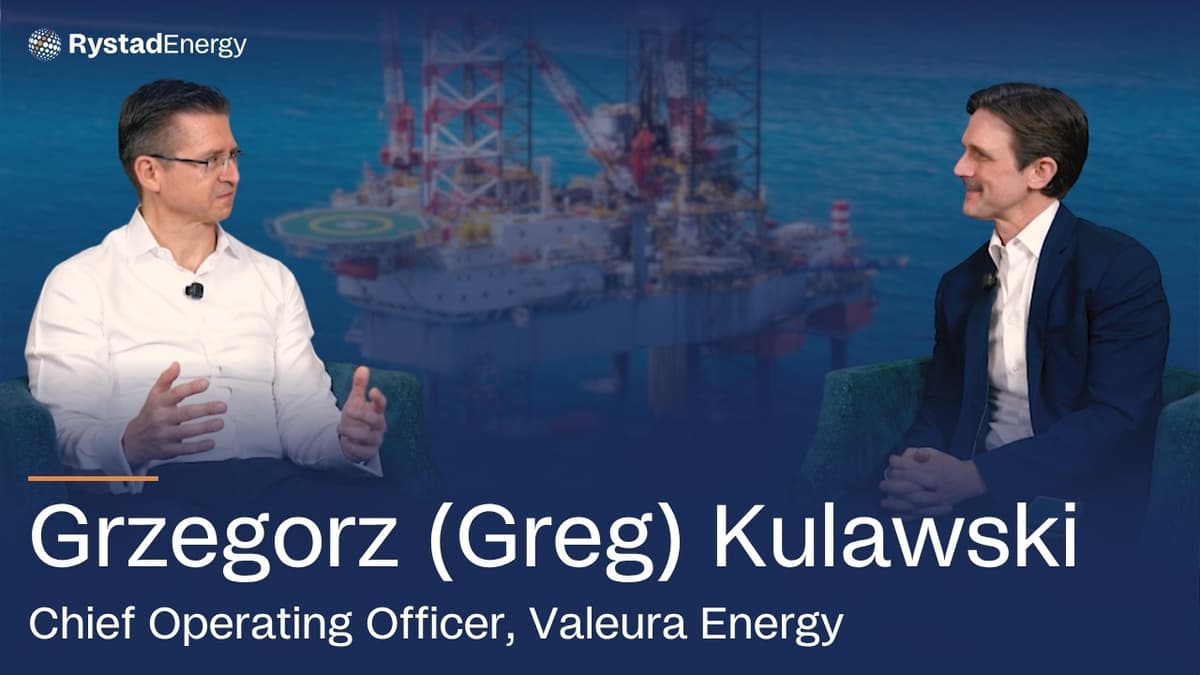
OTC Asia 2026: Thailand Offshore Growth and Energy Security, with Greg Kulawski
Greg Kulawski, COO of Velour Energy, outlined the company’s expanding footprint in Thailand’s offshore sector during the OTC Asia conference. Velour, a Toronto‑listed firm, runs four producing concessions in the Gulf of Thailand, delivering roughly 23,000 barrels of oil per...

How Malaysia Is Looking to Seize Its Upstream Opportunity with Petronas SVP Datuk Bacho Pilong
The podcast spotlights Malaysia’s upstream strategy, led by Petronas senior‑vice‑president Datuk Bacho Pilong of Malaysia Petroleum Management (MPM). He explains the agency’s historic mandate—energy security and nation‑building—and its current North Star: sustaining 2 million barrels of oil‑equivalent per day to keep...

How the Middle East War Is Reshaping Asia’s Upstream Strategy, with Prateek Pandey
The podcast examines how the Israel‑Iran‑U.S. conflict is forcing Asian energy planners to rethink upstream strategies. With roughly 55‑60% of the region’s oil and 70% of its LNG imports coming from the Gulf, any disruption to the Strait of Hormuz...

Will Power-Hungry Data Centers Overwhelm the Grid? With Fredrik Ellekjær and Victoria Fethke
The podcast examines whether the surge in AI‑driven data centers will swamp existing electricity grids. Analysts Fredrik Ellekjær and Victoria Fethke estimate global data‑center electricity consumption will reach roughly 1,250 terawatt‑hours by 2030 – about 10 % of U.S. demand –...

Can Offshore Wind Bounce Back After Stormy 2025? With Alex Fløtre and Venterra CEO Ed Daniels
The episode of “Let’s Talk Energy” examined whether offshore wind can recover after a turbulent 2025, featuring Ventara CEO Ed Daniels and Ryestad Energy’s offshore‑wind analyst Alexander Fløtre. Both guests noted that the global pipeline was slashed by roughly 60 GW, leaving a...

Could Middle East Conflict Break Energy Supply Chains? With Matthew Fitzsimmons
The podcast examines how the escalating Middle East conflict is reshaping the oil‑field services and equipment sector. With the Strait of Hormuz effectively shut and Qatar’s offshore rigs idled, the region’s drilling activity is projected to fall 15‑20% in 2026,...

Cheap No More: How Rising Demand Is Reshaping US Natural Gas, with Artem Abramov and Jai Singh
The episode examines how the United States’ natural‑gas market is transitioning from a decade of ultra‑low prices to a tighter, higher‑cost environment. Rising demand from newly approved LNG export projects, rapid data‑center build‑outs supporting AI workloads, and broader electrification are...

Next-Gen Nuclear and the Rise of SMRs with Carlos Torres Diaz and Natura Resources' Douglass Robison
The episode of "Let’s Talk Energy" spotlights the accelerating push for small modular reactors (SMRs) as a potential source of firm, carbon‑free electricity. Host Noah Brener interviews Doug Robinson, CEO of Nura Resources, about the company’s plan to build the...