
Los Angeles to Open Subway Extension May 8
Los Angeles Metro will open a 3.92‑mile D‑Line subway extension on May 8, adding three new stations and terminating at La Cienega Boulevard. The agency projects 16,200 weekday boardings for the new segment, which is part of a $3.7 billion plan slated for completion by the 2028 Olympic Games. Funding comes from a local sales tax, federal grants and a $749.3 million DOT loan. Additional extensions to Beverly Hills, Century City and UCLA are expected in 2027.

Trump Budget Proposal Once Again Targets Affordable Housing, Homeless Assistance
The Trump administration’s FY 2027 budget proposes a 13% cut to the Department of Housing and Urban Development, shrinking its discretionary budget to $73.5 billion. It would eliminate the $3.3 billion Community Development Block Grant and the $1.3 billion HOME Investment Partnerships Program, and...

5 Policy Principles that Will Be Key to Next Surface Transportation Bill
Congress is drafting the next multiyear surface‑transportation bill as the Highway Trust Fund faces a projected shortfall by 2028, driven by stagnant fuel taxes, inflation, and the rise of fuel‑efficient and electric vehicles. Consumer Reports proposes five policy principles emphasizing...

Trump Administration Effort to Rewrite Federal Housing Grant Criteria Hits Setbacks
A Rhode Island federal judge ruled that the Trump administration illegally altered the criteria for the $75 million Continuum of Care (CoC) permanent supportive housing grants, violating the Administrative Procedure Act. The decision was upheld by the First Circuit Court of...

Trump’s FY27 Budget Slashes Climate and Disaster Funding, Shifting Costs to Cities and States
President Donald Trump’s FY27 budget proposes a 10% cut—about $73 billion—in non‑defense spending, targeting climate, disaster and environmental programs. The plan eliminates key FEMA preparedness grants, slashes more than $1 billion from EPA categorical grants, and trims NOAA’s budget by $1.6 billion. Funding...

Digital Government’s Next Challenge: Making Systems Work Together
State and local governments are rapidly adding online payment options—78% now accept at least one fee digitally—but actual adoption lags at just 49.5% of transactions. Leaders cite legacy system integration as the primary barrier, exposing manual reconciliation, audit risk, and...

FTC Seeks Public Input on Junk Fee Rule for Rental Housing
The Federal Trade Commission has issued an Advance Notice of Proposed Rulemaking to curb undisclosed "junk fees" in rental housing, seeking public comment by April 13. The agency’s focus follows high‑profile settlements—$48 million with Invitation Homes and $23 million with Greystar—highlighting deceptive rent...

Federal Build-to-Rent Limits Could Reduce Housing Supply, Researchers Warn
Researchers warned that a forced‑sale provision in the 21st Century ROAD to Housing Act could sharply curb the build‑to‑rent (BTR) market. The rule requires BTR homes to be sold to individual owners within seven years, limiting the rental income period...

How Cities Can Encourage Faster, Cheaper Rooftop Solar
Cities across the United States are inflating residential solar costs by up to $7,000 due to cumbersome permitting, inspection bottlenecks, and outdated utility interconnection rules, according to a new report from Environment America and Frontier Group. Installers are increasingly bypassing...

Generative AI Is the Future of Traffic Engineering, Miovision Says
Miovision will roll out its generative‑AI traffic‑engineering agent, Mateo, on April 7, allowing transit authorities and private firms to ask natural‑language questions of sensor data. The tool promises to cut diagnostic time by up to 90%, turning multi‑day investigations into roughly...

Cities, States, Environmental Groups Sue EPA over Repeal of Mercury and Air Toxics Standards
A coalition of 21 states, cities and counties filed a lawsuit in the D.C. Circuit challenging the EPA’s repeal of the 2024 Mercury and Air Toxics Standards (MATS). The plaintiffs argue the rollback violates the Clean Air Act and ignores...

US DOT Opens $1B in Funding for Safe Streets and Roads
The U.S. Department of Transportation has opened applications for the fiscal year 2026 Safe Streets and Roads for All grant program, allocating roughly $1 billion for projects that protect pedestrians, cyclists, motorists and commercial‑vehicle operators. The competitive grant builds on a...

AI in Local Government? Detroit Residents Are ‘Not Widely Convinced’ It Belongs.
A University of Michigan survey of over 2,100 Detroit residents shows limited enthusiasm for municipal artificial intelligence, with support rarely exceeding 40% for most applications. AI for locating missing children garnered the highest backing at 57%, while identifying crime suspects...

Mega-Events Are Coming. Cities Are Overlooking Their Most Affordable Transit Fix.
Upcoming mega‑events—the America 250 celebrations, the 2026 FIFA World Cup and the 2028 Summer Olympics—will flood U.S. host cities with millions of travelers, straining existing transit infrastructure. Kai Boysan, CEO of Flix North America, argues that intercity buses offer a fast,...

Idaho Updates Grant-Management System with Cloud-Based Platform
Idaho has deployed Euna Grant, a cloud‑based grant‑management platform, to replace fragmented legacy processes across state agencies. The system integrates with the existing ERP platform, giving officials instant visibility into budgets and payments. As a result, reimbursement cycles collapsed from...

Anaheim Transit System Will Shut Down March 31
California’s Anaheim Transportation Network will cease operations on March 31, 2026, ending 30 years of service. The agency, which served 8 million riders annually across ten routes, faces a $730,000 monthly deficit despite receiving $8.2 million from the local tourism district. Its 74 electric...

Could Transit Agency-Owned Land Help Solve California’s Housing Problem?
A new Enterprise Community Partners analysis identified roughly 3,000 parcels of transit‑agency‑owned land—about 8,000 acres—across California that could accommodate up to 240,000 affordable homes. Currently, 22% of this land sits vacant or serves as parking, and most parcels are highly...

How Real-Time Data Can Forecast Traffic Flow
StreetLight Data unveiled Closure Impacts, a traffic‑forecasting add‑on to its Traffic Monitor suite, leveraging real‑time sensor feeds and historical baselines. The tool flags incidents such as collisions, lane blockages, and flooding, and projects the ripple effects of planned closures or...

Bipartisan Affordable Housing Legislation Just Cleared the Senate. Here’s What It Could Mean for Cities.
The Senate passed the bipartisan 21st Century ROAD to Housing Act, a policy‑oriented bill that revamps federal housing grants and reduces regulatory barriers without overriding local zoning. The legislation updates the HOME Investment Partnership Program, expands the Community Development Block...

The Path to Building Connected Communities
Crafton Tull planners Dave Roberts and Julie Luther Kelso, together with Laneshift founder Ryan Hale, argue that building connected communities requires both physical infrastructure and a supportive culture. They highlight walk audits and immersive experiences as tools to convert abstract...

Trump Administration Unveils New Plan for some Homeless Veterans: Legal Guardianship
On March 11, 2026, the Department of Veterans Affairs and the Department of Justice signed a memorandum allowing VA officials to seek court‑appointed legal guardians or conservators for vulnerable veterans, including those at risk of homelessness. The initiative is presented...
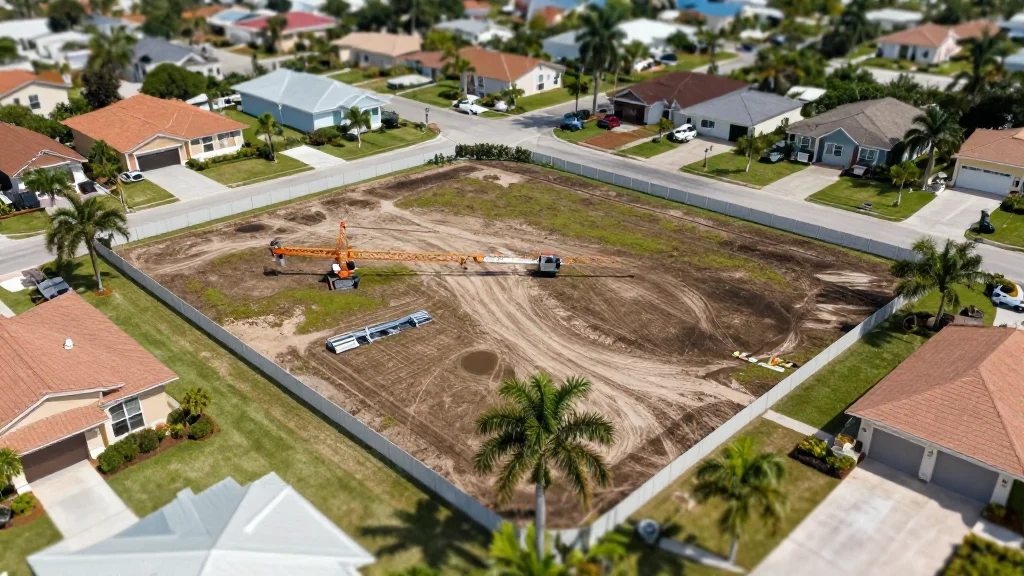
Florida Advances Bill to Bypass Local Zoning, Allow Residential Development on Brownfields
Florida’s legislature passed the Infill Redevelopment Act, mandating that counties with over 1.475 million residents permit residential development on 5‑acre parcels, including contaminated brownfields, adjacent to existing housing. The bill caps density at the lower of the local average or 25...

How Durham, North Carolina, Kick-Started Affordable Housing Development
Durham, North Carolina, approved a $95 million affordable‑housing bond in 2019, supplemented by $65 million in federal and local funds. The program has delivered 1,668 new rental units and preserved 888 existing homes, exceeding its original targets, and has housed over 2,030...

Nearly 40,000 ‘Shovel-Ready’ Affordable Homes in California Are Stuck in Financial Limbo, Report Finds
A new Enterprise Community Partners report finds that 39,880 affordable housing units across 461 California developments are shovel‑ready but stalled due to insufficient state funding. The projects, which could house over 432,000 low‑income households, require $2.3 billion in subsidies, $1.8 billion in...

Better Weather Forecasts, Disaster Reviews the Goal of New Federal Bills
Congress is advancing two bills to strengthen the nation’s weather forecasting and disaster response capabilities amid staffing and budget cuts at NOAA and the National Weather Service. Rep. Eric Sorensen’s National Weather Safety Board Act would create an independent board,...
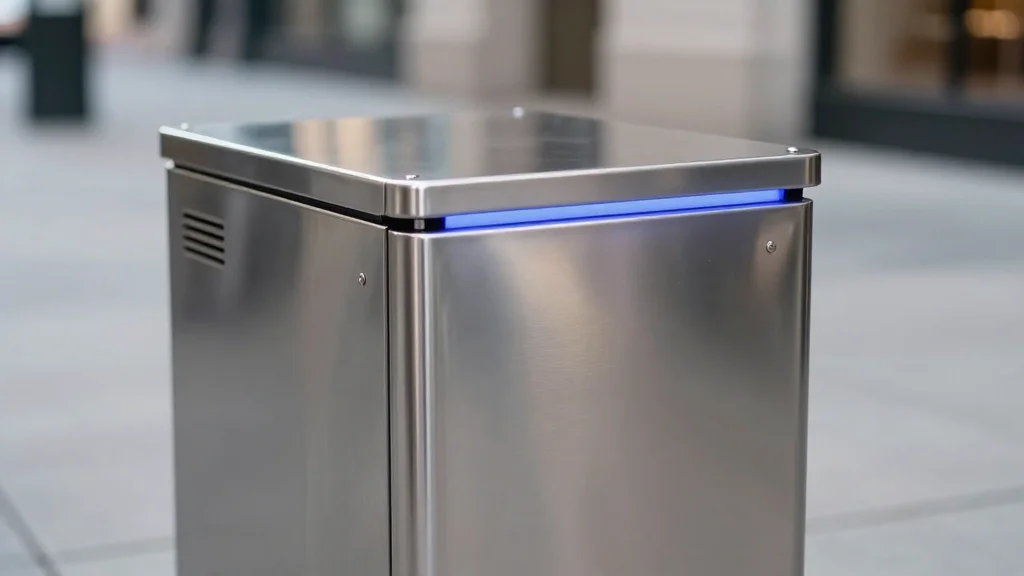
After Years of Delays, NYC Makes $4M Bet on Modular Public Toilets
New York City announced a $4 million investment to deploy 20‑30 modular public restroom units later this year. The initiative, separate from the Parks department’s 45‑new‑toilet build‑out, targets faster delivery by avoiding the deep‑underground utility clearances that stalled earlier projects. Bids...

Can AI Close the Language Gap in Disaster Warnings? A Federal Watchdog Raises Concerns.
A GAO report says the National Weather Service (NWS) lacks clear objectives and a funding strategy for scaling AI‑driven multilingual weather alerts. The agency’s original $1 million contract for automatic translations was cut to $600,000, limiting its ability to update the...

4 Ways Cities Can Shape Data Center Impact
Climate Mayors, together with Bloomberg Associates, released a report outlining how U.S. cities can shape the rapid expansion of hyperscale data centers driven by AI growth. The guide highlights four leverage points—site selection, electricity costs, environmental impacts, and local economic...

The Business Case for Dash Cams: Prioritizing ROI in a Precarious Fiscal Climate
Municipal fleets face tighter budgets as city revenues dip and confidence in meeting future fiscal needs wanes, prompting officials to scrutinize new technology spend. New research from Wakefield for Samsara shows dash cams delivering rapid ROI, with 96% of agencies...

The Missing Layer in Smart Waste Systems: Resident Engagement
The Senate passed the bipartisan STEWARD Act to expand recycling infrastructure and modernize data collection. While the legislation improves physical assets, it overlooks the human element that ultimately determines curb‑side success. Residents often face confusing, localized rules, leading to contamination...