
Recent Posts

News•Feb 26, 2026
How Embedded BNPL Optimizes Cash Flow for SMBs: Inside the Intuit-Affirm Partnership
Intuit has teamed with Affirm to embed a Buy‑Now‑Pay‑Later (BNPL) option directly into QuickBooks invoices, letting small‑business owners split customer payments while receiving the full amount upfront. The move turns QuickBooks from a bookkeeping tool into an actionable financial operating system, aligning with Intuit’s broader strategy of embedding services such as HR and credit cards. By positioning the BNPL feature at the moment an invoice is issued, the partnership gives SMBs immediate cash flow relief and a new sales lever. This integration signals a shift in fintech competition toward controlling the decision point within business workflows.
By Tearsheet

News•Feb 24, 2026
Citizens’ CIO on the Ethos that Led the Bank Into the Cloud and Beyond
Citizens Bank’s Chief Information Officer Michael Ruttledge outlines how the institution’s "Next Gen Technology" initiative has driven a full migration of its legacy mainframe workloads to public cloud platforms Azure and AWS. Since joining in 2019, Ruttledge has overseen a...
By Tearsheet

News•Feb 19, 2026
Open Banking’s Paywall Era – and What It Means for Banks, Fintechs, and Policy in 2026
J.P. Morgan now handles nearly two billion API requests each month, but only about 13% stem from direct customer‑initiated actions. Historically, open‑banking data flowed freely, enabling budgeting apps, lending tools and countless fintech services. In 2025 the bank began negotiating paid...
By Tearsheet

News•Feb 17, 2026
Affirm’s Move to Become a Bank Signals a Reconfiguration for the BaaS Industry and Beyond
Fintech lender Affirm announced plans to obtain a U.S. banking charter, a move that could reshape the banking‑as‑a‑service (BaaS) landscape. The filing comes as charter applications have surged, with 21 submissions in the first eight months of 2025—more than double...
By Tearsheet

News•Feb 16, 2026
Why some Major Banks Are Bringing Embedded Finance In-House
Capital One is reshaping its business by bringing embedded finance capabilities in-house through two high‑profile acquisitions. The 2024 purchase of Discover gave the bank broader credit‑card reach, payment rails and consumer data, while the January 2026 acquisition of Brex adds...
By Tearsheet

News•Feb 12, 2026
The ‘Discovery’ Problem in Embedded Finance – and How OMB Bank Found the Right Fintech Partner
Community bank OMB Bank struggled with a slow, manual process to locate fintech partners, relying on static PDFs and endless email threads. The bank’s breakthrough came when it discovered Backpack, a university‑payments fintech listed on Treasury Prime’s AI Marketplace, which...
By Tearsheet
News•Feb 11, 2026
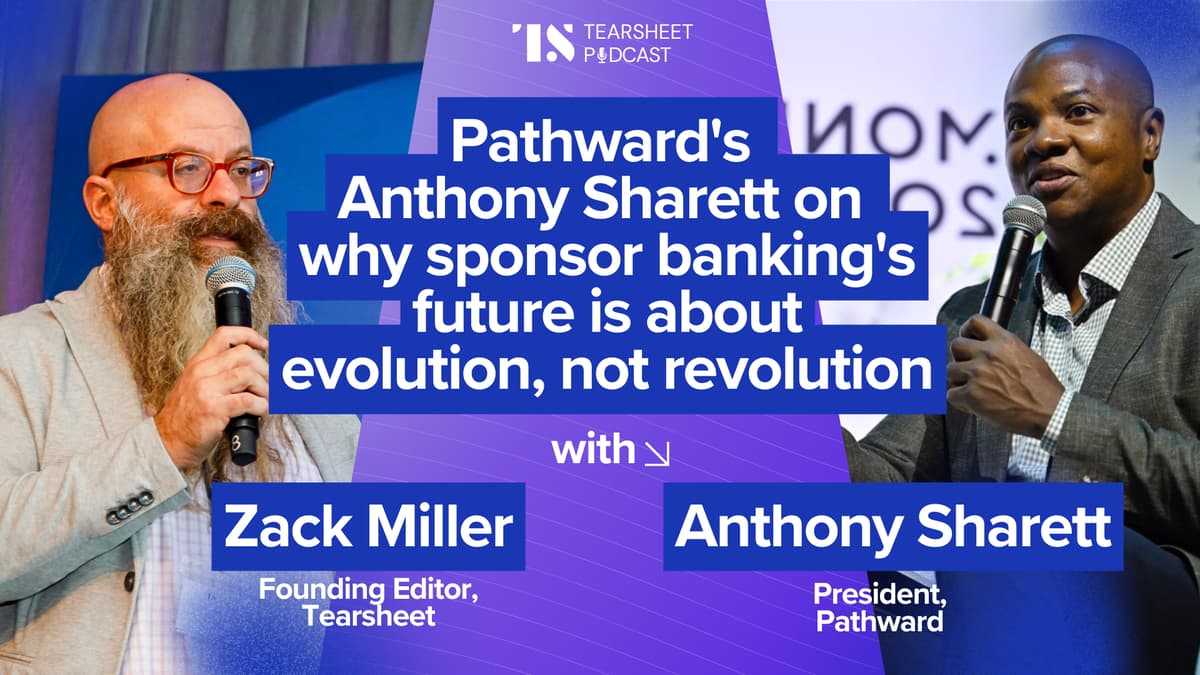
Pathward’s Anthony Sharett on Why Sponsor Banking’s Future Is About Evolution, Not Revolution
Sponsor banking, the bridge between fintechs and regulated banks, is under intense regulatory scrutiny but remains a vital conduit for expanding financial access. Anthony Sharett, President of Pathward, argues that the model’s future lies in gradual evolution rather than radical...
By Tearsheet

News•Feb 10, 2026
The Quarterly Review: Wise’s Lauren Langbridge Expands Domestic Payment Network Capabilities and Celebrates Partnership Wins
Wise’s Commercial Director for the Americas, Lauren Langbridge, drove two domestic payment network expansions—Direct Pix in Brazil and Zengin in Japan—while laying groundwork for additional connections. She secured new partnerships with Wealthsimple and Interactive Brokers (IBKR), extending the Wise Platform’s reach into retail...
By Tearsheet

News•Feb 6, 2026
UBS’s US Charter: From a Global Wealth Powerhouse Into a Full-Service US Bank
In January 2026 UBS Group AG secured conditional approval from the U.S. Office of the Comptroller of the Currency for a national bank charter, allowing it to accept deposits, open checking accounts, and extend traditional loans. Historically a wealth‑management‑focused operation...
By Tearsheet

News•Feb 5, 2026
January in Review: When Partnership Becomes the Product
Fintech‑bank collaborations are moving beyond simple feature swaps toward embedded financial infrastructure. In January 2026 three high‑profile deals illustrated this shift, with partners designing services that sit invisibly inside everyday workflows such as taxes, shopping and rent payments. The PayPal‑April...
By Tearsheet

News•Jan 29, 2026
Making Payments Part of the Workflow: Embedded Finance in 2026
Embedded finance is becoming the connective tissue for large enterprises, allowing payments to flow directly within existing workflow applications such as travel booking and expense management. In an interview, Eva Reda, Executive Vice President of Global Commercial Services Products at...
By Tearsheet
News•Jan 27, 2026
Inside Bank of America’s Plan to Own the Small Business Relationship
Despite a tough macro environment and recent White House policy shifts, U.S. small‑business applications are still climbing, according to Census data. Bank of America reports that 75 % of SMBs are feeling supply‑chain strain and foreign‑exchange volatility. To counteract these pressures,...
By Tearsheet

News•Jan 21, 2026
Morgan Stanley’s Crypto ETF Move – and the Risk of Getting ‘Institutional Crypto’ Wrong
Morgan Stanley has filed to launch a spot Bitcoin ETF, a Solana ETF that includes staking exposure, and an Ethereum Trust that offers staking rewards. This marks a departure from the bank’s traditional role of merely distributing third‑party crypto funds...
By Tearsheet

News•Jan 20, 2026
Micro Case Studies: The Feud over Interest Rate Caps and the Murky Future of Agentic Commerce
President Trump’s proposal to cap credit‑card interest rates at 10% for one year sent bank and issuer stocks tumbling, prompting fintech CEOs to publicly back the idea. Fintechs such as Bilt and Affirm are rolling out capped‑rate cards and new...
By Tearsheet

News•Jan 15, 2026
Loyalty in Banking Is Now Fragmented: How Chime Is Winning the Era of Soft Switching
Customers are increasingly opening secondary checking accounts and quietly shifting their primary banking relationship to new providers, a behavior dubbed “soft switching.” JD Power data shows that in Q3 2025, 52% of new checking accounts were additional accounts, with 72% of those...
By Tearsheet