
Letter From the Editor: Digital Banks Have Different Answers to What Banking Should Become Next
Digital banks have moved beyond the original goal of simply digitizing traditional banking. Two dominant logics have emerged: access‑first neobanks such as Chime and Cash App that focus on low fees and frictionless cash flow, and European platform banks like N26 and Monzo that layer multiple services onto a single account. Revolut sits between these camps, compressing payments, trading, crypto and wealth tools into a continuous user experience. The split reflects a deeper redefinition of “simplicity,” shifting from reduction to integration to behavioral compression.

Intuit Wants to Turn Workforce Management Into a Financial Operating System
Intuit announced QuickBooks Workforce, an AI‑native, end‑to‑end human capital management platform built directly into QuickBooks. The new suite consolidates payroll, benefits, hiring, time tracking and performance tools that SMBs typically run in separate applications. By embedding workforce data in the...

The New M&A Logic of Owning the Workflow Before AI Does
Fintech and AI firms are buying the operational layers that sit beneath transactions before artificial intelligence takes over those processes. NMI’s purchase of Dwolla adds ACH and real‑time bank‑transfer capabilities, while Anthropic’s acquisition of Fractional AI brings generative‑AI workflow expertise....

OpenAI and Plaid Take Another Shot at Personal Finance
OpenAI has integrated Plaid’s banking connectivity into ChatGPT, allowing the chatbot to access users’ bank accounts and deliver personal finance management (PFM) advice. The feature is currently limited to ChatGPT users and is not yet exposed via a public API....

Capital Is Flowing Again, Just Not Where the Consensus Says
US fintech funding surged to $5.1 billion in Q1 2026, a 47% year‑over‑year increase, driven primarily by early‑stage capital. Early‑stage rounds jumped 53% YoY to $2.5 billion, while late‑stage financing collapsed 60% quarter‑over‑quarter, with only nine deals exceeding $100 million. The data signals a...

Stablecoins and Wallets Are Being Redesigned for Systems Where Humans Are No Longer the Primary Users
Circle is building an Agent Stack that turns USDC into a machine‑readable, micro‑payment layer for AI agents, while Coinbase is extending its crypto wallet to give autonomous software programmable spending limits. Both initiatives aim to enable AI‑driven commerce where transactions...
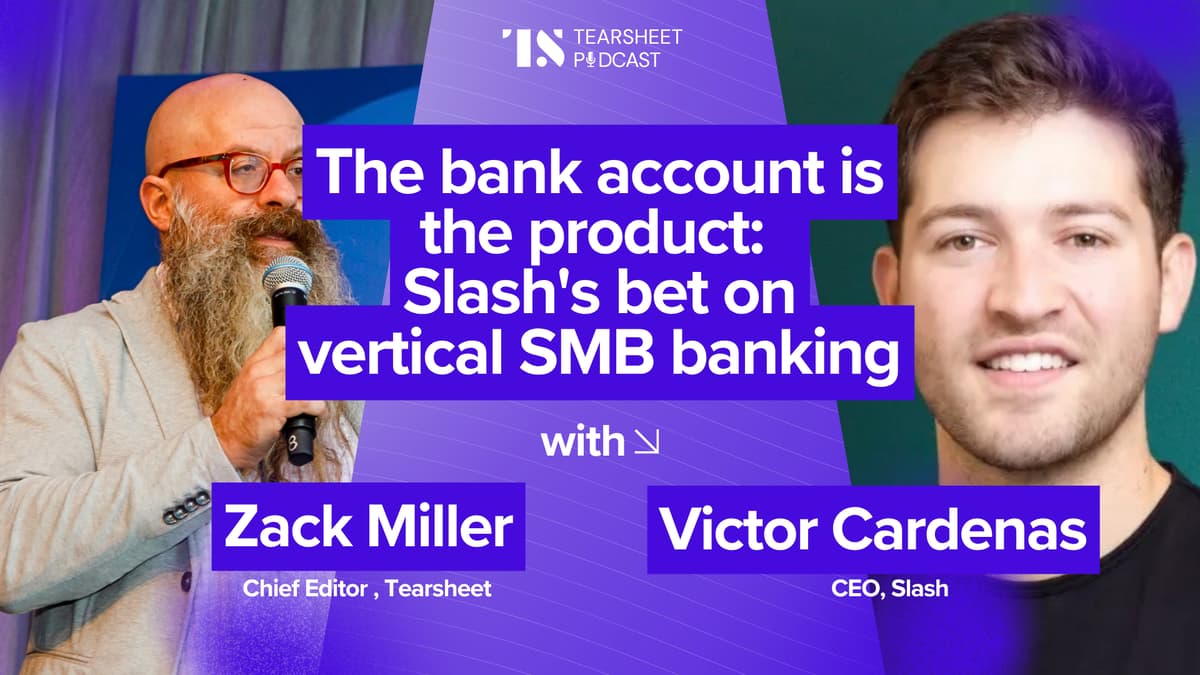
The Bank Account Is the Product: Slash’s Bet on Vertical SMB Banking
Slash, a fintech that began serving teenage sneaker resellers, has grown into a $1.4 billion company by bundling bank accounts with industry‑specific software. The platform now processes roughly $3 billion in stablecoin payments each year and recently closed a $100 million Series C round...

Affirm Bets on Banks, Bots, and Shopify to Reach $100 Billion in GMV
Affirm outlined a three‑pronged growth plan at its investor day, targeting $100 billion in annual gross merchandise volume. The plan hinges on expanding core BNPL offerings, launching "Affirm Edge" to embed buy‑now‑pay‑later in bank and credit‑union apps, and deepening its Shopify...

How Kudos Built a Consumer Data Moat on Top of Credit Card Rewards
Kudos offers an AI‑powered smart wallet that automatically selects the best credit‑card for each purchase, recommends new cards based on spending habits, and layers extra rewards on top of existing programs. The platform tackles the fragmented rewards landscape that leaves...

Green Dot and the Case to Make Financial Experiences Feel Calmer
Green Dot is turning its attention to the emotional friction that follows a financial transaction, coining the term “Cortisol UX” to describe stress‑inducing moments. Chief Product Officer Melissa Douros says the company will redesign interfaces to absorb, rather than amplify,...

Beyond Payments: Why SMBs Need Both Contactless Acceptance and Modern Fraud Controls
SMBs must adopt contactless payment acceptance as consumer demand spikes, with Mastercard reporting over 75% of its 2025 transactions contactless. At the same time, credit‑card fraud rose 54% year‑over‑year in Q3 2025, and SMBs experience fraud rates 65% higher than...

LendingClub Rebrands to Happen Bank as Its Identity Catches up to Its Model
LendingClub announced it will rebrand as Happen Bank this summer, reflecting its evolution from a marketplace lender to a full‑stack digital bank. The name change follows the 2021 acquisition of Radius Bank, which gave the firm a banking charter and...

Financial Brands Have an AI Voice Problem
Financial communications teams are grappling with an AI‑generated content problem that produces generic, formulaic copy lacking genuine perspective. Editors notice repetitive framing, empty claims and no counter‑arguments, eroding the trust that financial brands rely on. Companies like J.P. Morgan Payments...

Lili CTO Liran Zelkha on Building AI that Disappears
Fintech firms have spent the past two years layering chatbots and in‑app assistants onto their platforms, but Lili CTO Liran Zelkha argues the effort is misdirected. He believes small‑business owners, who are time‑pressed and uninterested in new interfaces, need AI...

The Week in Market Moves
The weekly market roundup highlights several strategic shifts across major banks and fintechs. Wells Fargo teamed with Mastercard to streamline B2B card payments, signaling a deeper push into payments infrastructure. Paymentus re‑positioned its value proposition around user experience rather than data...