
A New 'AI First' College Aims to Offer Cheaper, Employer-Friendly Degrees
Sal Khan, founder of Khan Academy, is launching the Khan TED Institute, a nonprofit partnership with TED and ETS that will offer a four‑year, competency‑based degree in applied artificial intelligence for about $10,000. The curriculum will be co‑designed with employer "thought partners" such as Google, Microsoft and Accenture, focusing on projects that emphasize communication, collaboration and creativity. Instruction will be entirely online, self‑paced, and free of live lectures, with students building portfolios to demonstrate AI‑resistant skills. Khan aims to provide a world‑class, affordable alternative to traditional elite colleges and to spark broader AI‑native university experiments.

AI Will Make the Academic Article Obsolete
AI agents are poised to render traditional academic articles obsolete, replacing them with continuously updated "living manuscripts." The technology can automate data cleaning, model estimation, and robustness checks at minimal cost, accelerating the credibility revolution in applied economics. By enabling...

How Colleges Cut
American colleges face mounting fiscal pressure, with one‑in‑five public and one‑in‑three private schools posting deficits in FY 2024. Revenue‑generation tactics such as new master’s programs and tuition hikes have stalled, prompting institutions to rely on cost‑cutting measures. Analysis of HelioCampus data...
When AI Cheating Becomes a Legal Risk
Universities are confronting a legal crossroads as AI‑generated work blurs the line between ordinary grading and formal misconduct. In 2024 the University of Minnesota expelled a Ph.D. candidate after AI similarity analysis, a decision upheld by federal and state courts....

Another Undergrad Is Trying to Disrupt College With AI. He Says His Version Isn't Cheating.
University of Notre Dame freshman Caden Chuang marketed Kerra, an AI agent that syncs with Canvas to generate study guides, draft assignments, and send deadline reminders. Within an hour, more than 1,000 students had enrolled before the university disabled his...

Nearly One-Third of Faculty in Red States Say They've Censored Their Research
A new Ithaka S+R survey of 4,000 U.S. faculty finds that nearly one‑third of researchers in states with “divisive concepts” legislation have altered or censored their work. Twenty‑nine percent reported self‑censorship, and 10 percent are actively seeking jobs elsewhere. The...
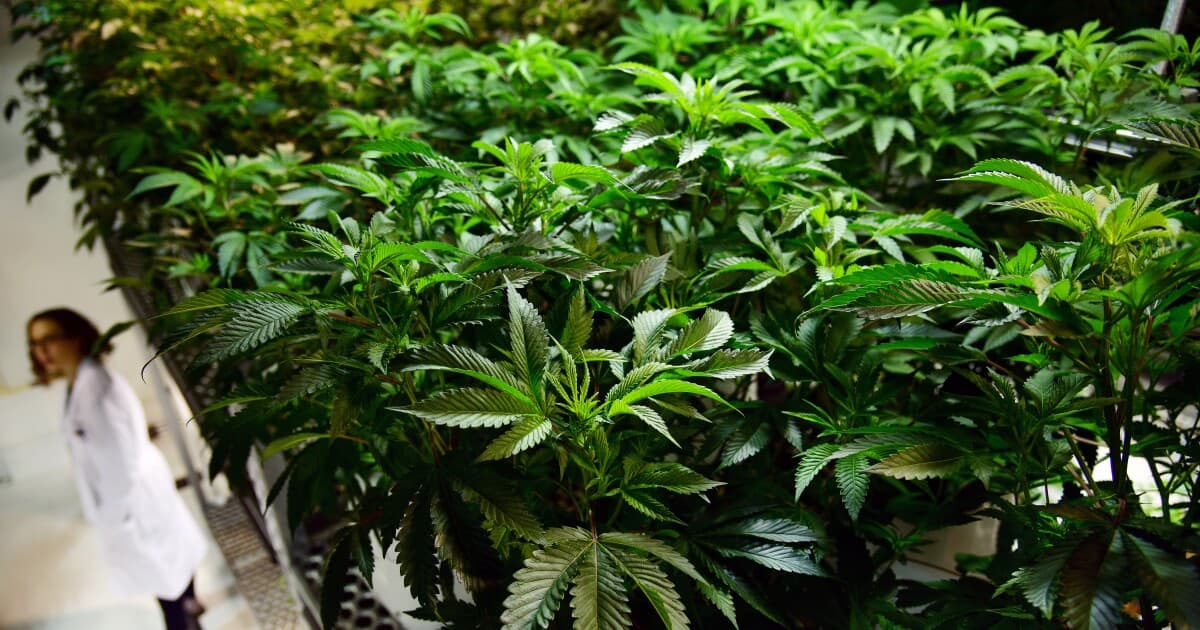
For Researchers, Trump's Easing Restrictions on Marijuana Signals a Budding Shift
The Department of Justice reclassified marijuana distributed through state medical programs from Schedule I to Schedule III, easing DEA registration for researchers. The change applies to FDA‑approved and state‑licensed medical cannabis, allowing more straightforward clinical trials while still requiring DEA and FDA...
Colleges Were Sweating a Major Compliance Deadline. Now the Justice Dept. Has Delayed It.
The Justice Department has postponed the federal web‑accessibility deadline for public colleges by one year, moving the primary compliance date to April 26, 2027 and extending it to April 26, 2028 for smaller entities. The original deadline, set for this Friday, required universities to...
Sit and Stay Seated? Walkouts at One State’s Public Universities Could Soon Be Banned.
Tennessee lawmakers have passed HB 1476, dubbed the Charlie Kirk Act, which bans "staging walkouts" at public universities and ties campus policy to the University of Chicago’s free‑expression principles. The bill defines a walkout as any disruption that forces an event...

The Hard Budget Conversation Colleges Should Have
Princeton University announced it is lowering its long‑term endowment return assumption from 10.2% to 8%, a shift that trims projected growth by roughly $11 billion over the next decade. The adjustment forces tighter budgeting, including hiring freezes and reduced travel allowances,...

People Are Angry (Again) About Colleges' Donors. Will Anything Really Change?
MIT and Harvard have overhauled donor‑review policies after the Jeffrey Epstein revelations, creating written guidelines and standing committees to flag reputational risk. MIT’s Gift Policy Guide mandates central review of gifts over $50,000 and can decline donations that could harm...

AI Can Improve Scholarly Writing — If We Use It Right
The article argues that AI, exemplified by Claude, can enhance scholarly writing when used as a thinking partner rather than a substitute for intellect. It highlights how senior researchers leverage AI to sharpen arguments, spot patterns, and iterate drafts, while...

Meet the Donors Funding the Civil-Dialogue Boom at Colleges
Civil‑dialogue initiatives are exploding on U.S. campuses, with more than 500 organizations—90% founded in the last decade—and nearly 100 programs launched since 2023. Federal support surged as the Department of Education earmarked $60 million for civil‑discourse grants, while philanthropies such as...

Students Are Using AI to Guide College Decisions. What Is It Telling Them?
Students are turning to AI tools to research colleges, with 46% of a 5,000‑student survey using AI in fall 2025, up from 26% in spring. One‑third said AI introduced a school they hadn’t considered, while one‑fifth removed a school after...
U. Of Michigan's Incoming President Has Brain Cancer and Won't Take Office
University of Michigan announced that incoming president Kent Syverud, a 69‑year‑old former Syracuse chancellor, has been diagnosed with a form of brain cancer and will not assume the role on May 11. The Board of Regents will reopen the presidential search,...